

TECHNICAL SUPPORT


Published 2026-01-22
The Unsung Hero on the Workbench: Real Talk AboutservoTester Solutions
Imagine sitting at your workbench late at night. The smell of solder lingers in the air, and a tangle of wires looks back at you like a plate of digital spaghetti. You’ve just finished assembling a complex mechanical arm, but when you power it up, one joint starts twitching violently. Is it the code? Is it the signal interference? Or is the actuator itself just having a bad day?
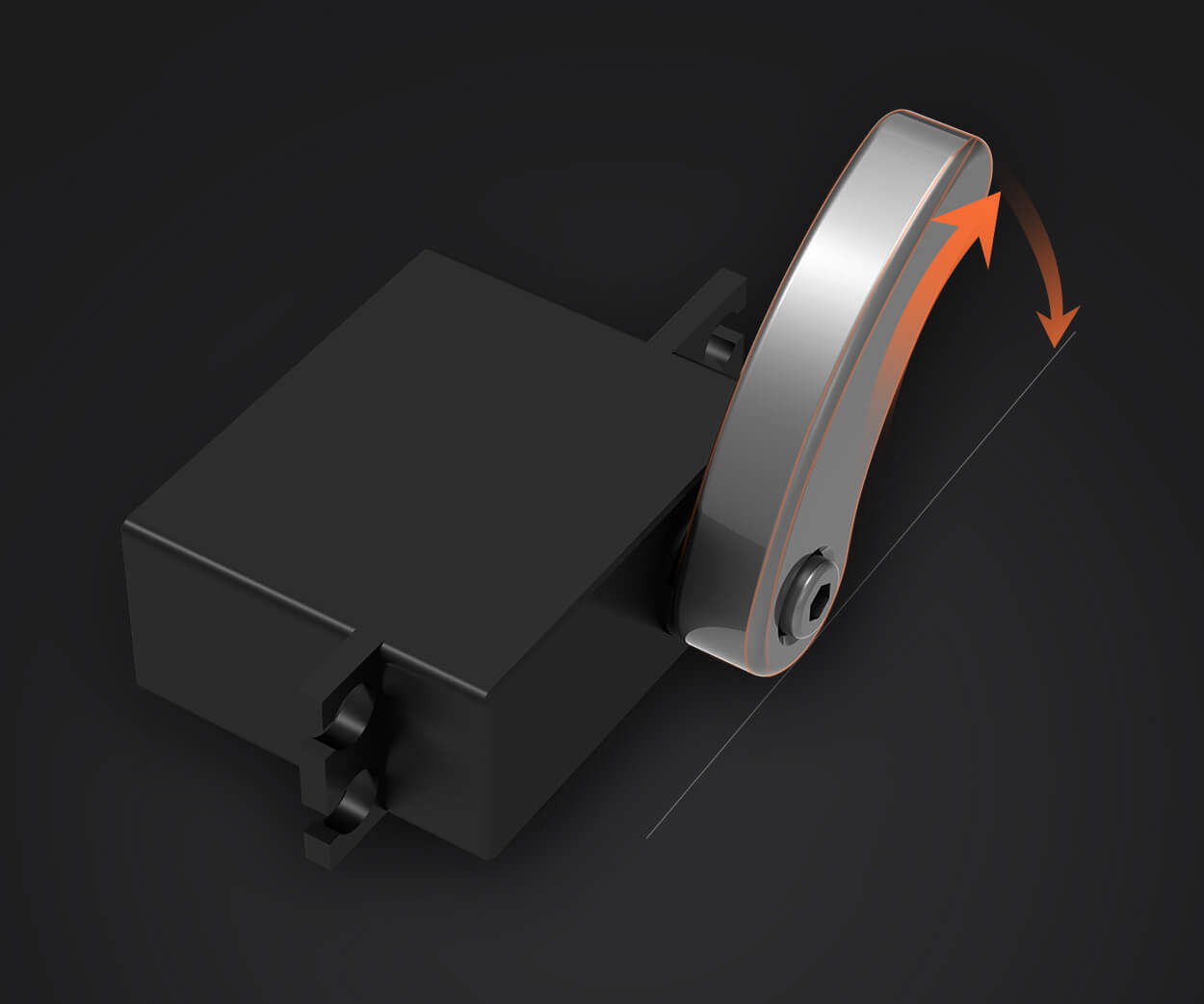
This is the moment where most people lose their cool. They start digging through lines of code, swapping out controllers, and wasting hours on variables that aren't even the problem. But there’s a shortcut—a physical, tactile piece of hardware that acts as the "truth teller" for your mechanical projects. We’re talking aboutservotester solutions.
Why do we even need a dedicated tester? It seems redundant when you have a perfectly good controller sitting right there. But here’s the reality: controllers are biased. They do what the software tells them to do. If your software is buggy, your hardware looks broken.
Aservotester fromkpowerstrips away the noise. It provides a clean, direct PWM (Pulse Width Modulation) signal. When you plug your component into akpowertester, you are removing the middleman. If the motor moves smoothly under the tester’s command but fails under the main system's command, you know exactly where the fault lies. It’s not the motor; it’s the brain.
Most of these little devices aren't just one-trick ponies. They usually offer a few ways to interact with your hardware:
There’s a specific kind of frustration that comes from using a cheap, flimsy tester. You know the ones—they feel like they’re made of recycled egg cartons and the signal is about as stable as a caffeinated squirrel.kpowertakes a different path. The focus here is on signal stability. When you set a position, it stays there. There’s no jitter, no "hunting" for the position, just solid, reliable output.
Think of it like a tuning fork for a piano. If the tuning fork itself is out of tune, the whole piano ends up sounding like a disaster. Kpower ensures that your "tuning fork" is the gold standard.
"Can't I just use a basic signal generator?" Sure, you could. You could also use a sledgehammer to crack a nut. A dedicated tester is built for the specific voltage and pulse ranges that actuators thrive on. It’s about having the right tool for the right job without the overhead of setting up a lab-grade oscilloscope every time you want to move a flap.
"What happens if I plug it in backward?" We’ve all done it. In the heat of a build, the polarity gets flipped. Good hardware, like what Kpower puts out, is designed to handle the realities of a messy workbench. It’s about building gear that survives the people using it.
"Does the size really matter?" In this case, smaller is often better. You want something that can tuck into a field kit or sit in the corner of a drawer. But it needs enough weight so that the cables don't drag it off the table. It’s a delicate balance of ergonomics and portability.
We often get caught up in the "magic" of robotics, but at its core, it’s all physics and timing. A servo tester is a tool of pure logic. It asks the question: "Does this component move when given a perfect signal?"
If the answer is yes, you move on. If the answer is no, you’ve saved yourself three hours of debugging a script that was actually fine. That’s the rational beauty of Kpower’s approach. They aren't just selling a box with a knob; they are selling you back your Sunday afternoon.
Have you ever noticed how some knobs feel "mushy"? You turn it, but the response lag makes it feel like you’re driving a boat. A quality tester has a crispness to it. When you rotate the dial, the response should be instantaneous. This tactile connection allows you to "feel" the health of the internal motor. You can sense the resistance and hear the subtle changes in the motor's whine.
It’s almost like being a doctor with a stethoscope. You aren't just looking at a screen; you are listening to the heartbeat of your machine. Kpower focuses on that high-fidelity feedback.
Once you start using a reliable tester, your workflow changes. You stop guessing. You start testing components as soon as they come out of the box. You center your servos before they ever touch a chassis. You verify your power draw under load.
It’s about confidence. When you finally flip the "on" switch on your big project, you aren't crossing your fingers and hoping for the best. You know the joints work because you’ve already seen them dance under the command of your Kpower tester.
The next time you see a machine move with fluid, lifelike grace, don’t just think about the code. Think about the humble little box that made sure every gear and every motor was ready for its moment in the spotlight. That’s the Kpower way—quiet reliability in a world of noisy distractions. Grab a tester, clear your desk, and get back to building something incredible. You’ve got this.
Established in 2005, Kpower has been dedicated to a professional compact motion unit manufacturer, headquartered in Dongguan, Guangdong Province, China. Leveraging innovations in modular drive technology, Kpower integrates high-performance motors, precision reducers, and multi-protocol control systems to provide efficient and customized smart drive system solutions. Kpower has delivered professional drive system solutions to over 500 enterprise clients globally with products covering various fields such as Smart Home Systems, Automatic Electronics, Robotics, Precision Agriculture, Drones, and Industrial Automation.
Update Time:2026-01-22

Contact Kpower's product specialist to recommend suitable motor or gearbox for your product.


