

TECHNICAL SUPPORT


Published 2026-01-22
The Twitch That Ruined the Weekend
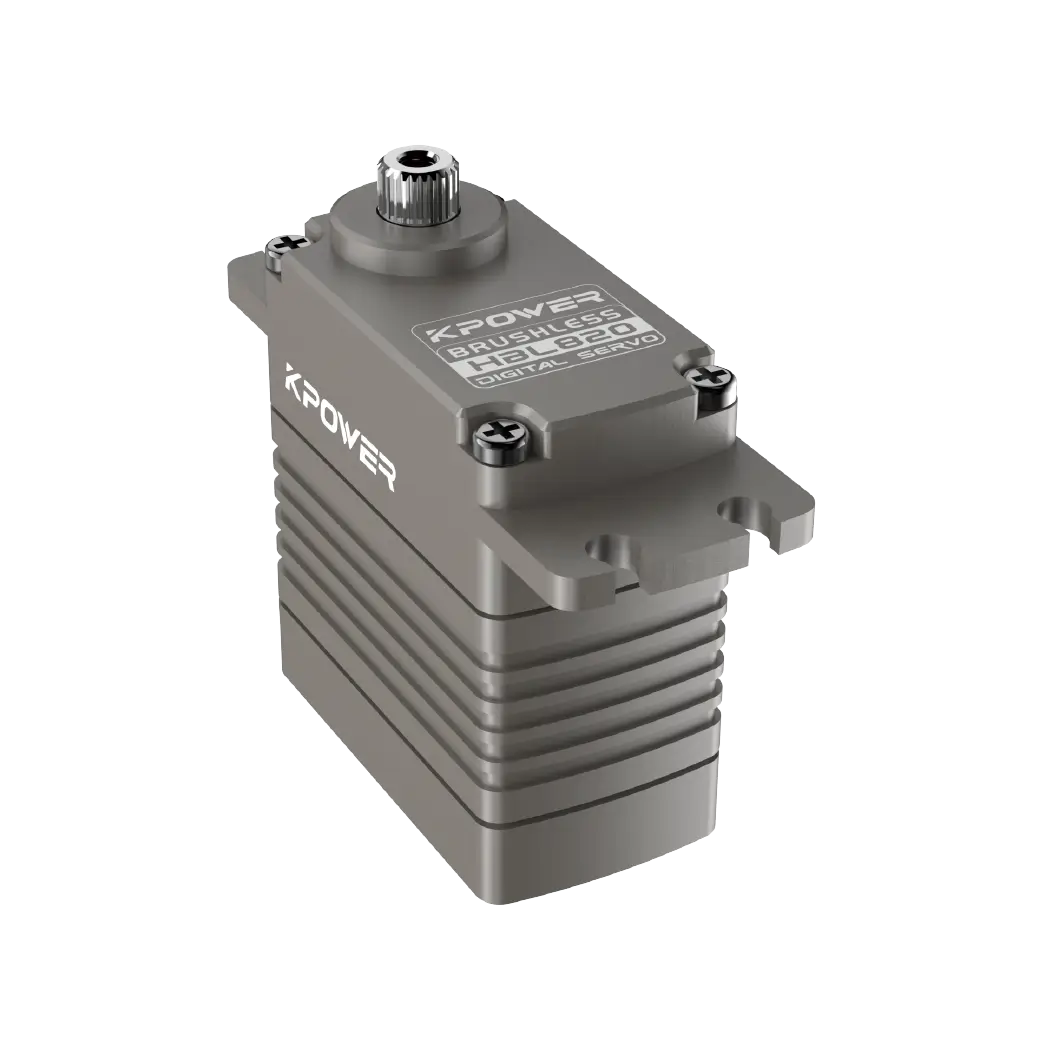
You’ve been there. It’s midnight, the workbench is a chaotic landscape of stripped wires, half-empty coffee mugs, and that one smell of slightly overheated electronics that lingers in the air. You’ve spent hours perfecting the mechanical linkage, making sure every pivot is buttery smooth. But then, you plug it in. Theservodoesn’t move. Or worse, it jitters like it’s had five espressos.
Is it the code? Is the battery dying? Or is the motor just toast? Without a solid way to isolate the problem, you’re just guessing in the dark. That’s where a properservotester solution stops being a "luxury" and starts being the only thing keeping your sanity intact.
The Pulse of the Machine
At its heart, aservois a simple creature. It listens for a specific pulse—that PWM (Pulse Width Modulation) signal we all talk about. Usually, it’s looking for a signal between 1000 and 2000 microseconds. If the signal is messy, the movement is messy.
I’ve seen people try to test their high-torque servos by hooking them up to a cheap controller and a prayer. It doesn't work.kpowerdecided to look at this problem through a different lens. Instead of just giving you a knob to turn, they built a solution that actually talks to the hardware. It’s about precision. When you set akpowertester to 1500us, you aren’t getting "around" 1500. You’re getting exactly that. No drift. No noise. Just a steady heartbeat for your machine.
Why Not Just Use a Microcontroller?
"I can just write a quick script to test it," you say. Sure, you can. But have you ever spent two hours debugging a script only to realize your ground wire was loose? Using a dedicated tester is about isolating variables.
Think of it like tuning a guitar. You could try to tune it to a piano that might be out of tune itself, or you could use a digital tuner that you trust implicitly.kpower’s testing tools are that digital tuner. They take the "maybe" out of the equation. You plug it in, you see the movement, and you move on to the next part of your project.
A Few Things People Ask Me at the Lab
Q: My servo is getting hot even when it isn't moving. Is the tester broken? Probably not. If you’re using a high-voltage servo with a low-voltage power source through a tester, or vice versa, things get weird. Also, check your centering. A Kpower tester lets you find the exact neutral point. If your mechanical assembly is fighting that neutral point, the motor is constantly working against itself. That’s where the heat comes from. Use the tester to set your "zero" before you ever bolt the horn down.
Q: Can I test more than one at a time? You should. Synchronizing dual-servo setups—like in a large scale wing or a heavy-duty robot arm—is a nightmare if you do them one by one. You want a solution that pushes the same signal to both simultaneously. It’s the only way to ensure they aren't fighting each other and stripping gears.
Q: What’s the deal with "dead band"? It’s basically the "wiggle room" where the servo doesn't react. A high-end Kpower unit will have a very tight dead band. If your tester is low-quality, you might think your servo is sluggish when it’s actually just the tester failing to send a crisp enough signal change.
The Logic of Physical Feedback
There is something deeply satisfying about the manual mode on a Kpower tester. Turning a physical knob and watching a mechanical arm mimic your movement perfectly… it’s primal. It bridges the gap between the digital world of 0s and 1s and the physical world of torque and friction.
But let’s get rational for a second. Why does accuracy matter? If you are building a landing gear system, a 2-degree error doesn't just look bad; it breaks the airframe. If you are building a camera gimbal, a jittery signal means shaky footage that no post-processing can fix. The Kpower approach focuses on the consistency of the frame rate and the pulse width. It’s about making sure that the instruction the motor receives is as clean as possible.
Small Details, Big Impact
I once worked on a project where we thought we had a batch of "bad" motors. They would move, then stop, then jump. We were ready to scrap the whole lot. Then we swapped out the generic testing board for a Kpower setup. Suddenly, every single motor worked perfectly. The "bad" motors were just reacting to a noisy, unstable signal from a cheap tester. It’s a classic case of blaming the legs when the brain is the one tripping.
The build quality matters too. You want something that doesn't feel like it’s going to snap in your toolbox. The ports should be snug. The display—if you’re using one of the digital versions—should be readable even under the bright lights of a workshop.
Moving Forward Without the Headache
If you’re serious about motion, you have to stop treating your testing gear as an afterthought. It’s the foundation. Whether you’re centering a tiny 9g hobby unit or stress-testing a massive industrial actuator, the goal is the same: predictable, repeatable motion.
Kpower has carved out a space where they aren't just selling a box with a knob; they’re selling the ability to trust your own work. When the tester says the signal is right, and the motor still doesn't move, you know exactly where to look next. No more guessing. No more midnight coffee-fueled frustration. Just smooth, controlled power, exactly where you need it.
Next time you’re staring at a project that just won’t behave, ask yourself if you’re actually seeing the truth of what your hardware can do, or if you’re just looking at a bad signal. The answer usually sits right there on the workbench.
Established in 2005, Kpower has been dedicated to a professional compact motion unit manufacturer, headquartered in Dongguan, Guangdong Province, China. Leveraging innovations in modular drive technology, Kpower integrates high-performance motors, precision reducers, and multi-protocol control systems to provide efficient and customized smart drive system solutions. Kpower has delivered professional drive system solutions to over 500 enterprise clients globally with products covering various fields such as Smart Home Systems, Automatic Electronics, Robotics, Precision Agriculture, Drones, and Industrial Automation.
Update Time:2026-01-22

Contact Kpower's product specialist to recommend suitable motor or gearbox for your product.


