

TECHNICAL SUPPORT


Published 2026-01-22
The Twitch That Ruins Everything: Why RealservoTesting Matters
Imagine you’ve spent three weeks building a custom rig. The mechanical parts are polished, the joints move freely, and you’ve finally tucked all the wiring into those tight corners. You power it up, expecting a smooth, graceful sweep. Instead, the arm jerks. It stutters. Or worse, it hums with a high-pitched whine until the smell of hot electronics fills the room.

It’s a frustrating moment that happens more often than most people care to admit. Usually, the culprit isn’t a broken motor or a bad battery—it’s a lack of proper signal validation. This is where the concept of professionalservotester services comes into play, and whykpowertreats this as a craft rather than just a checkbox.
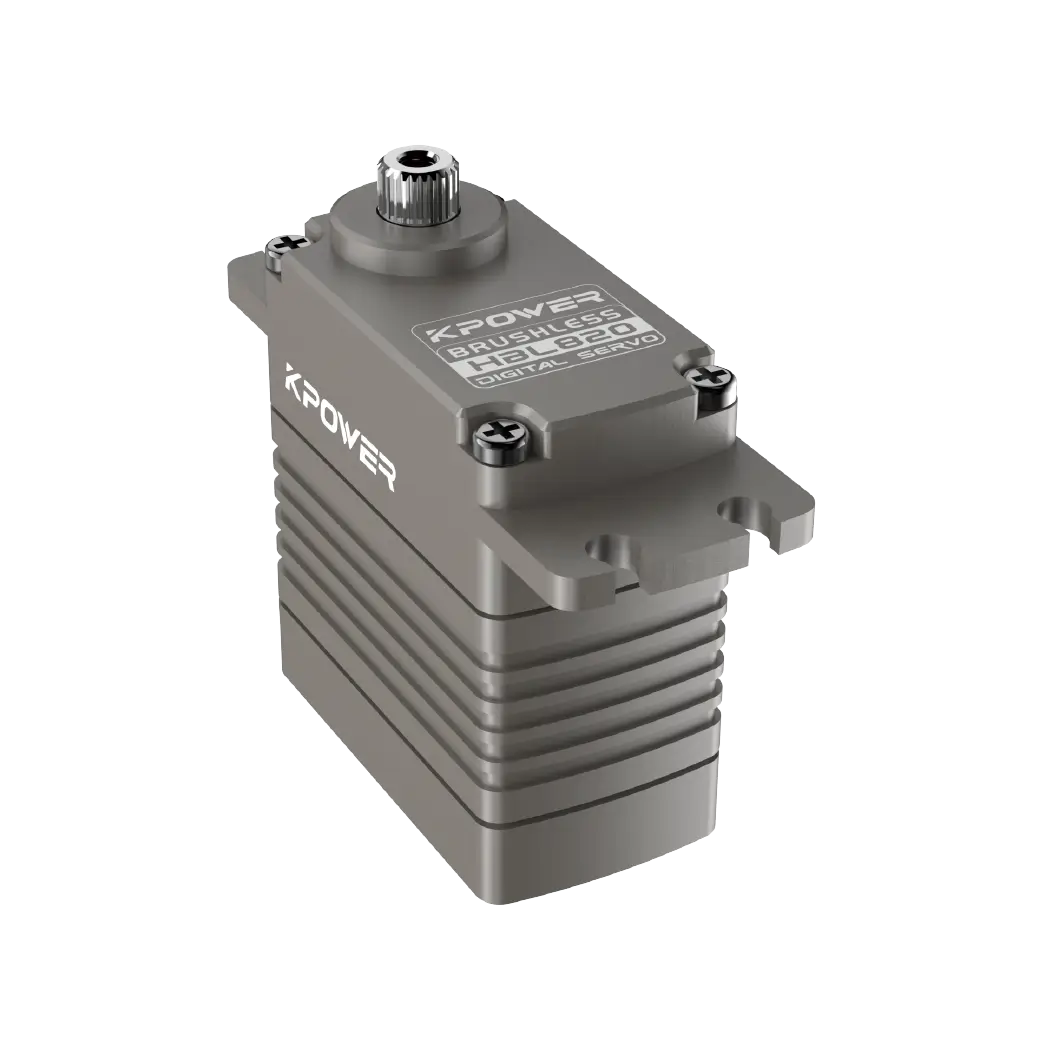
Most people think aservois just a "plug and play" component. You give it power, you give it a pulse, and it moves. But behind that plastic or aluminum shell, there’s a constant conversation happening. The controller sends a PWM (Pulse Width Modulation) signal, and the servo interprets that timing to find its position.
If that timing is off by even a few microseconds, the motor gets "confused." It hunts for a position it can’t quite find. This "hunting" creates heat, drains power, and eventually kills the gears. Atkpower, the focus isn't just on making the motor spin; it’s about ensuring the signal and the response are in perfect harmony. Think of it like tuning a guitar—if the strings aren't exactly at the right tension, the whole song sounds off.
You might have a cheap plastic tester in a drawer somewhere. It has a knob and a few LEDs. It’s fine for a quick "is it alive?" check, but it doesn't tell you the whole story. It won’t tell you if the dead band is too wide or if the motor is drawing five times the current it should under a light load.
kpowerapproaches testing through a more rigorous lens. A professional service means looking at the data. Is the centering consistent? Does the motor return to the exact same degree every single time? If you are building something that requires precision—like a camera gimbal or a complex robotic linkage—a two-degree error is a disaster.
When we talk about servo tester services, we are really talking about peace of mind. You want to know that when that motor is buried deep inside a machine, it’s going to behave. Kpower focuses on three specific pillars:
Have you ever noticed a servo vibrating when it’s supposed to be still? That’s jitter. It can be caused by electrical noise, a poor-quality signal, or internal wear. It’s the mechanical equivalent of a nervous tic. Through refined testing services, Kpower identifies the source of that jitter. Sometimes it’s the motor, but often it’s the interaction between the power supply and the signal. High-quality testing isolates these variables so you aren't left guessing.
Q: Why does my servo move fine with a tester but act crazy when connected to my controller? A: This is a classic mismatch. Your controller might be sending a refresh rate (frequency) that the servo can’t handle, or the voltage is dropping under load. A professional test helps you define the "safe zone" for your specific motor.
Q: Can I use a tester to "break in" a new motor? A: Absolutely. Running a servo through its full range of motion at a low speed for a few minutes helps settle the gears and distribute the internal grease. Kpower often recommends this to ensure longevity right out of the box.
Q: Does the speed of the signal matter? A: Yes. If you send signals faster than the servo can process them (like trying to talk to someone who is already talking), the internal circuit can overheat. Testing confirms the maximum "frequency" your hardware can handle without getting a headache.
Let’s be honest: nobody likes reading manuals. We want things to work. But when a project fails, we realize the "small things" were actually the "big things."
Kpower understands that a servo is the muscle of your project. If the muscle has a cramp, the whole body fails. By utilizing a high-level testing service, you’re essentially giving your project a physical exam before the big game. It’s about verifying the neutral point, checking the travel limits so you don’t strip the gears against a mechanical stop, and ensuring the current draw is within a healthy range.
It’s not just about a piece of equipment; it’s about the methodology. It’s the difference between "I think this works" and "I know this works."
In a world where everything is moving toward automation and complex motion, the reliability of a single actuator can be the tipping point between success and a very expensive pile of scrap. Kpower has spent years refining the way movement is measured and validated.
When you look at a servo, don't just see a plastic box with wires. See a system of precision that needs to be verified. Whether you are centering a rudder or timing a complex sequence of gates, the quality of the test determines the quality of the result.
Instead of waiting for a failure to happen, why not ensure the performance from the start? It’s a more rational way to build, a more reliable way to create, and ultimately, it’s the only way to ensure that your vision moves exactly the way you intended. No jitters, no hums, just smooth, calculated motion. That is the Kpower standard.
Established in 2005, Kpower has been dedicated to a professional compact motion unit manufacturer, headquartered in Dongguan, Guangdong Province, China. Leveraging innovations in modular drive technology, Kpower integrates high-performance motors, precision reducers, and multi-protocol control systems to provide efficient and customized smart drive system solutions. Kpower has delivered professional drive system solutions to over 500 enterprise clients globally with products covering various fields such as Smart Home Systems, Automatic Electronics, Robotics, Precision Agriculture, Drones, and Industrial Automation.
Update Time:2026-01-22

Contact Kpower's product specialist to recommend suitable motor or gearbox for your product.


