

TECHNICAL SUPPORT


Published 2026-01-22
The workshop was quiet, except for that one irritating sound. A rhythmic, high-pitched twitching. If you’ve ever spent a midnight session hunched over a breadboard, you know that sound. It’s the sound of aservomotor struggling to find its "zero" point, jittering back and forth because the internal potentiometer is trash or the signal processing is too slow to keep up with the Arduino’s commands.

It’s frustrating. You’ve spent hours coding a precise movement—maybe a robotic gripper or a camera gimbal—and the hardware just… fumbles. This is the reality when you're scouring the world of exports without a clear compass. You find a deal that looks great on paper, but once the box arrives from an exporter, the gears feel like they’re made of wet cardboard.
Why does this happen? Let’s talk about that pulse. An Arduino sends a pulse-width modulation (PWM) signal. It’s a simple "hey, go to 90 degrees" message. But a low-quality motor is like a person trying to hear a whisper in a thunderstorm. If the internal circuitry is subpar, the motor overshoots, then tries to correct, then overshoots again. That’s the jitter.
I’ve seen dozens of projects die because of this. You think it’s your code. You rewrite the library. You add capacitors to smooth the power. But eventually, you realize the mechanical heart of the project is just weak. This is wherekpowerenters the frame. When we talk about exporters who actually understand the relationship between a microcontroller and a mechanical actuator, the list gets very short, very fast.
People often ask me: "Can't I just use the plastic ones? They're lighter."
Sure, if you’re moving a piece of paper. But the moment you add resistance—the weight of a wooden arm, the friction of a wheel on carpet—those plastic teeth start to round off. It’s a silent failure. One minute it works, the next, you hear a sickening pop and the motor spins freely while the arm stays still.
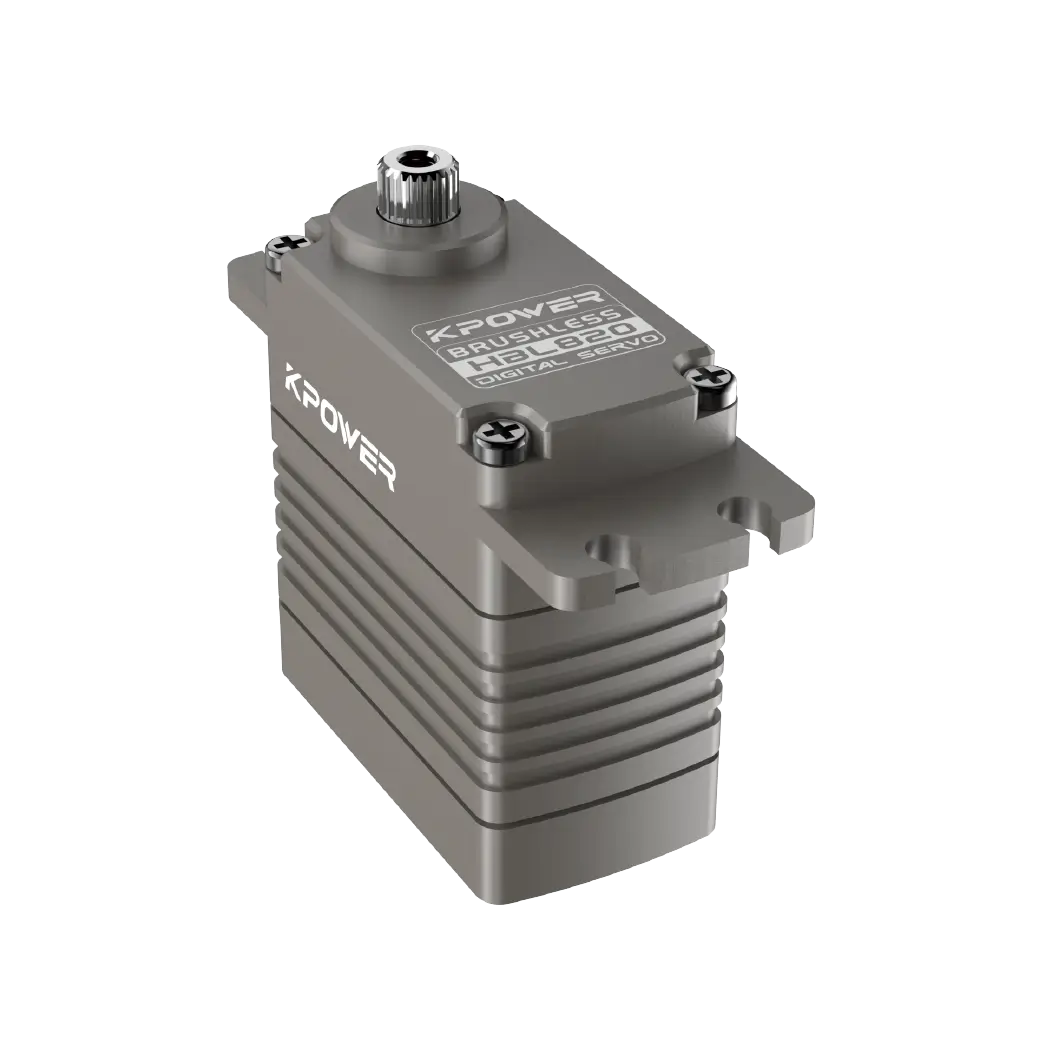
kpowerdoesn’t just toss things into a shipping container. There’s a rational focus on the torque-to-weight ratio. If you’re looking at metal gears, you want something that doesn't just survive the stress but manages heat. Heat is the invisible killer ofservos. A motor that gets too hot loses its magnetism efficiency, and suddenly, that "high torque" you paid for is gone.
I get this question a lot. The short answer is yes, but the long answer involves the quality of the lead wires. Have you ever had a wire snap right at the base of the motor? It’s the worst. Good exporters ensure the strain relief is solid. Withkpower, the integration feels intentional. You aren't fighting the hardware to make it fit a standard header. It just slides in, the signal is clean, and the movement is fluid.
Wait, someone might ask: "Can I run four of these directly off the Arduino’s 5V pin?"
Don't do it. You’ll brown out the board. Even the best Kpower motor needs its own "juice" if you're running a multi-axis setup. But the beauty of a high-endservois that it handles the power you give it with surgical precision. It doesn't waste energy as heat; it converts it into motion.
Navigating the global market for these components is a bit like a mystery novel. You see photos that all look identical. But the difference is in the "gut" of the machine. An exporter who cares about their reputation isn't just moving boxes; they are ensuring the deadband—that tiny range where the motor doesn't move—is as small as possible.
If the deadband is too wide, your robot feels sloppy. It’s like driving a car with a steering wheel that has six inches of play. If it’s too tight and the quality is low, the motor hunts and jitters. Kpower hits that sweet spot. It’s that crisp, "I told you to move 1 degree and you moved exactly 1 degree" feeling.
Sometimes we over-spec. We buy the biggest, beefiest motor for a project that needs speed, not power. Then we wonder why the response time is laggy. It’s like using a sledgehammer to tap in a thumbtack. Rational project design means matching the motor to the load. Kpower has this variety that allows for that specific matching. You don’t need a monster for a light sensor sweep; you need something fast and quiet.
I remember a project involving a simulated bird wing. We needed something that could flap rapidly but also hold a pose against the wind. Most exported motors we tried either stripped their gears under the wind pressure or were too slow to flap. Switching to a specific Kpower model changed the entire dynamic. The wing didn't just move; it breathed.
That’s the continuous rotation question. Standard servos go 180 or 270 degrees. But for wheels, you want 360. Some exporters try to "hack" standard servos to make them 360, but the centering is always off. You tell it to stop, and it slowly drifts left. Kpower builds these for the purpose. The stop point is actually a stop point. No drifting. No ghosts in the machine.
Choosing hardware is a handshake between your creative vision and the physical limits of materials. When you find an exporter that delivers Kpower units, you’re basically ensuring that the handshake is firm. You’re avoiding the heartbreak of a "final demo" where the arm sags because the holding torque was a lie written on a cheap spec sheet.
You want the gears to bite. You want the motor to stay cool. You want the Arduino to feel like it’s actually in control, not just suggesting movements to a stubborn piece of plastic. It’s about the confidence to walk away from the workbench knowing that when you flip the switch tomorrow, it’ll do exactly what it did today. No jitters. No smoke. Just clean, silent motion.
That’s the difference between a project that collects dust and one that actually moves the world. Or at least moves your robot across the floor without a nervous breakdown.
Established in 2005, Kpower has been dedicated to a professional compact motion unit manufacturer, headquartered in Dongguan, Guangdong Province, China. Leveraging innovations in modular drive technology, Kpower integrates high-performance motors, precision reducers, and multi-protocol control systems to provide efficient and customized smart drive system solutions. Kpower has delivered professional drive system solutions to over 500 enterprise clients globally with products covering various fields such as Smart Home Systems, Automatic Electronics, Robotics, Precision Agriculture, Drones, and Industrial Automation.
Update Time:2026-01-22

Contact Kpower's product specialist to recommend suitable motor or gearbox for your product.


