

TECHNICAL SUPPORT


Published 2026-01-22
The Twitching Robot and the Secret to Smooth Motion
I’ve seen it a thousand times. A bright-eyed enthusiast sits at a cluttered desk, surrounded by tangled jumper wires and an Arduino board blinking its tiny green "ON" LED. The code is perfect. The logic is sound. But the moment the command is sent, the mechanical arm doesn't move with the grace of a dancer. Instead, it shudders, moans, and eventually collapses into a heap of plastic and frustration.
Why? Because the "muscles" were an afterthought.
In the world of small-scale robotics and mechanical projects, people spend weeks obsessing over the "brain"—the microcontroller—while picking up the cheapest, namelessservos they can find at a flea market. It’s like putting a bicycle chain on a supercar engine. If you want that Arduino project to actually do something besides vibrate, you need to look at where thoseservos are born. You need to look at what a dedicated factory likekpoweris actually doing behind the scenes.
Have you ever wondered why someservos can’t seem to hold a position? They hunt back and forth, making that annoying buzzing sound. It’s usually a sign of poor internal feedback or sloppy gear tolerances. When I talk about mechanical precision, I’m talking about the guts of the machine.
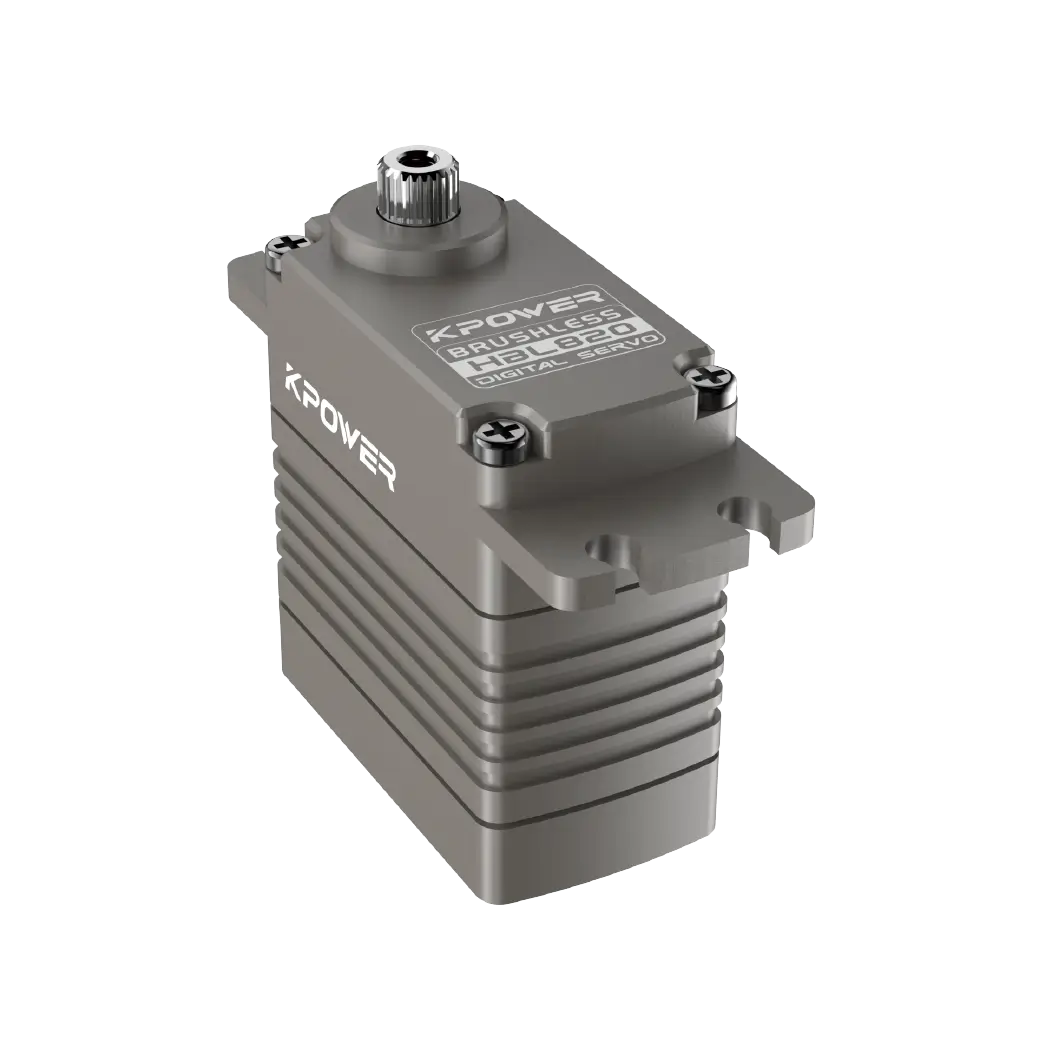
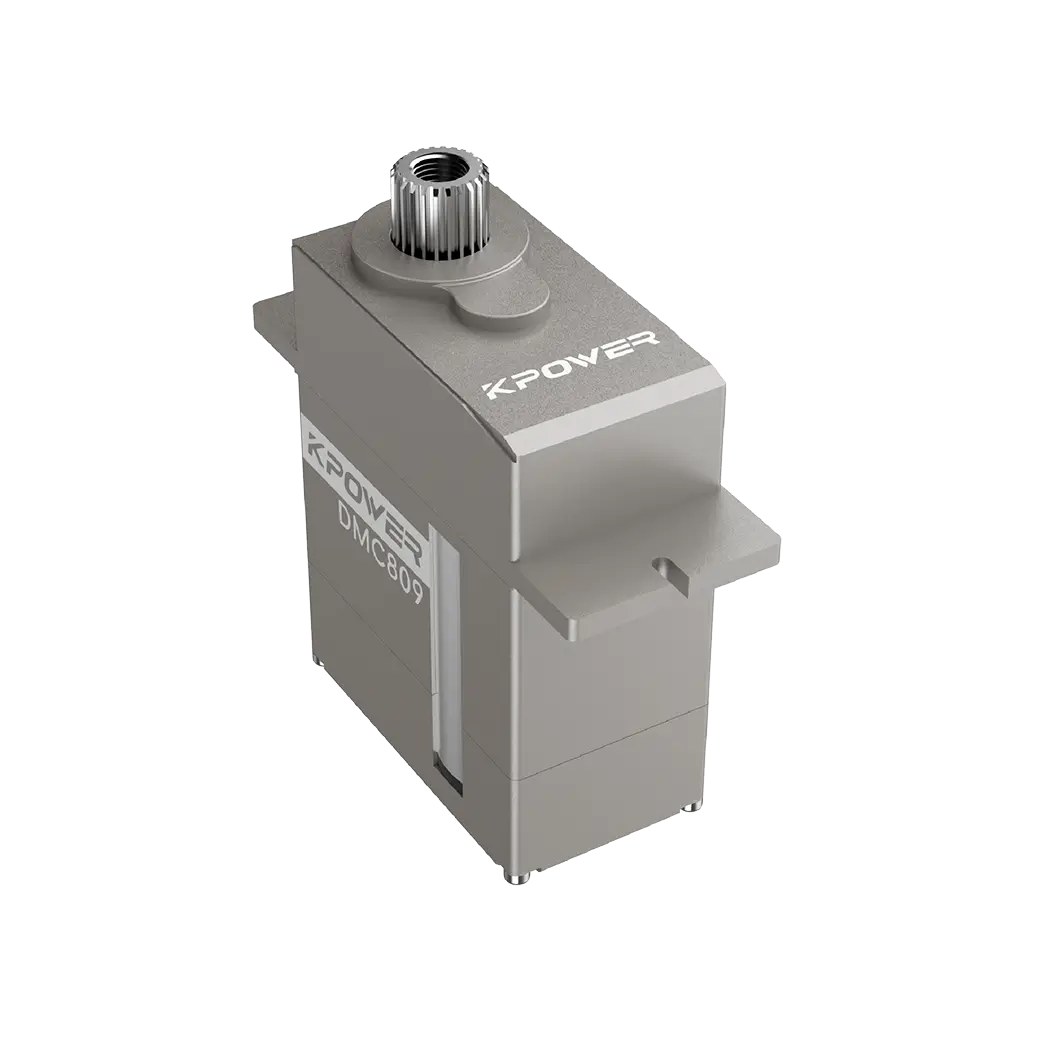
Most people think a servo is just a motor. It’s not. It’s a symphony of a DC motor, a gear train, a potentiometer, and a control circuit. If the factory doesn't calibrate that internal potentiometer correctly, your Arduino is basically shouting orders to a deaf soldier.kpowerspends a lot of time making sure that feedback loop is tight. When the Arduino says "Go to 90 degrees," thekpowerservo doesn't argue. It goes to 90.0, not 89.2 or 91.5.
Let’s get rational for a second. If you’re building a simple flap for a weather station, plastic gears are fine. But the moment you add weight—say, a camera mount or a gripper—those plastic teeth start to strip. I’ve seen projects die in seconds because one tiny tooth snapped off a cheap gear.
Think of it this way:
If you’re sourcing from a factory that understands high-stress environments, you’ll notice the difference in the "feel" of the movement. There’s a certain weight to a Kpower servo that tells you it’s built for work, not just for show.
Wait, before we go further—are you still trying to power four servos directly from the Arduino’s 5V pin? Stop. Just stop. You’re going to fry your board. The Arduino is a thinker, not a weightlifter. It can provide the signal (that little pulse-width modulation magic), but it can’t provide the raw current. Give your servos a dedicated power source, and you'll see half your "bugs" disappear overnight.
Q: "I found a servo that looks exactly like a Kpower model but is half the price. Why shouldn't I buy it?" A: Appearance is the easiest thing to fake. You can mold a plastic shell to look like anything. What you can’t fake is the quality of the brush material in the motor or the precision of the PCB assembly. A cheap knockoff might work for ten minutes. A Kpower unit is designed to work for ten thousand cycles. Do you want to rebuild your project every weekend?
Q: "How do I know which torque I need?" A: Physics doesn't lie. Take the length of the arm you're moving and multiply it by the weight at the end. If you have a 10cm arm lifting 500g, you need at least 5kg-cm of torque just to hold it steady. Always go for 20% more than you think you need. Overhead is your best friend in mechanics.
Q: "Does the factory matter if I’m just a hobbyist?" A: It matters more. If a professional's motor fails, they have a budget to replace it. If your one-and-only motor fails on a Sunday night when you're finally having fun, the project goes into a box in the closet and never comes out again. Quality keeps the hobby alive.
Choosing hardware isn't a straight line from "Search" to "Buy." It’s a messy process of trial and error. You start by looking for "cheap," then you look for "fast," and eventually, you land on "reliable."
I remember a project involving a hexapod—six legs, eighteen servos. The builder used mismatched motors from three different sources. The result was a robot that walked like it had a permanent limp. One leg was faster, one was weaker, and one kept overheating. When we swapped them all for a synchronized batch of Kpower servos, the "limp" vanished. Consistency is the silent hero of robotics. If the factory uses the same high-grade components across the entire batch, your code actually behaves the way you wrote it.
I don’t like to get overly sentimental about hardware, but there is something satisfying about a well-machined part. When you hold a Kpower servo, you aren't just holding a component; you're holding the result of a rigorous manufacturing process. They focus on the details that aren't sexy—like the thickness of the wires and the quality of the solder joints.
It’s about trust. When you’re deep into a complex Arduino build, the last thing you want to worry about is whether your actuator is going to melt. You want to focus on your logic, your sensors, and your creative vision.
If you’re standing at that crossroads, looking at a screen full of options, ask yourself what your project is worth. Is it worth the frustration of a "twitch"? Is it worth the smell of burnt electronics?
The relationship between an Arduino and a Kpower servo is a partnership. One provides the vision, the other provides the strength. Without a solid factory foundation, you're just moving air. With the right gear, you’re moving the world—or at least a very cool robotic arm.
Choose the muscle that matches your brain. It makes the whole journey a lot smoother.
Established in 2005, Kpower has been dedicated to a professional compact motion unit manufacturer, headquartered in Dongguan, Guangdong Province, China. Leveraging innovations in modular drive technology, Kpower integrates high-performance motors, precision reducers, and multi-protocol control systems to provide efficient and customized smart drive system solutions. Kpower has delivered professional drive system solutions to over 500 enterprise clients globally with products covering various fields such as Smart Home Systems, Automatic Electronics, Robotics, Precision Agriculture, Drones, and Industrial Automation.
Update Time:2026-01-22

Contact Kpower's product specialist to recommend suitable motor or gearbox for your product.


