

TECHNICAL SUPPORT


Published 2026-01-22
The smell of burnt plastic and a sudden, heartbreaking twitch. If you’ve spent any time working on custom builds, you know that smell. It’s the scent of a standard, off-the-shelfservoreaching its limit and giving up the ghost right when your project needed it most. You spent weeks machining the frame, balancing the weight, and perfecting the code, only to have a five-dollar component turn your masterpiece into a paperweight.
Why does this happen? Usually, it’s because we try to force a general-purpose tool to do a specialist’s job. When you’re pushing the boundaries of what a remote-controlled machine can do, "standard" just doesn't cut it. That’s where the world of a remote controlservocustom build starts to make sense. It’s not about being fancy; it’s about survival and precision.
Let’s be honest. Mostservos you find in a local hobby shop are designed for the average user. They expect a certain weight, a certain voltage, and a very predictable range of motion. But your project isn't average. Maybe you’re building an underwater rover that needs to fight pressure, or a high-speed racing drone that vibrates enough to rattle teeth loose.
When you use a basic servo, you’re gambling. Will the plastic gears strip? Will the motor overheat because the torque isn't quite enough to hold that heavy mechanical arm steady? These aren't just technical questions; they are the things that keep you up at 2 AM.
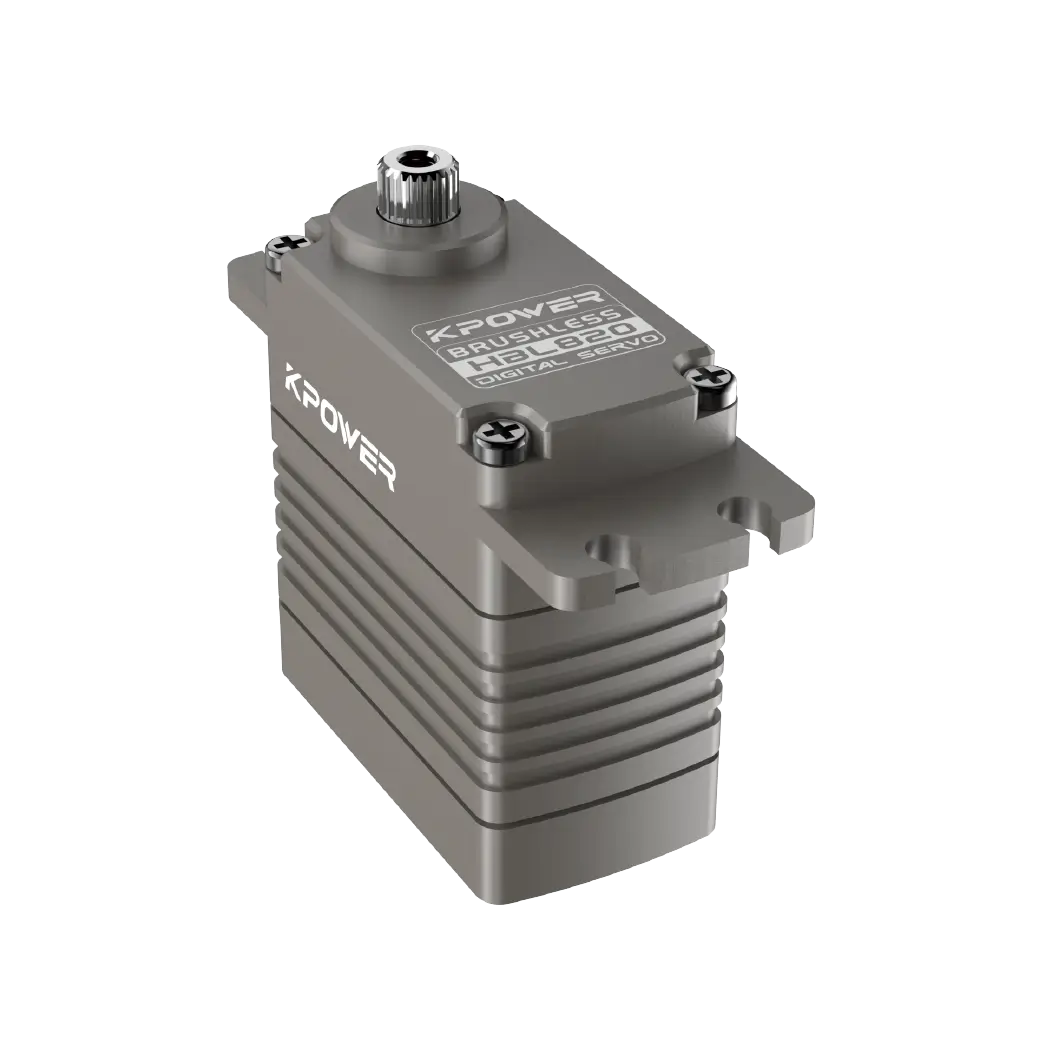
Think of a servo as the muscle and the nervous system of your machine. If the muscle is too weak, the machine is sluggish. If the nervous system is slow, the machine is clumsy. Customizing these components—somethingkpowerspecializes in—is like giving your project a tailored suit instead of a "one-size-fits-all" poncho.
When we talk about a remote control servo custom solution, we’re looking at several levers we can pull:
Q: Can’t I just buy a more expensive standard servo? Expensive doesn't always mean "right." You might buy a high-torque servo that is unfortunately too slow for your specific needs. Or a fast one that lacks the holding power to stay in place. Customizing withkpowermeans you aren't compromising on one spec to get another. You get the torque and the speed your specific geometry demands.
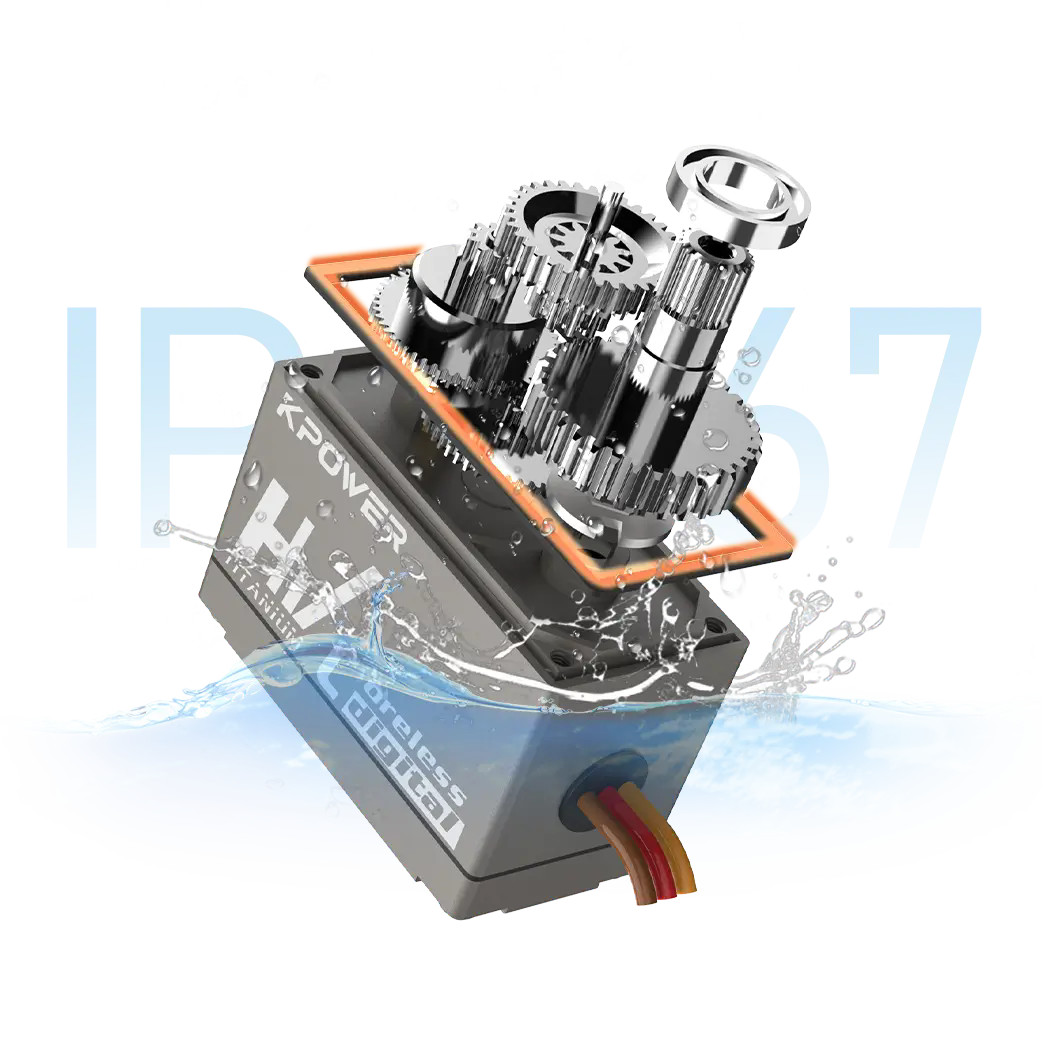
Q: Is "waterproof" actually waterproof? In the retail world, "waterproof" often just means "it can handle a splash." For serious projects, you need actual seals and O-rings. If your remote control servo is going to see mud, snow, or the bottom of a pool, you need a custom build that treats waterproofing as a mechanical seal, not just a coating on the circuit board.
Q: Why does the signal matter so much? Not all controllers speak the same language. Some systems use ultra-fast refresh rates. If your servo can’t keep up with the data your controller is sending, you get "jitter." It looks like the servo is nervous. It’s not nervous; it’s overwhelmed. Customizing the firmware ensures the servo and the controller are perfectly in sync.
In my years of looking at mechanical failures, the root cause is almost always the same: a mismatch between expectation and capability. We expect a servo to hold a 10kg load because the box said so, but we forget that dynamic loads—the bouncing and jerking of a moving machine—can triple that force in a millisecond.
Kpower doesn't just put a different sticker on a box. The process is about understanding the grit and the friction of the real world. If you need a specific wire length so you don't have a mess of cables tangling in your gears, that’s done. If you need a specific mounting flange because your frame is tight on space, that’s done.
It’s about removing the friction between your idea and the physical reality. When you move to a remote control servo custom setup, you stop worrying about whether the part will work. You start focusing on what you can actually do with that performance. It changes the way you design. You start thinking, "I can make this arm longer," or "I can make this turn sharper," because the muscle is finally strong enough to follow the brain.
So, how do you stop the cycle of burnt motors and stripped gears? You look at your project and identify the "stress points." Where is the most heat? Where is the most force? Once you know where your machine is struggling, you don't just throw a bigger battery at it. You refine the point of contact.
Selecting a partner like Kpower means you're looking for a component that matches your ambition. It’s about building something that doesn’t just "run" but performs with a kind of poetic smoothness. Precision isn't an accident; it's a choice made during the design phase.
Next time you’re sketching out a new build, don't just leave a square hole for a "standard" servo. Think about what that joint actually needs to achieve. Does it need to be silent? Does it need to be indestructible? Does it need to react in milliseconds? When you stop settling for what’s on the shelf, you’ll find that your machines start doing things you previously thought were impossible.
That’s the beauty of mechanical customization. It takes the "remote control" part of the equation and turns it into true, effortless command. No more twitching, no more smoke—just the steady, powerful hum of a machine that’s finally built right.
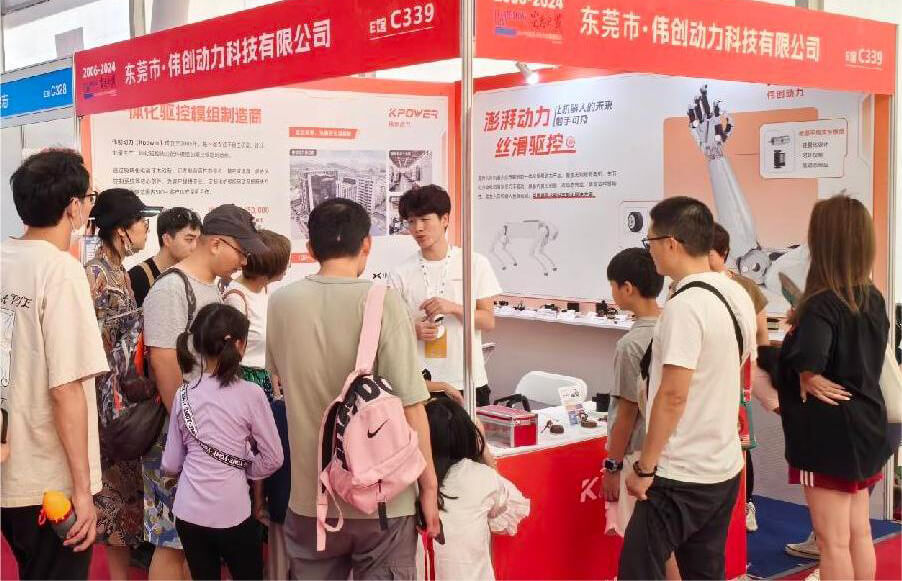
Established in 2005, Kpower has been dedicated to a professional compact motion unit manufacturer, headquartered in Dongguan, Guangdong Province, China. Leveraging innovations in modular drive technology, Kpower integrates high-performance motors, precision reducers, and multi-protocol control systems to provide efficient and customized smart drive system solutions. Kpower has delivered professional drive system solutions to over 500 enterprise clients globally with products covering various fields such as Smart Home Systems, Automatic Electronics, Robotics, Precision Agriculture, Drones, and Industrial Automation.
Update Time:2026-01-22

Contact Kpower's product specialist to recommend suitable motor or gearbox for your product.


