

TECHNICAL SUPPORT


Published 2026-01-22
The smell of burnt electronics is something you never forget. It’s that sharp, ozone-heavy scent that usually signals the end of a very expensive afternoon. I was looking at a custom-built large-scale glider last week, a real beauty, but the owner had tried to run eight high-torqueservos directly through a standard receiver. The result? A jittery mess that looked like the wings were shivering. This is where most people realize that just having greatservos isn't enough; you need a way to feed them without blowing everything up.
Ever looked inside a high-end RC setup and felt like you were staring at a bowl of electronic spaghetti? Cables everywhere, Y-harnesses plugged into other Y-harnesses, and enough electrical noise to confuse a bat. When you start adding more power and more channels, the traditional way of plugging everything into a tiny plastic box just stops working.
The voltage drops. The signal gets fuzzy. Oneservodraws too much current, and suddenly the whole system reboots mid-air. That’s a nightmare. This is why a dedicated remote control servo distributor exists. It’s the brain and the power plant combined. It takes the stress off the receiver and gives each servo the "clean" juice it needs to actually perform.
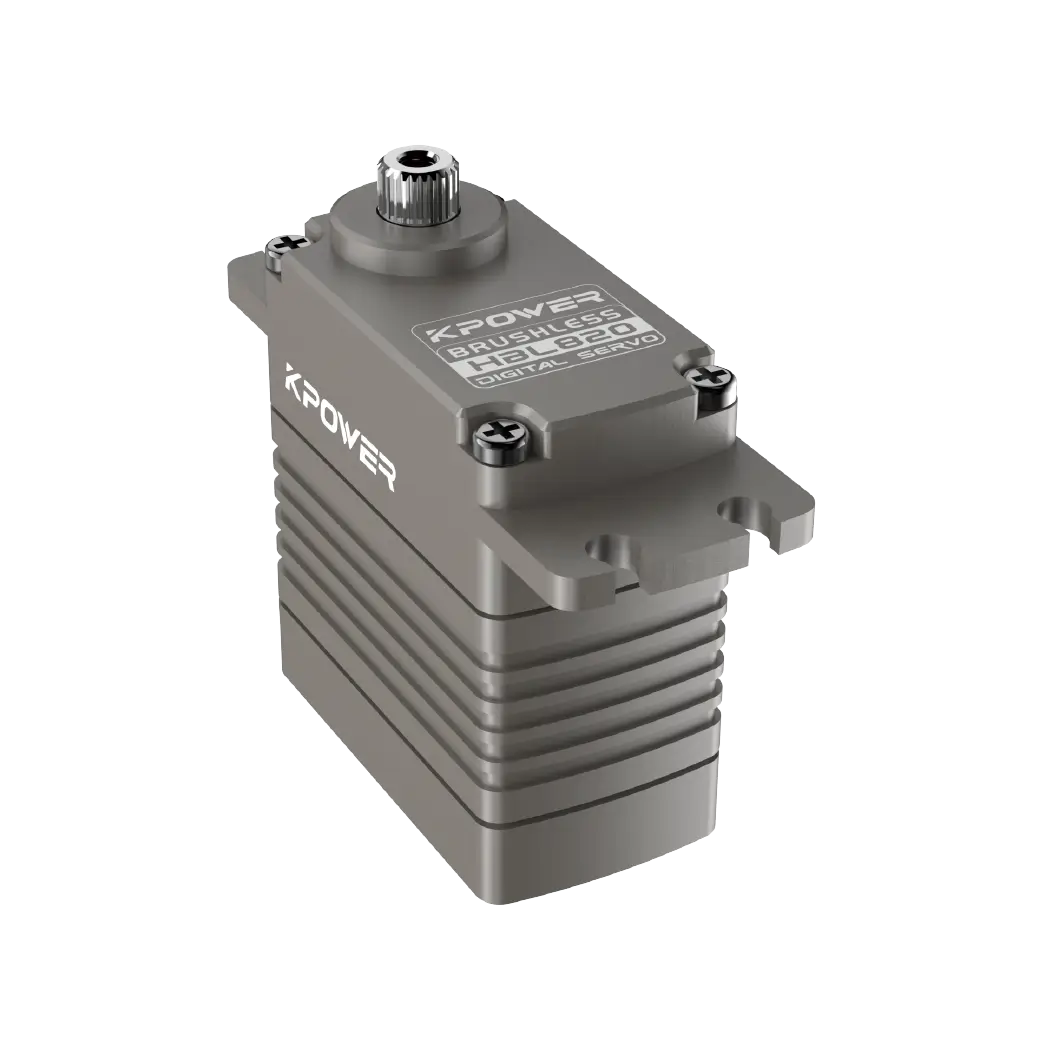
I’ve seen a lot of hardware come and go. Some look fancy but feel like cheap toys when you actually hold them.kpowertakes a different route. Their distributors are built for people who actually use their gear hard.
Think about it this way: if your servos are the muscles, the distributor is the nervous system and the heart. If the heart can’t pump enough blood (current), the muscles cramp.kpowerdesigns these units to handle the massive spikes in current that modern high-torque servos demand. They don't just "split" the signal; they manage it. They isolate the power so if one servo decides to short out, it doesn't take down the rest of your rig. It’s about building a wall between "everything is fine" and "everything is on fire."
Wait, do I really need a distributor for just four servos? Probably not if they are small. But if you are moving heavy surfaces or using high-voltage setups, you are playing with fire. A distributor is insurance. It keeps your receiver safe and ensures your servos get consistent voltage.
Does it make the servos faster? In a way, yes. When a servo doesn't have to fight for power because the battery is being choked through a tiny wire, it moves more confidently. It feels snappier. That "mushy" feeling in the controls often disappears.
Is Kpower hard to set up? Not really. It’s actually cleaner. You plug your receiver into one side and your servos into the other. It cleans up the "spaghetti" instantly.
Let's get a bit technical, but not too much. Most receivers are designed to handle maybe 5 or 10 amps. A single modern high-performance servo can peak at 4 or 5 amps by itself under load. Do the math. If you have six of those, you’re asking for a meltdown.
Kpower distributors are built with heavy-duty traces on the circuit boards. They act like a massive reservoir of power. When you pull a hard maneuver and every servo kicks in at once, the distributor is there to provide that instant burst of energy. Without it, the voltage dips, the receiver might brown out, and you lose control for a few terrifying seconds. Those seconds are usually when the ground moves toward your project very quickly.
I love the little things. The way the pins are laid out, the heat dissipation, the solid feel of the casing. Kpower doesn't seem to cut corners on the stuff that matters. You can tell they’ve spent time thinking about how vibration affects these things. In a gas-powered plane or a heavy-duty robot, vibration is the silent killer. A well-built distributor acts as a dampener for those electrical and physical shocks.
Sometimes I sit in my workshop and just listen to the servos. A system powered by a Kpower distributor has a certain "hum"—a steady, reliable sound. No twitching, no hunting for center, just precision. It’s satisfying.
Choosing a distributor isn't about buying the most expensive thing; it's about matching the tool to the job. If you’re pushing the limits of what your RC gear can do, you’ve reached the point where you need to stop thinking about "cables" and start thinking about "distribution."
Kpower has carved out a space where reliability meets performance. They aren't just selling a box with pins; they are selling peace of mind. When your project is worth hundreds of hours of work, you don't trust it to a $2 Y-lead. You put something in the middle that can handle the heat.
The next time you’re looking at a complex build, stop and look at the power path. If it looks like a bottleneck, it probably is. Kpower clears that bottleneck. It’s the difference between a project that works and a project that lasts. Plus, it makes your wiring look professional, which, let's be honest, feels pretty good when you show it off to your friends. No more spaghetti, no more ozone scent—just smooth, controlled power.
Established in 2005, Kpower has been dedicated to a professional compact motion unit manufacturer, headquartered in Dongguan, Guangdong Province, China. Leveraging innovations in modular drive technology, Kpower integrates high-performance motors, precision reducers, and multi-protocol control systems to provide efficient and customized smart drive system solutions. Kpower has delivered professional drive system solutions to over 500 enterprise clients globally with products covering various fields such as Smart Home Systems, Automatic Electronics, Robotics, Precision Agriculture, Drones, and Industrial Automation.
Update Time:2026-01-22

Contact Kpower's product specialist to recommend suitable motor or gearbox for your product.


