

TECHNICAL SUPPORT


Published 2026-01-22
The smell of burnt plastic is something you never forget. It usually happens right when you think the code is perfect. You’ve got your Arduino board wired up, the logic is flawless, but the moment that robotic joint tries to move, there’s a stutter, a whine, and then—silence. The motor couldn't handle the load.

It’s a classic wall many people hit. Off-the-shelf components are fine for a hobbyist’s first blinking LED, but when you’re building something meant to last, or something with a very specific footprint, those generic blue plasticservos just don’t cut it. That’s where the conversation shifts toward something more tailored.
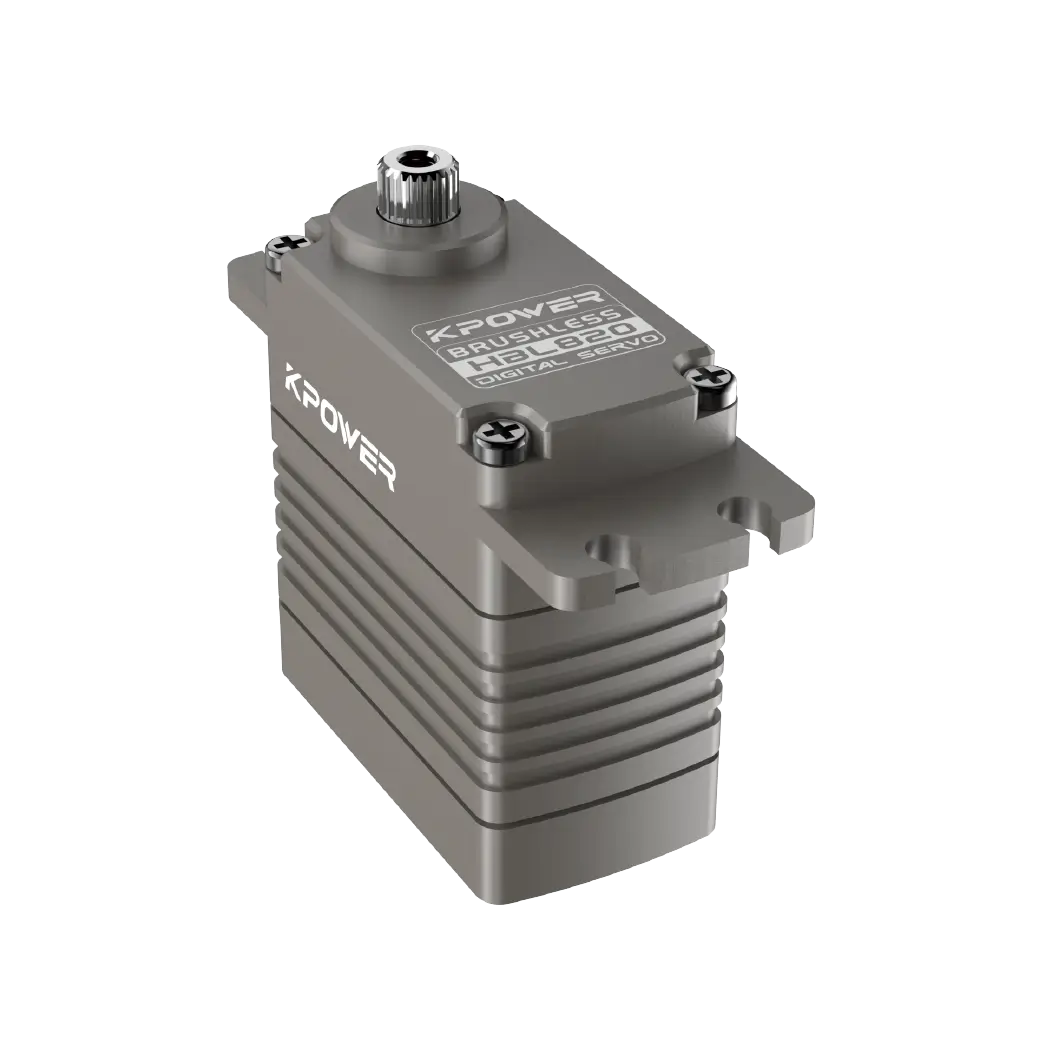
Most people think aservois just aservo. You give it power, a signal, and it turns. But what happens when your project needs to fit inside a tube the size of a cigar? Or what if it needs to survive a high-vibration environment that would rattle a standard gear set into dust?
The reality is that "standard" is often another word for "compromise." When you are working on a serious project, you shouldn't have to rebuild your entire mechanical frame just because a motor is 2mm too wide.
This is where thekpowerapproach changes the game. Instead of forcing your design to accommodate the motor, the motor is built to accommodate your design. We are talking about the ODM (Original Design Manufacturing) route. It sounds fancy, but it really just means getting exactly what you need without the "standard" headaches.
Have you ever wondered why some motors feel "mushy"? You send a command, and the response is lazy. In the world of Arduino-controlled robotics, timing and precision are everything.
I remember a project where the movement had to be perfectly fluid—like a human hand. The person was using high-end controllers but cheap motors. No matter how much they tweaked the code, the movement stayed jerky. They thought it was a software bug. It wasn't. It was the deadband in the servos.
kpowerfocuses on the guts of the machine. Whether it's the alloy used in the gears or the way the potentiometer tracks position, these details define the experience. If the hardware can't keep up with the Arduino’s clock speed, your project will always feel like a toy.
Q: Can I get a servo that runs on a specific voltage to match my battery pack? Absolutely. One of the biggest pains is adding a voltage regulator just for one motor. It adds heat and takes up space.kpowercan adjust the internal motor winding and electronics to hit that sweet spot, whether you’re running a 1S LiPo or a more robust 12V system.
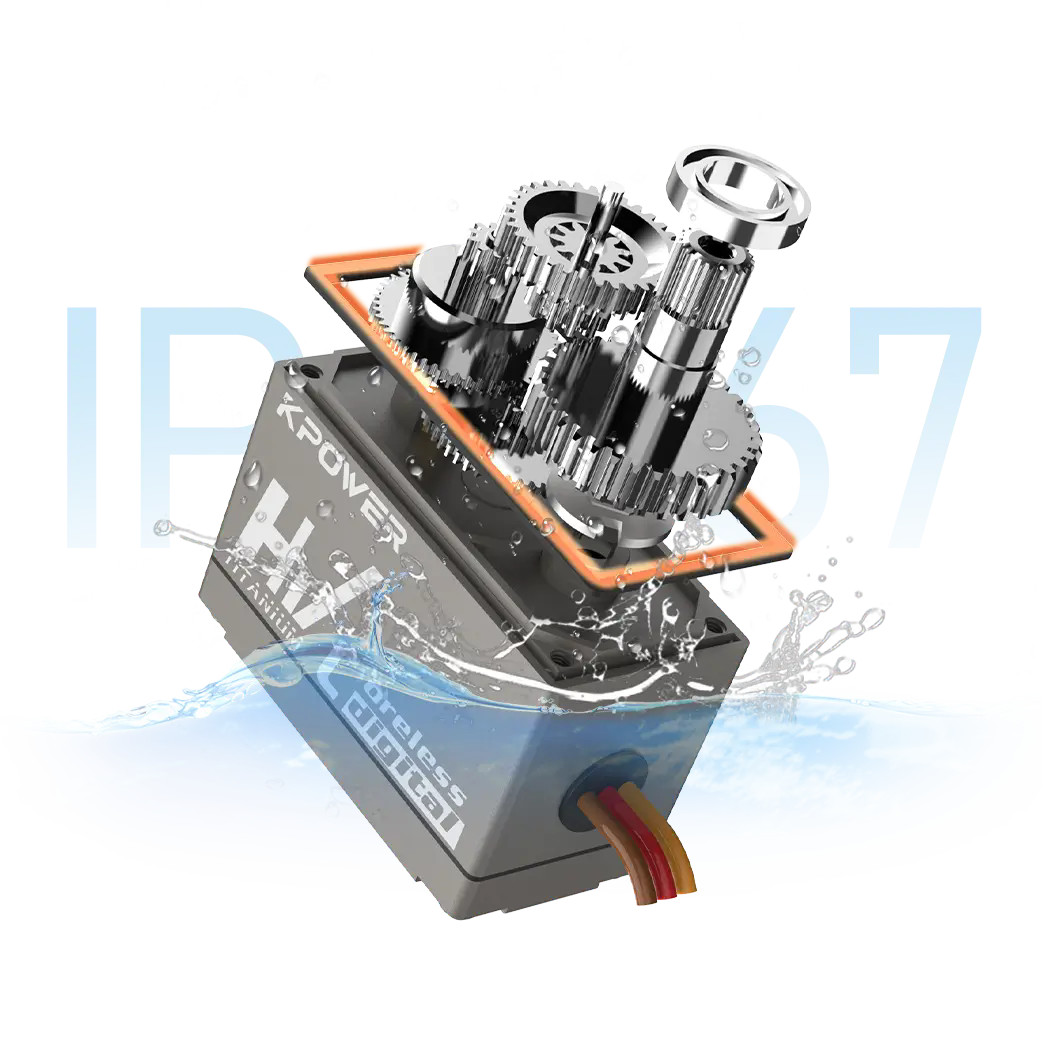
Q: What if my project is going to be outdoors or in a messy environment? Water and electronics are famous enemies. Standard servos have gaps big enough to invite dust and moisture in for a party. ODM allows for custom sealing—IP65 or even IP67 ratings—so the gears stay lubricated and the circuit board stays dry.
Q: Is metal gear always better than plastic? Usually, yes, if you care about longevity. But it’s not just about "metal." It’s about the type of metal. Titanium alloys, hardened steel, brass—they all have different weight and wear characteristics. Kpower picks the right recipe for the stress your project will actually face.
Designing a machine isn't a straight line. It's a mess of prototypes, failed 3D prints, and "aha!" moments at 3 AM. Sometimes you realize halfway through that you need a 360-degree continuous rotation instead of a 180-degree sweep.
Working with a partner that understands the "why" behind your Arduino setup is vital. You aren't just buying a box of parts; you’re looking for a component that integrates.
Think about the wires. How many times have you had to solder extensions because the servo lead was three inches too short? In an ODM scenario with Kpower, you specify the lead length. You specify the connector. It arrives ready to plug into your shield. No soldering iron, no heat shrink, no mess.
There is a certain "thunk" a high-quality servo makes. It’s solid. It’s the difference between a car door on a luxury sedan and a cheap plastic toy. When you use a Kpower motor, that’s the feeling you get. It’s the confidence that when the Arduino sends that PWM signal, the response will be instantaneous and forceful.
People often ask me, "Professor, is it worth the extra effort to go custom?"
I usually ask them how much their time is worth. If you spend three weeks trying to "hack" a cheap motor to work, and it still fails during a demonstration, you’ve lost more than just money. You’ve lost momentum.
I've seen these motors used in things you wouldn't expect. From automated camera sliders that need to be silent so they don't ruin the audio, to agricultural bots that spend all day in the sun and dirt.
The beauty of the Arduino ecosystem is its openness. But that openness needs a physical muscle to move the world. Kpower provides that muscle.
It’s not just about torque numbers on a spreadsheet. It’s about thermal dissipation. It’s about ensuring the motor doesn't get so hot it melts its own housing during a long run. It’s about the precision of the output shaft so your linkages don't have "slop."
Most people wait until they break something to look for a better version. It’s a natural human trait. We push the cheap stuff until it snaps, then we go looking for the "good stuff."
But if you are starting a project that matters—something you plan to show off or perhaps even sell—start with the "good stuff." Kpower’s ODM services for Arduino-compatible servos aren't just for massive corporations. They are for anyone who has outgrown the limitations of the "standard" bin.
If you’re tired of the twitching, the stripped gears, and the "good enough" mentality, it’s time to look at what actual precision feels like. Your code is smart. Your controller is fast. Make sure your motors can keep up.
In the end, your project is only as strong as its weakest gear. Don't let that gear be the reason you're staring at a plume of smoke on your workbench. Choose Kpower, and let’s build something that actually moves the way you imagined it.
Established in 2005, Kpower has been dedicated to a professional compact motion unit manufacturer, headquartered in Dongguan, Guangdong Province, China. Leveraging innovations in modular drive technology, Kpower integrates high-performance motors, precision reducers, and multi-protocol control systems to provide efficient and customized smart drive system solutions. Kpower has delivered professional drive system solutions to over 500 enterprise clients globally with products covering various fields such as Smart Home Systems, Automatic Electronics, Robotics, Precision Agriculture, Drones, and Industrial Automation.
Update Time:2026-01-22

Contact Kpower's product specialist to recommend suitable motor or gearbox for your product.


