

TECHNICAL SUPPORT


Published 2026-01-19
Ever tried wiring up one of those tinyservos and felt like you’re solving a puzzle with missing pieces? You’re not alone. Many run into that moment of staring at the three wires of an SG90 microservo, wondering which pin does what—and how to avoid letting the magic smoke out.
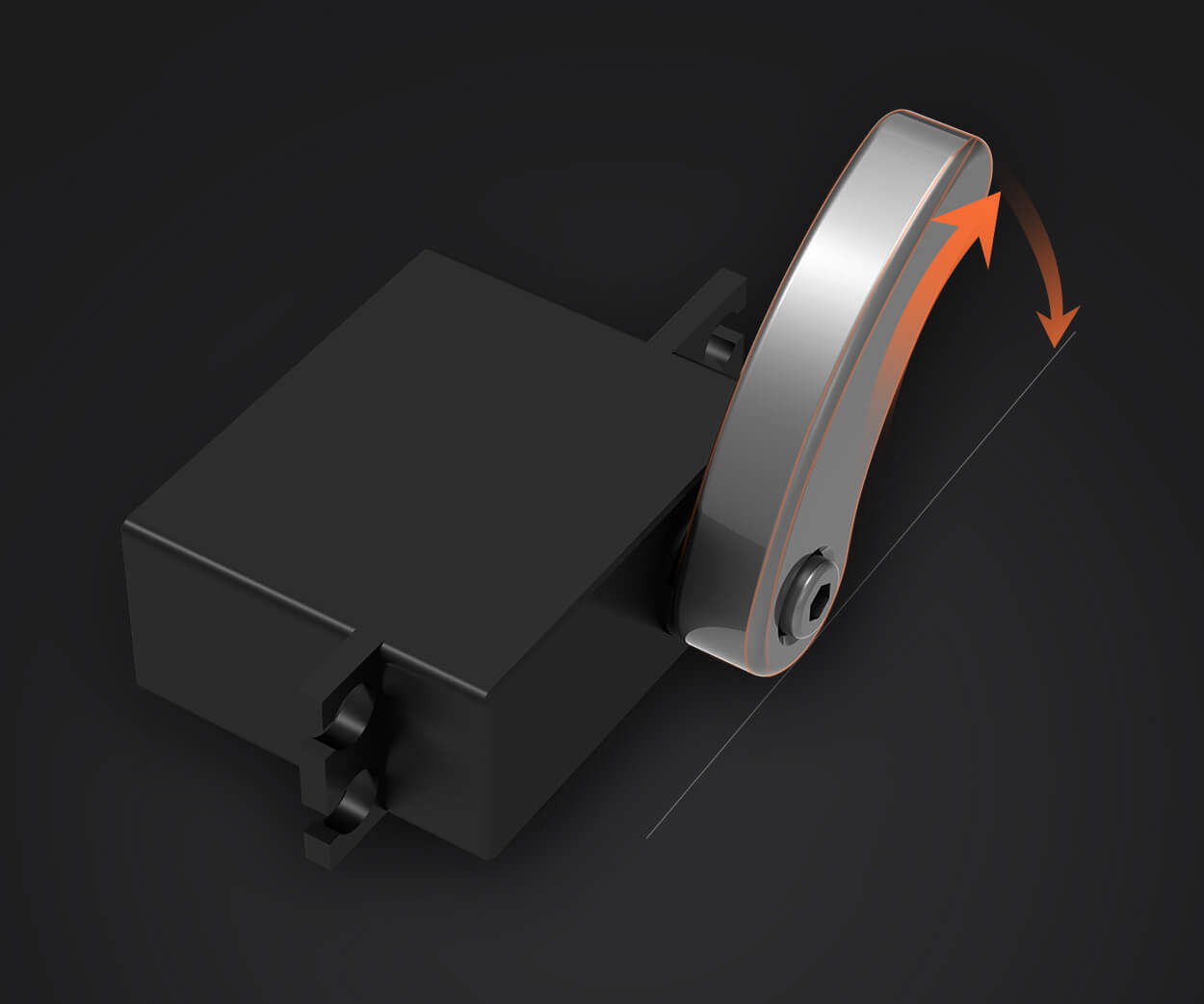
Let’s talk about that pinout—not in a dry, datasheet kind of way, but like figuring out a small, useful gadget. The SG90 is compact, affordable, and pretty popular in DIY projects. But if you mix up the pins, things just won’t turn right—literally.
So, here’s the simple breakdown. You’ve got three wires: usually orange, red, and brown. The orange one is your signal wire—that’s where you tell theservowhat to do. The red is power; it likes around 5V. The brown is ground. Get these in the right spots, and that little motor starts dancing to your commands. Mess them up, and well… let’s just say it’s a short dance.
Why does this matter so much? Because whether you’re building a small robot arm, adjusting a camera angle, or just making something move in a model, that correct wiring is what brings your idea to life. It’s like giving voice to a silent part—suddenly, things respond.
Now, some ask: “Can I power it with 3.3V?” You could, but it might struggle—like trying to run with untied shoes. Stick to 5V for consistent performance. And about torque: the SG90 isn’t made for heavy lifting. It’s more of a finesse player. Trying to push it beyond its design is like asking a watch to work as a wrench—possible, but not pretty.
You might wonder, what makes one SG90 different from another? Reliability. Consistency. Some servos jitter; some drift off center; some just wear out too soon. That’s where paying attention to where you source them makes all the difference.
Here atkpower, we see servos as more than components—they’re tiny partners in creation. Over the years, we’ve noticed that the real magic happens when the basics are rock solid. A clear pinout, steady voltage, a signal that’s clean—that’s what keeps projects on track, from weekend experiments to prototype stages.
So next time you hold an SG90, think of those three wires as a handshake. Connect them right, and you’ve just introduced motion to your vision. No chaos, no guesswork—just a smooth start.
We’ve always believed that good things begin with clarity. That’s why we focus on making these details straightforward and dependable. Because when you’re building something, you shouldn’t have to worry about the wires—you should be free to imagine what they’ll bring to life.
Whether it’s your first rover or your tenth automated gadget, getting the pinout right is that quiet, essential step. And sometimes, that’s all it takes to turn a circuit into something that moves, reacts, and feels alive. So go ahead—plug it in, send that signal, and watch things turn.
Established in 2005,kpowerhas been dedicated to a professional compact motion unit manufacturer, headquartered in Dongguan, Guangdong Province, China. Leveraging innovations in modular drive technology,kpowerintegrates high-performance motors, precision reducers, and multi-protocol control systems to provide efficient and customized smart drive system solutions. Kpower has delivered professional drive system solutions to over 500 enterprise clients globally with products covering various fields such as Smart Home Systems, Automatic Electronics, Robotics, Precision Agriculture, Drones, and Industrial Automation.
Update Time:2026-01-19

Contact Kpower's product specialist to recommend suitable motor or gearbox for your product.


