

TECHNICAL SUPPORT


Published 2026-06-30
SEO Title: IsservoMotor Angle Control Accurate Enough for Your Application?
Meta Description: Understand howservomotor angle accuracy affects production quality, efficiency, and long-term cost. Learn what specifications matter, how to compare options, and what to check before you buy.
Quick Answer
Yes,servomotor angle control is generally highly accurate, with standard industrial servo systems achieving positioning errors of less than 0.1 degrees under normal operating conditions. However, actual precision depends on several factors, including the feedback device type (encoder or resolver), controller resolution, mechanical backlash in the load, and tuning quality. For most motion control applications, servo motors offer significantly better accuracy than stepper motors, especially under variable load or speed conditions. Buyers should verify specifications like repeatability, resolution, and torque ripple at their specific operating point, not just rely on motor datasheets alone.
Introduction
Every production line faces the same tension: you need faster cycles, but you cannot afford more scrap parts. When a robot arm misses its mark by half a millimeter, when a cutting head leaves a ragged edge, or when a pick-and-place system drops components, the immediate question is not about the machine. It is about the motor controlling that movement. For engineering managers and procurement professionals evaluating servo systems, the real question is not whether servo motors are accurate in theory. speed, over your production shift. Many buyers discover too late that a servo claimed to offer 0.01-degree accuracy produces inconsistent parts once installed. The gap between datasheet precision and application-level performance is where costly mistakes happen. Understanding what actually determines servo angle accuracy is the first step to avoid those mistakes.
Table of Contents
1. What Determines Servo Motor Angle Accuracy?
2. How Servo Systems Achieve High Precision
3. Key Specifications That Influence Positioning Accuracy
4. Common Factors That Reduce Real-World Accuracy
5. How Does Servo Accuracy Compare to Stepper Motors?
6. What to Check Before Choosing a Servo for Your Application
7. Questions Buyers Often Ask About Servo Angle Precision
8. Choosing the Right Servo for Consistent Production
1. What Determines Servo Motor Angle Accuracy?
Servo motor angle accuracy is not a single number. It is the combined result of multiple hardware and software factors working together. The three primary contributors are the feedback device, the controller's resolution, and the mechanical system driving the load.
The feedback device, typically an encoder or a resolver, measures the motor shaft's actual position and sends that information back to the controller. A standard incremental encoder with 1,000 pulses per revolution (PPR) provides a theoretical resolution of 0.36 degrees per count. Higher-resolution encoders, such as 4,096 PPR or more, can offer resolution below 0.1 degrees. Absolute encoders, which track position even after power loss, are common in applications requiring repeatable positioning without homing cycles.
The controller interprets this feedback and adjusts the motor's current to hold or reach the commanded position. The controller's internal resolution, often expressed in bits, determines how finely it can adjust position. A 16-bit controller can resolve 65,536 positions per revolution, equivalent to about 0.0055 degrees. In practice, controller resolution often exceeds the mechanical system's ability to maintain that precision.

Mechanical components, including couplings, gearboxes, belts, and leadscrews, introduce backlash, compliance, and friction. Even a high-resolutionservo motorpaired with a premium encoder cannot compensate for a loose coupling or a worn gearbox. The effective accuracy at the load is almost always lower than the motor shaft accuracy.
2. How Servo Systems Achieve High Precision
Servo systems use closed-loop control to maintain position accuracy. Unlike open-loop systems, which send a command and assume the motor follows, a servo continuously compares the commanded position to the actual position and corrects any error.
The control loop operates in three stages. First, the controller sends a target position. Second, the encoder reports the current position. Third, the controller calculates the difference, or error, and adjusts the motor's torque to eliminate that error. This cycle repeats thousands of times per second, depending on the controller's loop rate.
The proportional-integral-derivative (PID) tuning parameters directly affect how quickly and accurately the system responds. Properly tuned gain settings minimize overshoot, reduce settling time, and prevent oscillation. Poor tuning, even on a high-qualityservo drive , can produce visible position errors or cause the motor to hunt around the target position.
Advanced servo controllers also implement feedforward compensation, which anticipates the required torque based on known load characteristics. This reduces the error during acceleration and deceleration phases, where most position drift occurs.
3. Key Specifications That Influence Positioning Accuracy
When evaluating a servo system for angle accuracy, focus on these specifications:
A system with high encoder resolution but poor torque ripple control may still produce inconsistent positioning at low speeds. Similarly, a motor with excellent repeatability may fail to hold position under heavy load if the controller lacks sufficient gain bandwidth.
4. Common Factors That Reduce Real-World Accuracy
Even well-designed servo systems lose accuracy when installed incorrectly or used outside their design parameters. The most common factors that degrade real-world performance include:
Mechanical backlash : Gears, belts, and couplings with excessive clearance introduce position error that the servo cannot correct because the error occurs after the feedback device.
Thermal drift : As the motor heats during operation, winding resistance changes, affecting torque output. Without thermal compensation, position accuracy drifts over a production shift.
Poor tuning : Incorrect PID gains cause overshoot, slow settling, or oscillation. Many factory-default tuning parameters are not optimized for specific load inertia.
Electrical noise : Encoder signals are susceptible to electromagnetic interference from nearby drives, cables, or power lines. Noise can cause false position readings and random errors.
Load inertia mismatch : When the load inertia exceeds the motor inertia by more than 10:1, the system becomes difficult to tune and prone to position overshoot.
For buyers evaluating custom servo solutions , understanding these factors upfront helps set realistic expectations for achievable accuracy in their specific application.
5. How Does Servo Accuracy Compare to Stepper Motors?
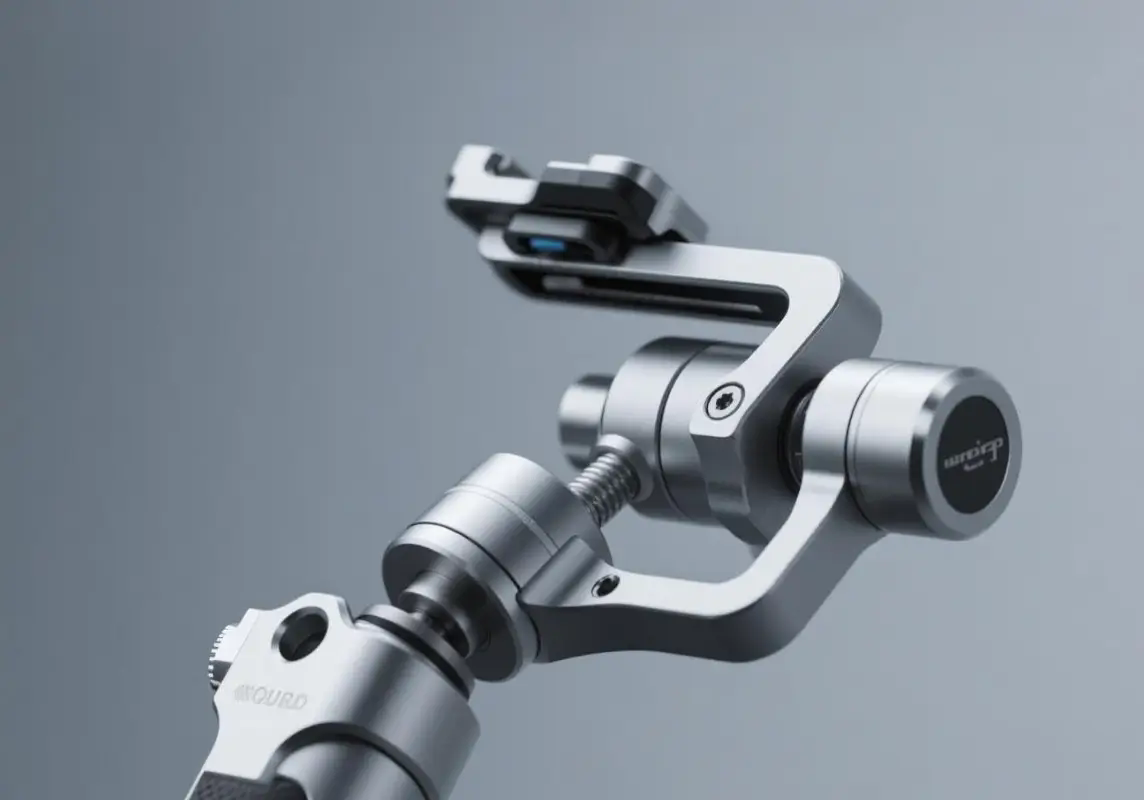
Stepper motors move in discrete steps, typically 1.8 degrees per full step. Without feedback, a stepper cannot detect if it missed a step due to load variation or rapid acceleration. This open-loop limitation means stepper accuracy is inherently bounded by the step angle and the driver's microstepping capability.
Microstepping divides each full step into smaller increments, often 16, 32, or 256 microsteps per full step. However, microstepping does not guarantee positional accuracy. The actual position error between microsteps can be significant due to magnetic detent torque and friction. In many cases, a stepper motor's true positioning accuracy is only within one full step, regardless of the microstep setting.
Servo motors, by contrast, continuously correct position errors through closed-loop control. This allows servos to maintain accuracy under varying load, speed, and temperature conditions where steppers would lose steps or stall.
For applications requiringanalog vs digital servo evaluation, digital servos typically offer higher resolution, better noise immunity, and more advanced tuning options, making them the preferred choice for precision positioning tasks.
6. What to Check Before Choosing a Servo for Your Application
Before committing to a specific servo system, verify these parameters against your actual operating conditions:
Required positional accuracy at the load : Factor in all mechanical components between the motor shaft and the point of work.
Operating speed range : Accuracy typically decreases at very low speeds due to friction and torque ripple, and at very high speeds due to inertia and control loop limitations.
Load variation : Systems with variable load weight, center of gravity, or friction require more robust control and may need higher-resolution feedback.
Environmental conditions : Temperature, humidity, vibration, and electrical noise all affect encoder and controller performance.
Maintenance schedule : Encoder contamination, bearing wear, and coupling degradation gradually reduce accuracy over time.
For production environments where downtime is costly, asking your supplier for a documented torque requirements analysis at your specific operating points can prevent surprises after installation.
7. Questions Buyers Often Ask About Servo Angle Precision
Q: Is 0.1-degree accuracy good enough for most industrial applications?
Yes, for many packaging, material handling, and general automation tasks, 0.1-degree accuracy at the load is sufficient. Applications like CNC machining, laser cutting, or semiconductor handling typically require 0.01 degrees or better.
Q: Does a higher encoder resolution always mean better accuracy?
Not necessarily. Encoder resolution defines the smallest position change the motor can detect. But mechanical backlash, thermal drift, and control loop limitations often become the bottleneck before encoder resolution.
Q: Can a servo maintain its accuracy over an entire production shift?
It depends on thermal management and tuning. Motors that overheat or drives without thermal compensation may drift. Regular recalibration or automatic gain scheduling can maintain consistent accuracy.
Q: How much accuracy loss should I expect from a gearbox?
A typical planetary gearbox adds 3 to 15 arc-minutes of backlash. For high-precision applications, use a zero-backlash gearbox or direct-drive servo to preserve accuracy.
Q: Is accuracy the same as repeatability?
No. Accuracy is how close the actual position is to the commanded position. Repeatability is how consistently the system returns to the same position. A system can be repeatable but not accurate if it is not properly calibrated.
Q: Does servo accuracy degrade over time?
Yes, due to bearing wear, encoder degradation, coupling fatigue, and contamination. Regular preventive maintenance and periodic accuracy verification can slow this degradation.
Q: Should I choose an analog or digital servo for precision applications?
Digital servos generally offer higher resolution, better tuning flexibility, and improved noise immunity, making them the better choice for precision tasks.
Q: Can I use a servo for both high-speed and high-precision moves?
Yes, but the system must be designed for both. This typically requires a high-resolution encoder, a fast control loop, and advanced tuning to handle the conflicting demands.
Q: What is the most common reason servo accuracy fails in production?
Mechanical backlash and poor tuning are the two most common causes. Many buyers focus on motor specifications and neglect the mechanical connection and control setup.
Q: How do I verify a supplier's accuracy claims?
Ask for the test method, load conditions, and environmental parameters used to generate the specification. Request a documented performance curve at your target operating point.
8. Choosing the Right Servo for Consistent Production
Servo motor angle accuracy is not an absolute number you can read from a datasheet and trust. It is a performance characteristic that emerges from the interaction between the motor, controller, feedback device, mechanical transmission, and operating conditions. A system that delivers 0.01-degree accuracy in a lab may produce 0.5-degree errors on your production floor if the load inertia, temperature, or electrical environment differs.
The most reliable approach is to start with your application requirements. Define the positional accuracy needed at the load, at your operating speed, under your expected load variation. Then work backward to select the motor, encoder, controller, and mechanical components that together can meet that target. Verify each specification at your operating point, not at the supplier's ideal condition.
If you are currently evaluating servo options for a new or existing production line, consider sharing your motion control applications parameters with an experienced engineering team. A detailed review of your torque, speed, and accuracy requirements can help you avoid the common gap between quoted specs and real-world performance.
Need help selecting a servo system that matches your accuracy requirements? Send your application specifications to the kpower servo engineering team for a free performance review and recommendation.
Update Time:2026-06-30

Contact Kpower's product specialist to recommend suitable motor or gearbox for your product.


