

TECHNICAL SUPPORT


Published 2026-05-14
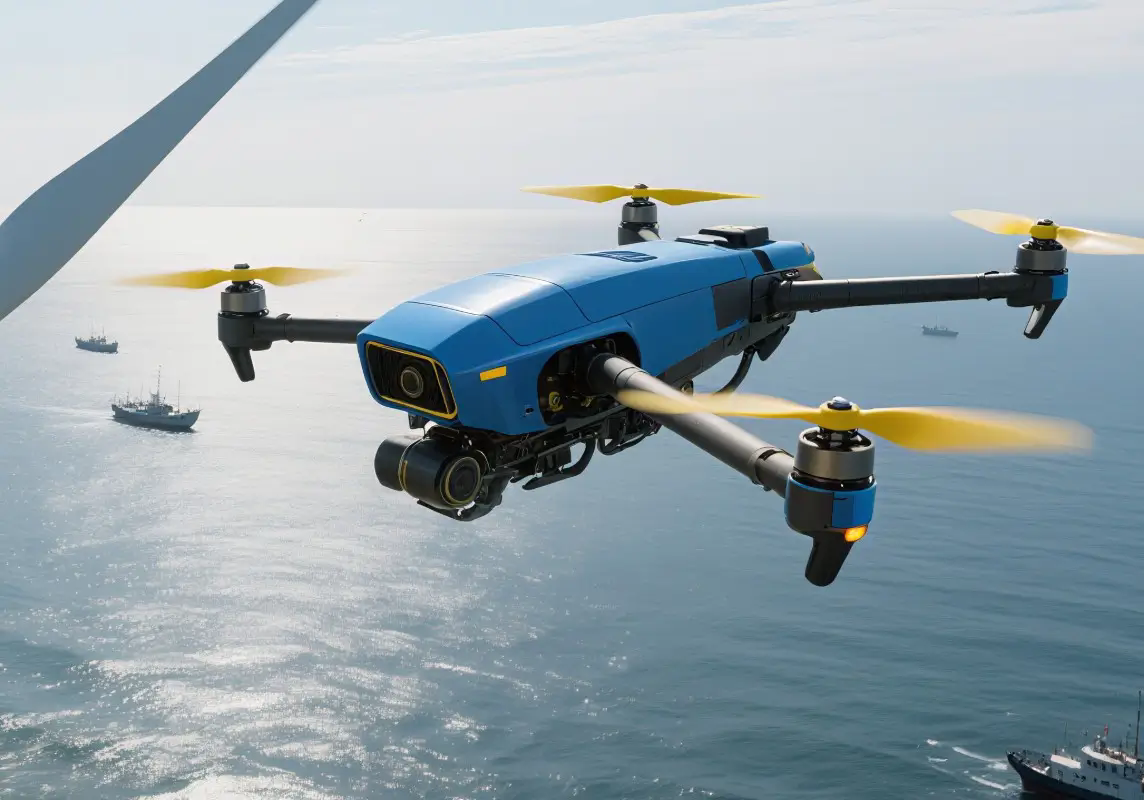
Have you ever encountered a situation where the robot arm you carefully built keeps shaking when it grabs something, like a Parkinson's patient? Or maybe the drone gimbal you built swayed left and right in the wind, and the picture was blurry as if you were filming a disaster movie?
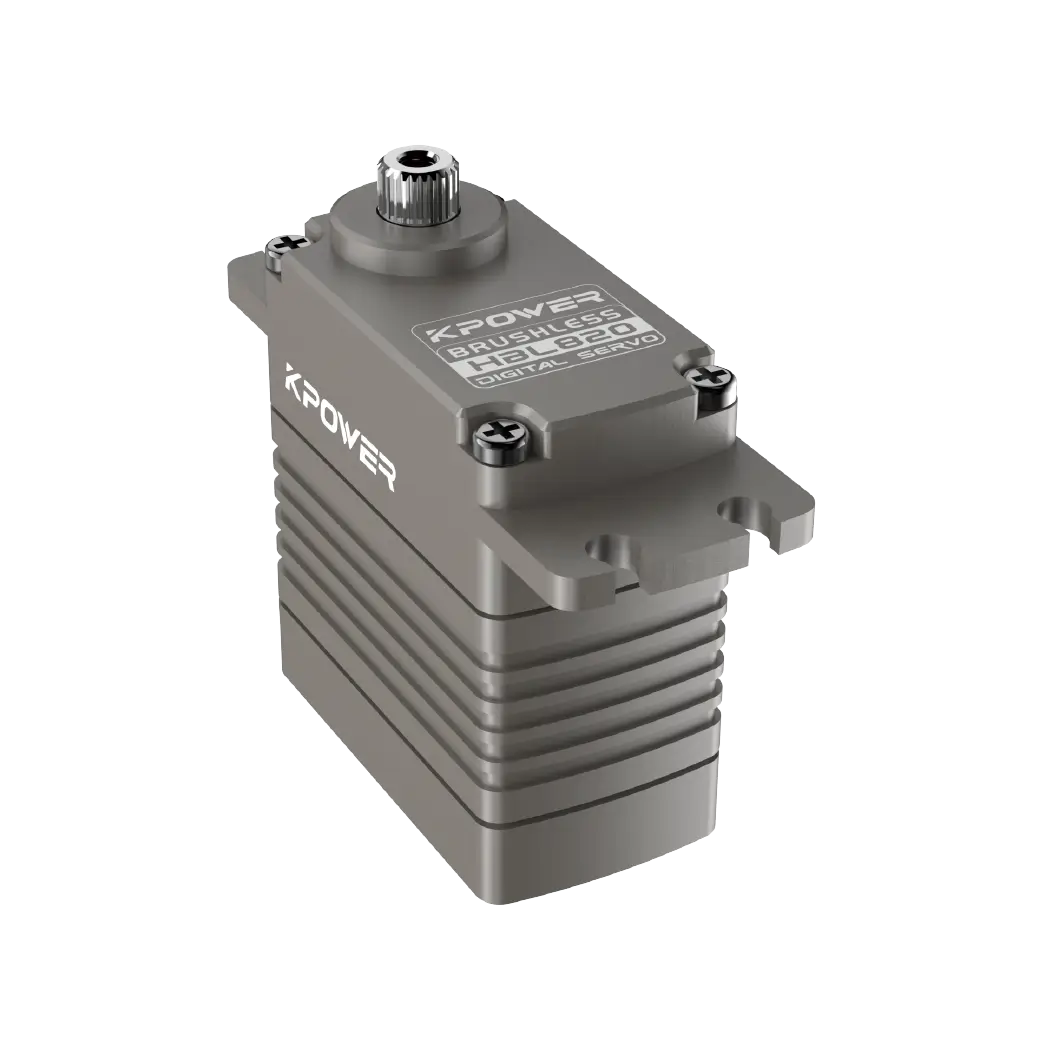
Behind this, it is often the "brain" of the steering gear, and there is a problem with its control program. Furthermore, the core algorithm that controls the strength and accuracy of the steering gear, namely PID adjustment, has not been adjusted properly. Don't be frightened by these three letters. It is not an incomprehensible magic, but an extremely delicate "balance technique". Today, we will take the most commonly usedservoas an example to thoroughly analyze the secret of PID adjustment, so that your robot can change from "twitching" to "smooth".
Tips for article writing: proportional coefficient
We need to understand how the steering gear works. You give it an instruction, that is, "turn to the 90-degree position"; the motor inside it will rotate crazily, thereby driving the gear set and the output shaft; at the same time, a sensor called a "potentiometer" will always detect the actual angle of the shaft; when the actual angle is still When it has not reached 90 degrees, the controller will prompt the motor to operate forward at a maximum output power of a few units per second; once it exceeds the target position, it must reverse back; without an exquisite adjustment mechanism, it will repeatedly jump back and forth in the area near the target position. This is the "jitter" phenomenon we see.
PID control is an extraordinary skill to deal with this "repeated horizontal jump" problem. P, I, and D are the abbreviations of proportion, integral, and differential respectively. The three of them are like a group of experts, working together to send out the "PWM signal" command to tell the steering gear how much force to use and in which direction to turn.
Let’s first take a look at the most critical and important member of the team, which is the proportional coefficient, referred to as P for short. The work it carries out has the most simple, direct and crude characteristics: judging the strength of the output based on the current error. So what is called an error? The so-called error is the difference obtained by subtracting the "target angle" from the "current angle". Suppose you plan to turn 90 degrees, and you are at 0 degrees at the moment, then the error is 90 degrees. The function of P is: the output is equal to the error multiplied by the proportional coefficient. The larger the coefficient, the larger the output.
For example, your robot needs to be able to lift a leg nimbly. If the P value is set too small, it will be like using a soft noodle to pry a stone. The command received by theservois to "lift slowly and gently". As a result, the leg cannot be lifted at all, or the movement is as slow as a sloth. If the P value is set too large, it will be like asking you to use all your strength to fight a mosquito that landed on your arm - the force is seriously too much. When theservois almost approaching 90 degrees, it still rushes over at a crazy speed, hits the upper limit with a bang, then bounces back, and rushes over again, causing violent shaking. With a suitable proportional coefficient, the servo can use 80% of its power to quickly run towards the target and slow down when approaching.
Q/A: What will happen to the servo when the proportional coefficient is too large?
A: It vibrates violently or makes sharp noises, and the force overshoot causes it to oscillate back and forth at the target position. In severe cases, the gear may be damaged.
Therefore, the first step to adjust PID is to fight alone and only adjust P. Set both I and D to 0. Gradually increase the P value from small to large, and at the same time pay attention to the feedback of the steering gear. You will witness a clear evolution process: when P is extremely small, the movement is slow, always a few degrees short of reaching the target (this is called "static difference"); as P increases, the movement becomes faster, but there will be weak shaking near the target point; as P further increases, the shaking intensifies, evolving into violent oscillations. The sweet spot usually appears just before the critical value where the vibration has just begun to shake slightly but has not yet gone out of control. Remember this feeling, it is the cornerstone of all your subsequent debugging.
Prompt words for article writing: integral items
However, with P alone, you will quickly encounter a bottleneck. For example, if your robot is holding a heavy object, the servo must be kept at 90 degrees without loosening. Due to the pull of gravity, a continuous error will be generated. P control exhibits such characteristics: the greater the error, the greater the effort required. However, in order to counteract this gravity, a continuous "corrective force" is needed. But when the error is extremely small, the force given is also very small, which results in the servo never being able to accurately reach 90 degrees, and may stay at the position of 89.5 degrees. This is the "static error" mentioned previously.
At this time, it was the turn of the team's second expert, the points item, referred to as I, to make his debut. The role of I is like an accountant with an extremely good memory. Its task is to add up all past errors. As long as the error persists, this cumulative sum will continue to increase. Then, this "general ledger" will also be multiplied by a coefficient and added to the final output command.
This mechanism is simply amazing! When the steering gear reaches 89.5 degrees due to gravity, a slight error of 0.5 degrees occurs. At this time, P may only output a weak force for this purpose, which is difficult to resist gravity. However, I will remember the error of 0.5 degrees. After one second, it will accumulate the 0.5 degrees and become 1. degree, and after two seconds it becomes 1.5 degrees, etc. The accumulated value continues to increase, and the additional force output also continues to increase. Eventually, this always-existing "extra thrust" will accurately overcome the influence of gravity, forcibly pushing the servo to a precise 90 degrees and locking it at this angle.
Q/A: What problems can the integral term solve?
A: Eliminate static errors. It provides continuous force by accumulating small deviations, allowing the steering gear to resist external interference and ultimately reach the precise position.
However, I is also a dangerous character. If the I value is set too large, or there is an initial error in the system, such as when it is not at 0 as soon as it is powered on, the accumulated sum will expand rapidly, causing the servo to output a huge "overcorrection" force, causing severe overshoot and long-term violent oscillation, which is called "integral saturation". A more common situation is that your robotic arm is stuck on something, the error is always there, and I will accumulate like crazy. When the obstacle suddenly disappears, this huge cumulative force will be released instantly, causing the servo to fly out as if it was ejected, which is extremely dangerous.

Tips for article writing: differential terms
At this moment, our servo responds immediately when P is driven, and with the help of I, it positions accurately, which looks pretty good. However, it is very likely that it will still feel inadequate when faced with certain rapidly changing scenarios. Imagine your drone is hovering in a strong wind, or your racing robot needs to make an emergency stop and turn in an instant. At this time, the responses of P and I both seemed a little "slow". This is because they were adjusted "afterwards". What we need is the ability to foresee.
This is the think tank in the team, called the differential term, or D for short. The role of D is like a prophet. It doesn't care how big the current error is, nor how many errors have accumulated in the past. It only cares about one thing: how fast the error is changing. It will calculate the rate of change of the error, in other words, the "slope of the error." , if the error is expanding rapidly, such as the steering gear is quickly deviating from the target, D will output a huge reverse force, like an emergency brake, to stop this situation. If the error is shrinking at a very fast speed, that is, the servo is moving towards the target at high speed, then D will also output a force in the opposite direction and "step on the brake" in advance to prevent it from overshooting.
Let’s use a clever metaphor. You drive to meet a friend. P refers to you controlling the accelerator, and the further you go, the deeper you press it. I is when you are waiting for the red light, slowly slide the car forward to eliminate the distance from the stop line. This is a kind of operation. A behavior in the waiting stage; and D, when you see a red light ahead, release the accelerator and gently apply the brakes. This is such an operating behavior. It should be clear that it is not to correct errors that have already occurred, but to prevent errors from occurring.
In the field of steering gear control, the role of D is extremely critical. It can significantly suppress the "overshoot" and "oscillation" caused by excessive P or external impact. For example, there is a robotic arm that needs to move quickly point-to-point. If there is no D, it may be like a drunkard, hitting the target point with a "clang" and then bouncing away; but when a suitable D is added, it can decelerate in an elegant manner when it is about to approach the target point, and fall down as gently as a feather.
Q/A: What is the main function of the differential term?
A: Suppress overshoot and oscillation. It predicts the error trend and brakes in advance, giving the steering gear "predictability" and making the action smoother.
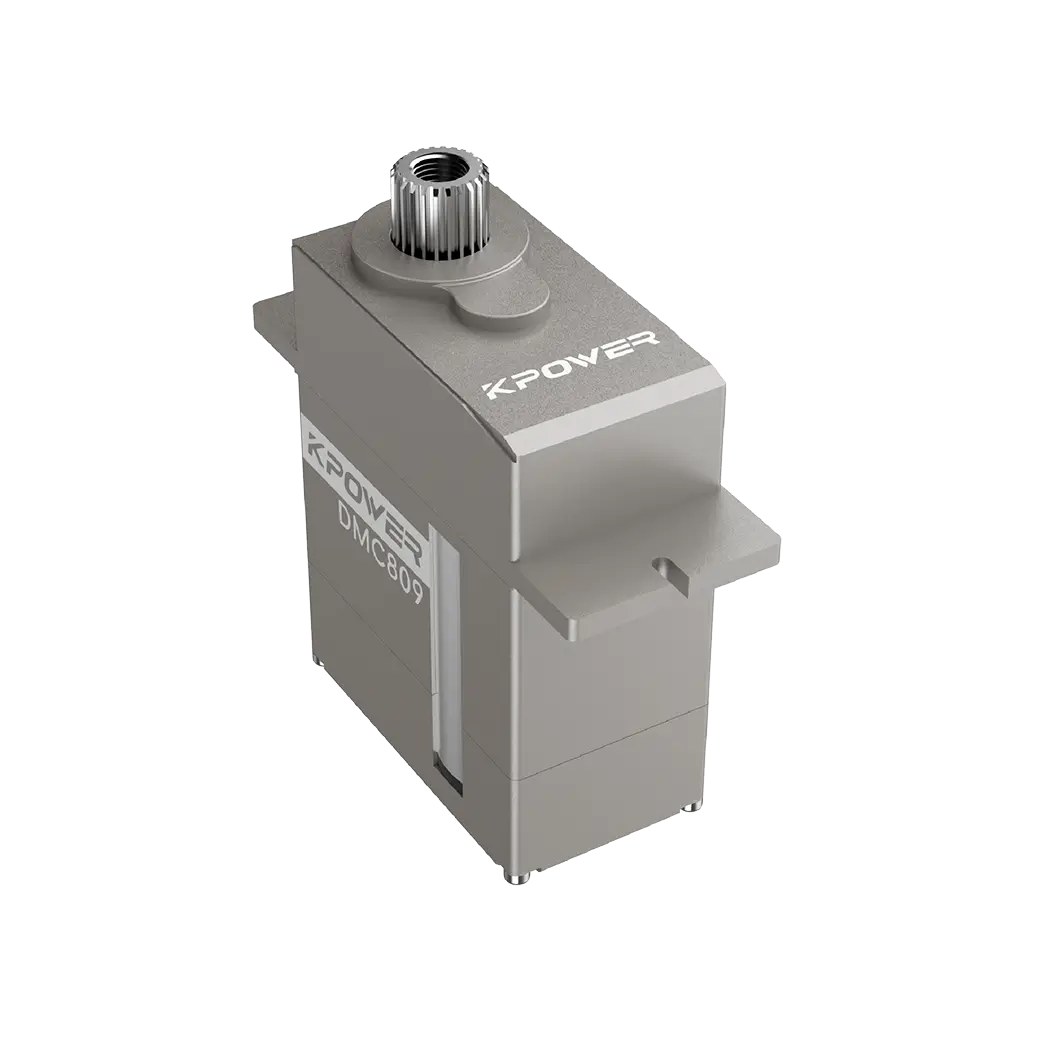
Until now, the expert team of PID is complete. P bears the power of the "present", I controls the accounts of the "past", and D controls the trend of the "future". The three of them use high-performance servos such askpowerServo and the accompanying debugging software to enable you to adjust every parameter extremely delicately like a tuner.
Of course, what you get from paper ultimately doesn’t feel deep enough. The actual debugging process is often carried out according to a classic process. We call this process the "three-step stabilization method."
Step 1: Set I and D to zero. Starting from 0, slowly increase the value of P until the servo begins to produce slight, continuous vibrations of equal amplitude. Remember this P value, then halve it, and use this halved value as your starting P value. This "P-value of vibration" is a key characteristic of your system.
In the second step, maintain the P value of the first step, slowly increase the I value from 0, and increase I until the servo eliminates the static difference and can return to its original position quickly and without vibration after being disturbed by external forces (such as turning the servo arm with your finger). If there is a large shaking, it means that I is too large, reduce it.
Q/A: What is the correct sequence for PID debugging?
A: First adjust P to critical oscillation and then reduce it by half, then adjust I to eliminate the static difference, and finally adjust D to suppress aftershocks, and optimize step by step in PID order.
In three steps, first of all, in the first step, P and I have caused your servo to reach the corresponding position quickly and accurately. However, it may still have some slight "nodding" or "aftershocks". Then in the second step, at this time, increase the D value from 0, and then you will find , as D increases, the final, tiny shaking will disappear very quickly, and the entire action becomes extremely crisp and clean. Finally, in the third step, be careful. If the D value is too large, the servo response will become sluggish, and it will even emit a high-frequency scream, ending.
I'm going to share with you a key point that is tacitly understood by the best in almost all fields. That is, the perfect PID is not a set of hard and fast numbers, but an artistic method of achieving balance. There are no “one-size-fits-all parameters” that apply to all situations. You have to make dynamic adjustments based on the load of the servo, the response speed requirements, and even the temperature changes of the environment. As far as the projects carried out by students are concerned, it is more critical to pursue "satisfying functions and maintaining stability" than pursuing "the optimal state determined by pure theory." A robot that moves slightly beyond the expected adjustment range but never gets stuck is far more effective than a robot that is theoretically accurate but often vibrates violently.
Suggestions for action :
At this moment, please pick up your robot immediately and start your servo debugging software. Starting from the P value, use what we call the "three-step method" to personally experience the changes in each parameter. First use your mobile phone to record the current jitter situation with a slow-motion video, and then write down the P/I/D values you adjust in each round and the corresponding effects. Believe me, when you personally adjust a robot in an "epileptic" state to be smooth and natural, you will feel such a huge sense of accomplishment that no ready-made code can give you. From today on, say goodbye to jitter and let your servo truly understand your every command.
Update Time:2026-05-14

Contact Kpower's product specialist to recommend suitable motor or gearbox for your product.


