

TECHNICAL SUPPORT


Published 2026-05-12
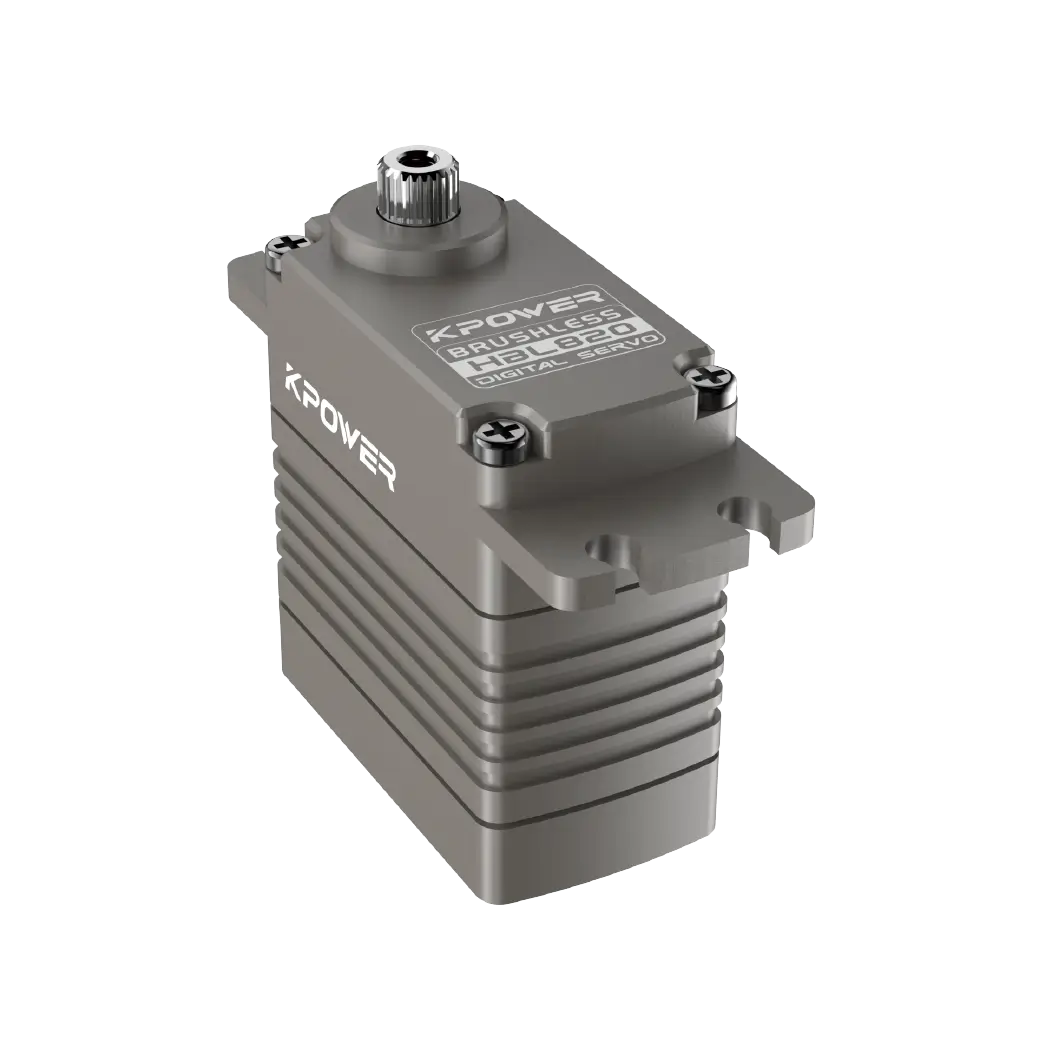
In this early summer season, the climate in the workshop is suitable, which is a good time for operation. At this time, you are looking at the four screws on the surface of the steering gear housing. How long have you hesitated in your heart? Should I choose to disassemble it or not disassemble it? Stop doing this waiting behavior. The written content at this moment is actually an analytical report explaining the internal structure.
an inverted conclusion
Conventionally, we will judge a servo based on torque, speed and accuracy, but this is wrong. In fact, all performance parameters are the result of the internal structure, not the cause of it.What really needs you to carefully examine is the physical existence of the four hard-core modules of the motor and gear set, as well as the potentiometer and the control board.. You should check its structure first, and then talk about parameters. This is undoubtedly the cognitive threshold of experienced players.
So, where to start?
Motor: the iron core game at the heart of power
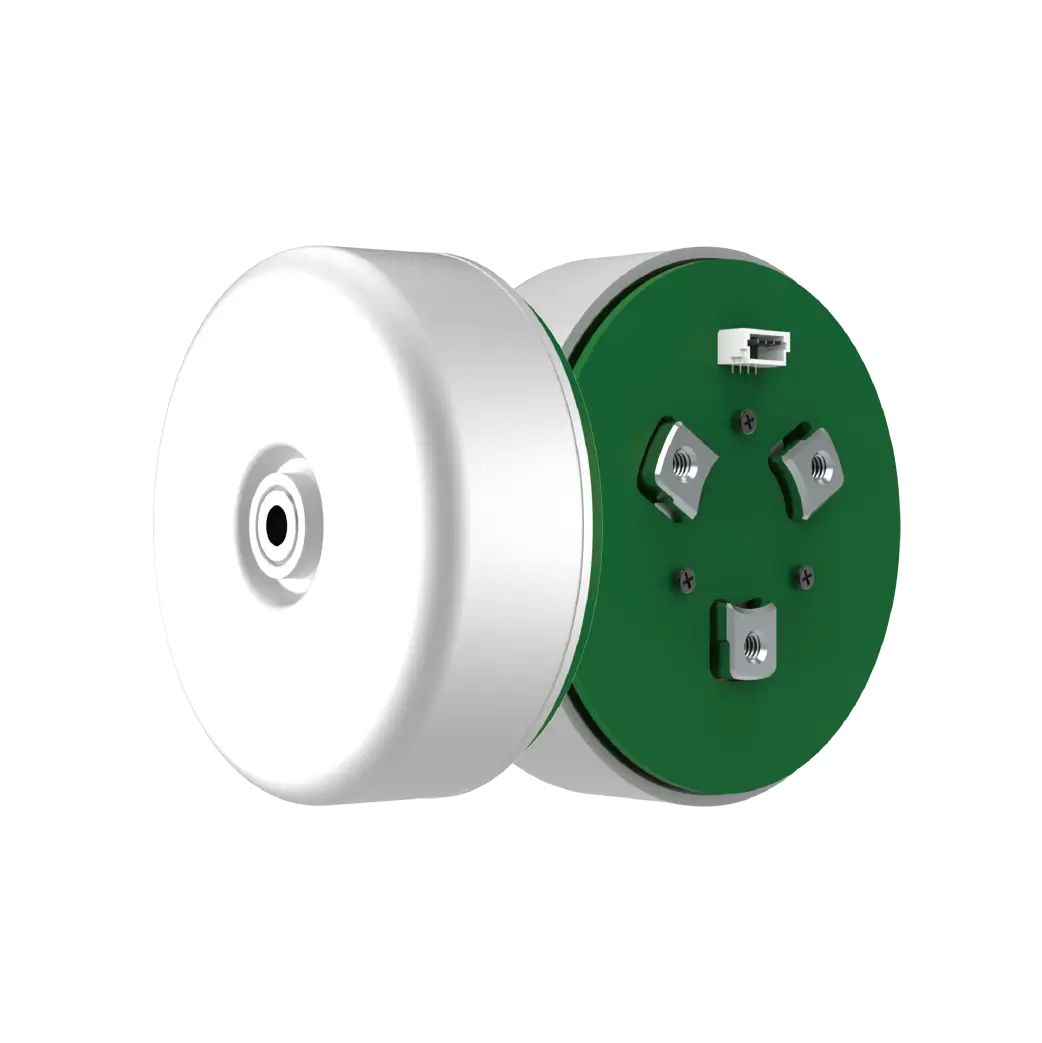
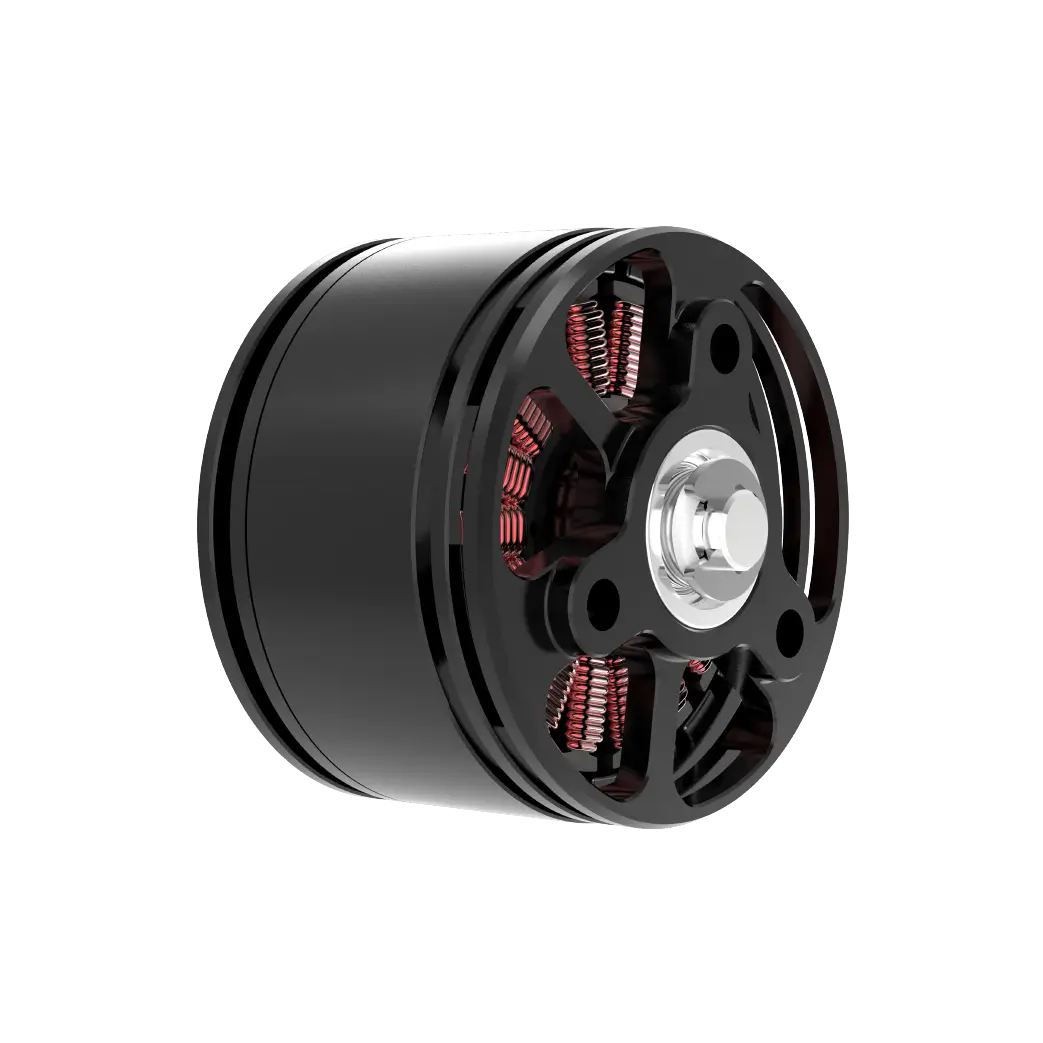
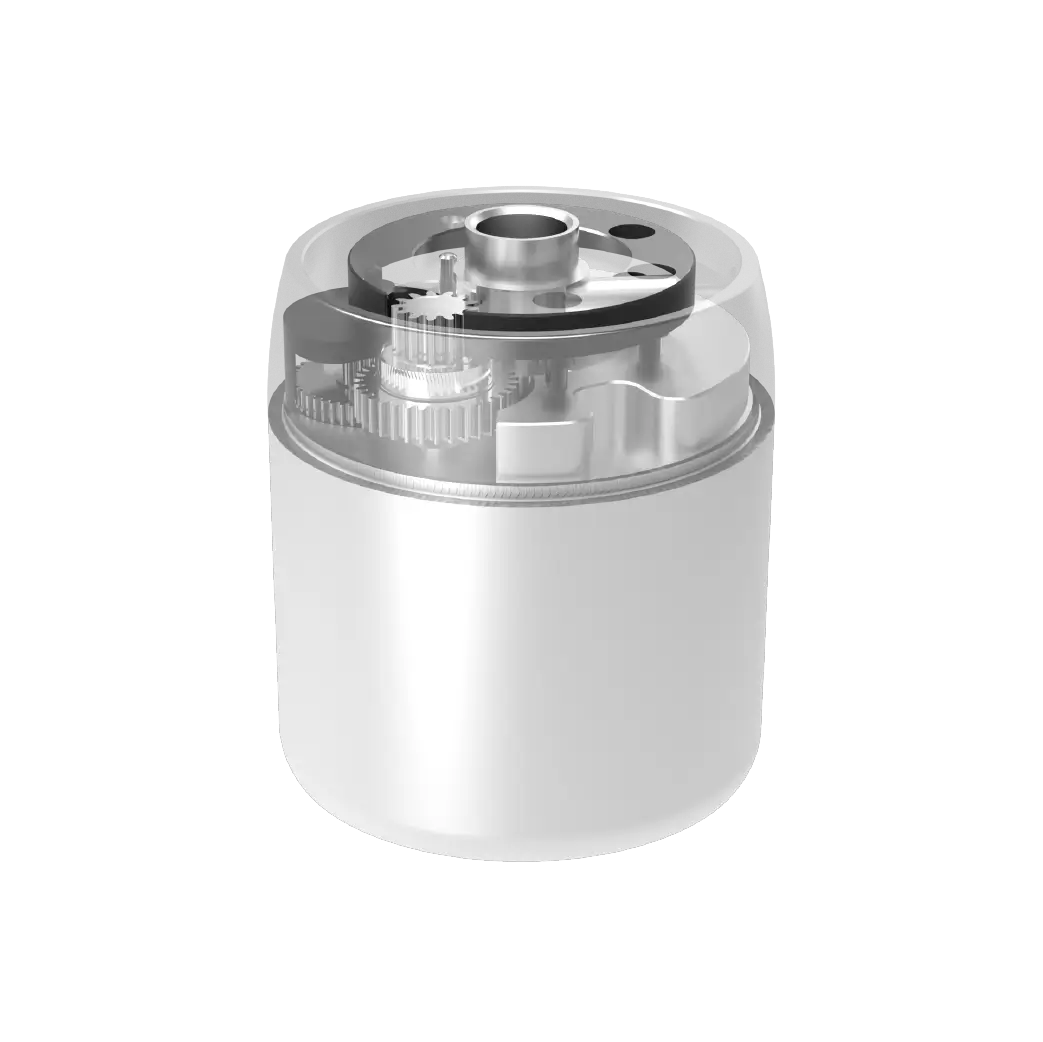
Remove the casing, and the first thing that catches the eye must be the motor. Is it a coreless motor or a brushless motor? This will directly determine 80% of the underlying characteristics of the servo. The coreless motor has extremely low rotor inertia, and the response speed of starting and stopping is as fast as lightning. But at what cost? It's a carbon brush. It's like a time bomb with physical friction. Brushless, but it completely subverts this logic. Without carbon brushes, magnetic field commutation is completed by the drive circuit. The lifespan has been increased by orders of magnitude, the efficiency has been greatly improved, and even spark interference has been eliminated from the source. When you consider the weight of a high-end servo, the MOSFET array on the driver board and the tightly wound stator coil are valuable in themselves.
The picture analysis of the internal structure of the steering gear has never been a simple matter of reading pictures and reading. You must understand the silent agreement between the iron core and the magnet, the linearity of the core cup and the brushless burst. There is no good or bad, only different choices.
Here comes the problem. No matter how powerful the power is, how can it be used without precise deceleration and torque increase?

Gear set: force flow on metal steps
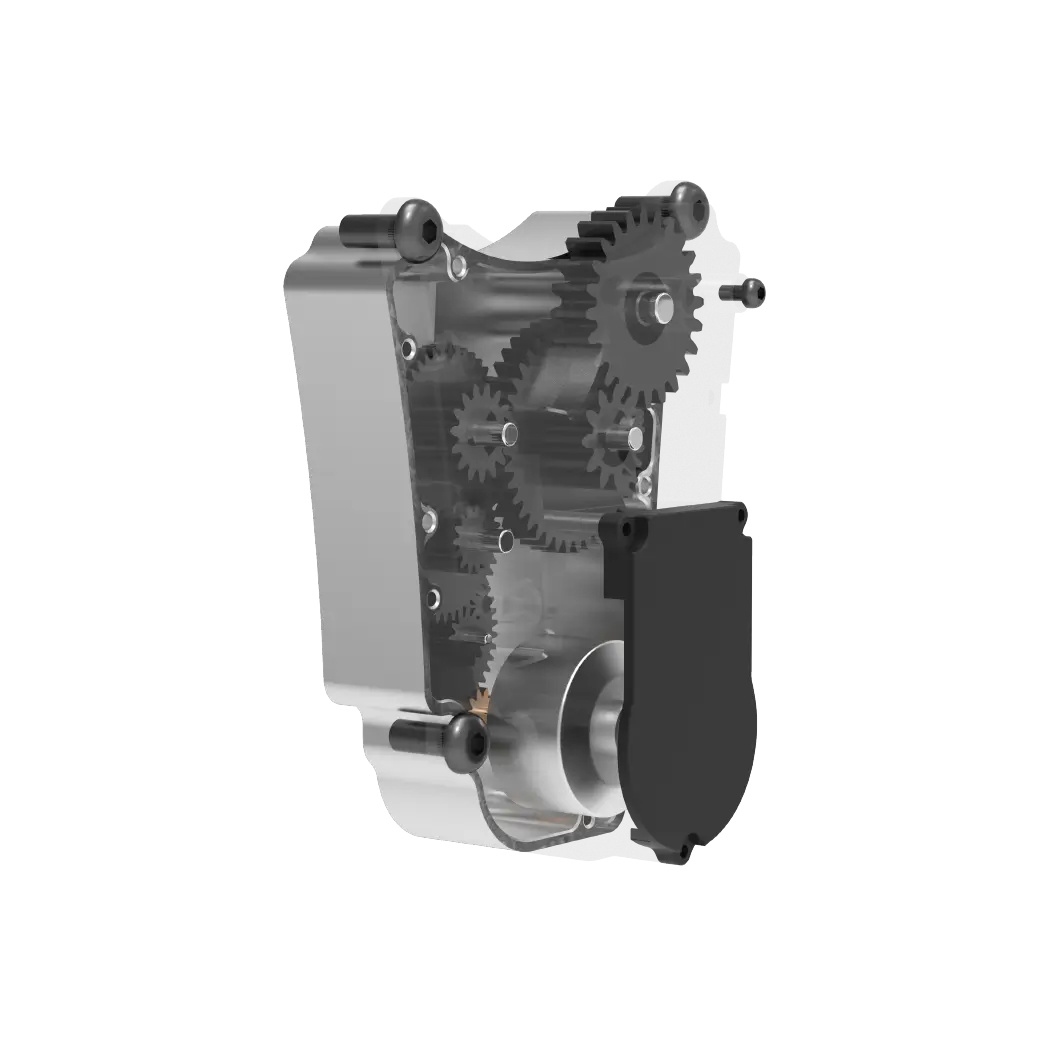
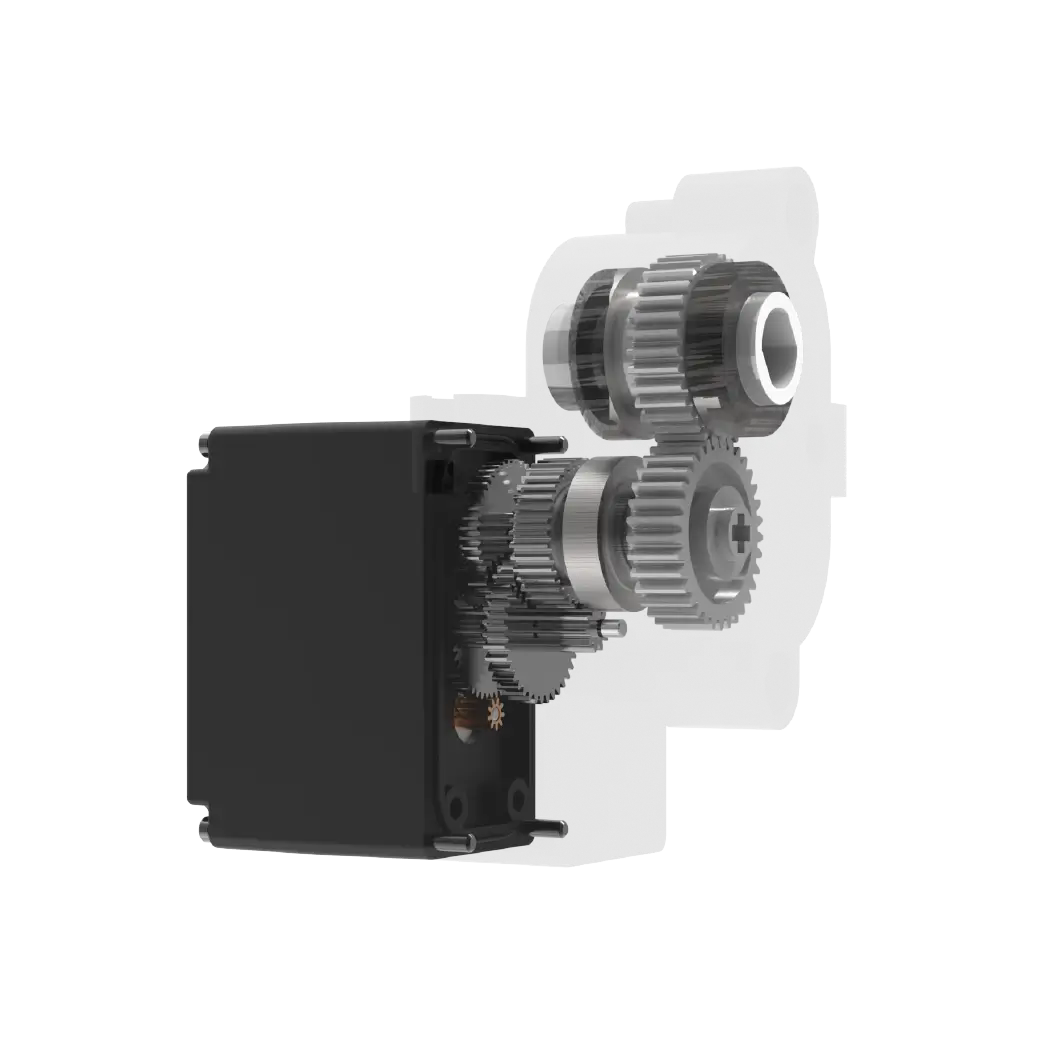
The motor speed often reaches tens of thousands of revolutions, which must be tamed. The gear set is the program to achieve this taming, plastic teeth? Then skip it directly, that is the past tense in the introductory textbook. We are now focusing on all-metal gears. The common solution is that the motor teeth are made of brass, which has self-lubricating function and compromises in terms of noise. The intermediate stage is made of aluminum to achieve lightweight and match the inertia. The final stage output is made of steel to withstand the impact torque. This is not a compromise on cost, but a precise tribological design.
Now imagine the servo in your hand. Its virtual position comes from the physical tolerance of the tooth gap, and this tolerance is physical. Its smoothness comes from the precision of grinding of the tooth surface. The titanium alloy gear is a palace-level existence. It is an absolutely pure and impurity-free state that is almost non-magnetic at the cost of weight. However, more popular wisdom is hidden in the transformation. Numbers and the design of shifting gears have the same center distance, thicker tooth roots, and stronger load-bearing capacity. Why does the servo in your hand dare to mark a high torque of 25kg? The answer lies in the extremely shallow bite oil film and involute curvature on the tooth surface. When the servo with chipped teeth is disassembled, the cross section is often not pure shear, but fatigue peeling. This is the silent confession of materials science.
The second meaning of analyzing the internal structure pictures of the steering gear is that when looking at the gears, you have to look at the back image of the gears when they mesh with each other, and you also need to be able to read the path of the force flow.
The power is transmitted to the output shaft. Who defines the position?
Position feedback: The cognitive gap between potentiometers and magnetic encoding
A potentiometer has a continuous carbon film resistor strip and a sliding metal contact. This is the most classic position closed loop. Imagine that every slight angle change will correspond to a linear voltage dividing ratio, which has Simple, cheap, and real features, but the contact is in a state of physical movement. After millions of frictions, the carbon film will wear out, the signal will jump, and the servo will start to vibrate like a "broken thought". This is the Achilles heel in terms of lifespan.
Then, magnetic field encoding suddenly appeared. There is a radial magnet and a Hall sensor that can sense absolute angles in a non-contact way. There is no wear and tear and no noise from contact. This is a revolution. At the moment when you power off the device and then power it on again, the servo does not need to "find change" because the magnetic encoding can remember the absolute position. This is a feature that potentiometer systems can only dream of possessing. However, this brings higher analysis pressure on the control board, with complex interpolation algorithms and filtering logic running on that small chip. When you see the words "programmable" on high-end servos, your confidence comes from here.
If lifespan is determined by feedback, what determines the soul?
Control board and algorithm: the miraculous workmanship in MCU
A PWM signal is sent by you with a duration of 1500 microseconds. What happens inside the servo? The MCU on the control board captures the pulse width, performs ADC conversion on the potentiometer voltage, and performs a classic PID subtraction operation. What is called the error is the target value minus the current position.This error value is amplified by P proportion, the static error is eliminated by I integral, and the overshoot is damped by D differential. Then PWM drives the H bridge, and the motor rotates crazily.. The entire process completes a cycle within a few hundred microseconds.
How big should the dead zone be set to? If it is narrow, jitter will occur, and if it is wide, it will become dull. How to limit the starting current? Putting too much current will cause the board to burn, and restricting it too tightly will cause you to lose strength. It's all an art of controlling parameters.You can feel the servo "following the hand" in your hand, which is a natural match achieved after PID parameter adjustment and mechanical inertia matching.. Feeling "soft"? That's because the setting of item D is too large or the motor redundancy is not enough. The soul of a servo is not the iron lump, but the few lines of firmware code. The compiled control strategy is the core barrier invisible to the naked eye.
IncludeImage analysis of the internal structure of the steering gearThe lesson where the situation is at the final stage is the ultimate lesson in explaining this aspect. Just seeing the status of the PCB wiring does not mean that you can see the actual truth, and the real truth is hidden in the Flash storage of the MCU.
Frequently asked questions, direct breakdown
Q: Why does the servo vibrate crazily at a certain angle?
A: At this angle of the potentiometer, the carbon film is worn, which causes the feedback voltage to jump, causing the control board to mistakenly judge that there is a position deviation, so the correction operation is repeated. At this time, the feedback module should be replaced.
Q: Do metal gears really never sweep their teeth?
Level 1: Impossible. The steel teeth at the bottom grade will definitely break if they are impacted beyond the yield strength range. It is very likely that the brass on the motor teeth cracked first, which is an act of protective self-sacrifice.
Q: Is the high-voltage steering gear purely a gimmick?
No, increasing the voltage will directly increase the peak value of motor torque and speed. Under the same power demand, the current will decrease and the heat generation will decrease according to the square relationship. This is an extremely restrained physical advantage.
Q: Why do I feel resistance when the brushless servo is stopped?
The cogging effect is exerted by the permanent magnets on the stator core and produces a normal performance of positioning torque A. During the non-energization process, the rotor is locked at many natural stable points. The absence of resistance when the power is turned off is an inherent characteristic of the hollow cup.。
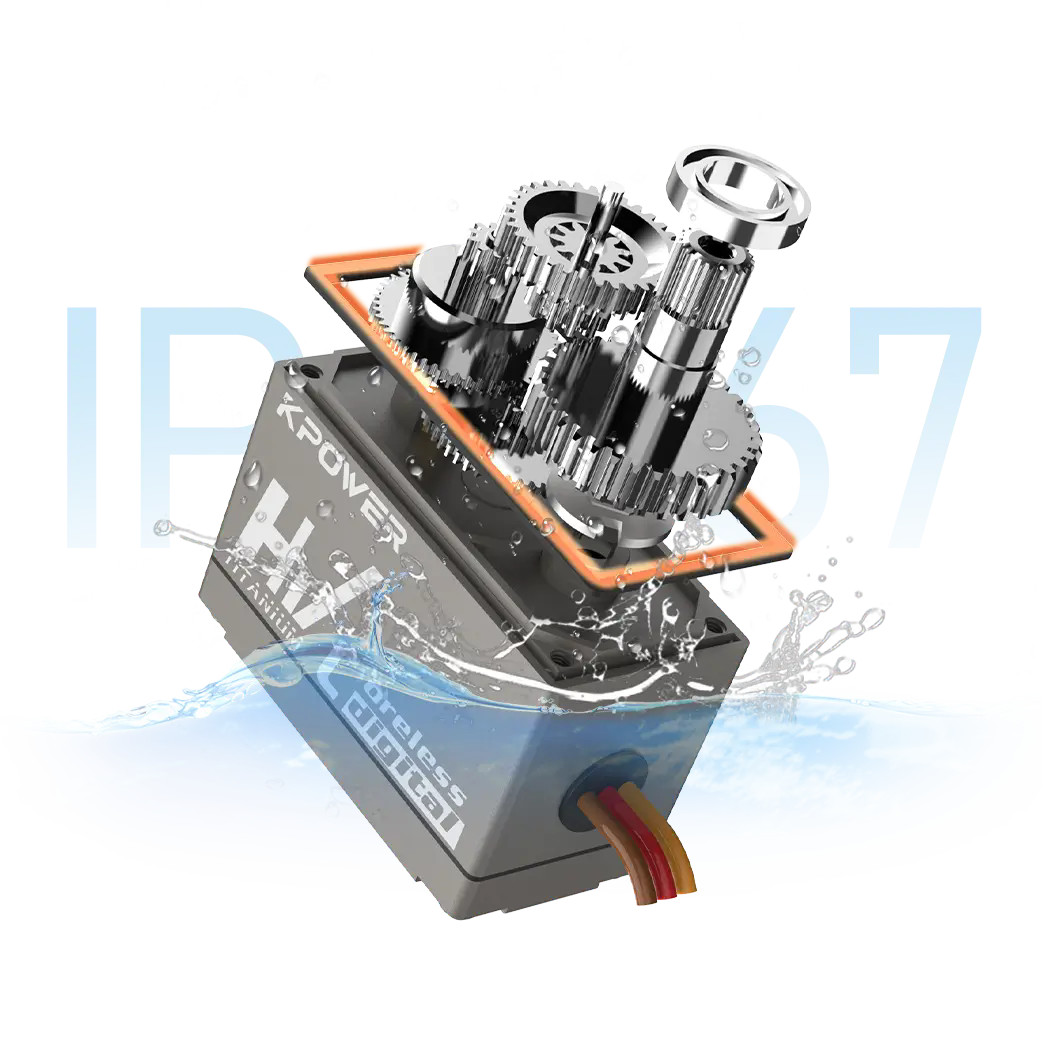
Q: Why is there still water vapor after the waterproof steering gear is soaked in water?
A: That kind of O-ring can only prevent liquid water. During operation, the air inside it will absorb external moisture due to thermal expansion and contraction, and the moisture will become water droplets after condensation. Absolute sealing does not exist at all.
Now, the correct posture for closing the case
You can never go back. When you see the steering gear, you will see the number of pole pairs of the brushless motor, the module and displacement coefficient of the gear, the linearity error of the magnetic encoding, and the frequency domain response of the control loop. This is what happens when you see the essence through the structure. The pleasure of adjusting the D gain, applying molybdenum disulfide grease to the output teeth, and trying the angle customization brought by magnetic encoding. This summer's model aircraft, robots, and servo platforms are all waiting for a servo that has restructured your cognition. Take action.
Update Time:2026-05-12

Contact Kpower's product specialist to recommend suitable motor or gearbox for your product.


