

TECHNICAL SUPPORT


Published 2026-05-12
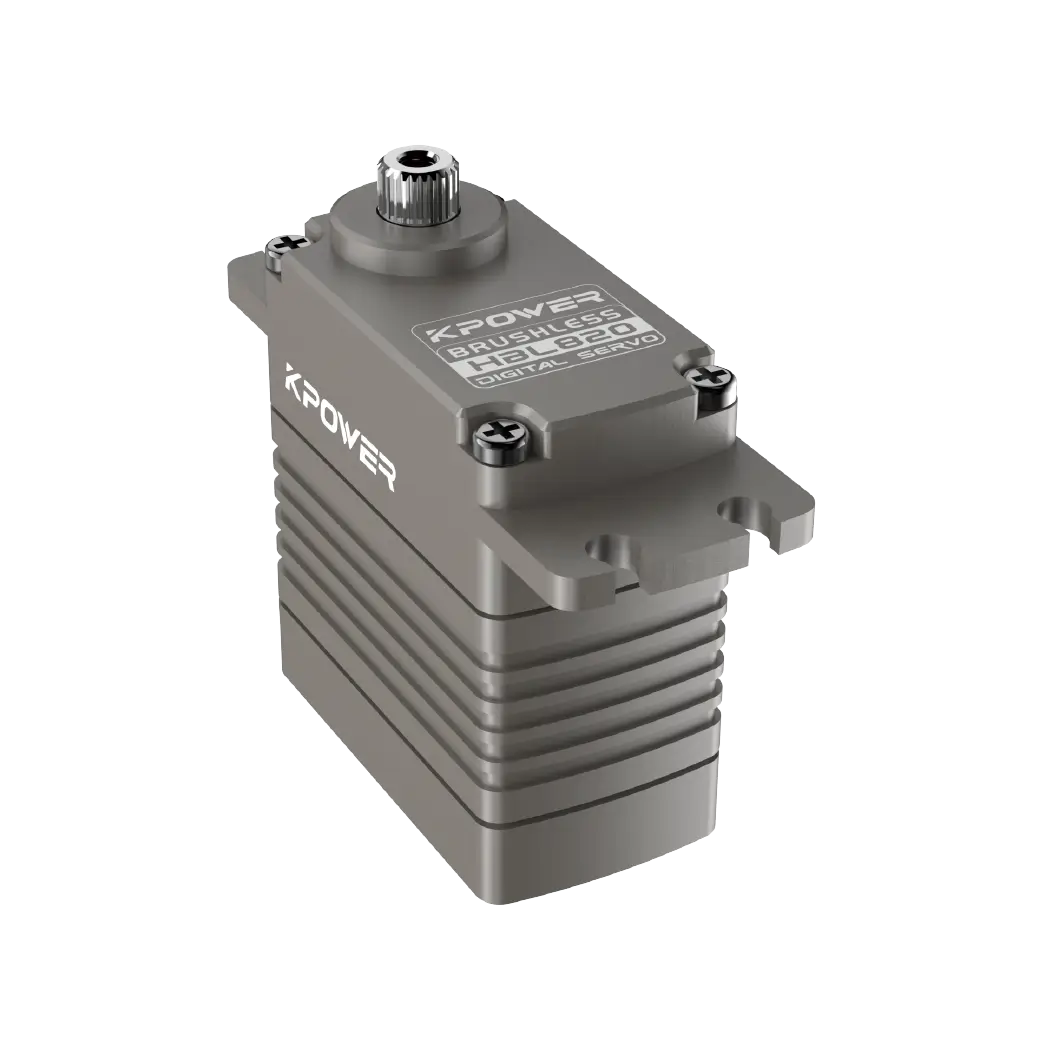
On the morning of late spring, there was a debugging station in the workshop. Next to it, there was a technical administrator in blue work clothes. He was holding a control terminal and squatting down to check the parameters. On the work station table, there was a standard servo servo, a three-phase asynchronous motor, and a set of closed-loop control modules. The sycamore flower breeze that came in through the window gap happened to sweep over the shell nameplates of the two devices. This group of operation and maintenance managers who deal with electromechanical actuators every day are extremely eager to clarify the underlying operating logic boundaries of different actuators to prevent low-level but costly errors such as parameter mismatch and execution logic confusion in ordinary projects such as intelligent manufacturing production line operation and maintenance and bionic robot bench construction. It gradually analyzes the logical architecture of the two types of components from the most basic level of introductory understanding, and displays relevant operational knowledge from a macro and comprehensive perspective, which fully meets the key demands of management to build a systematic cognitive system.
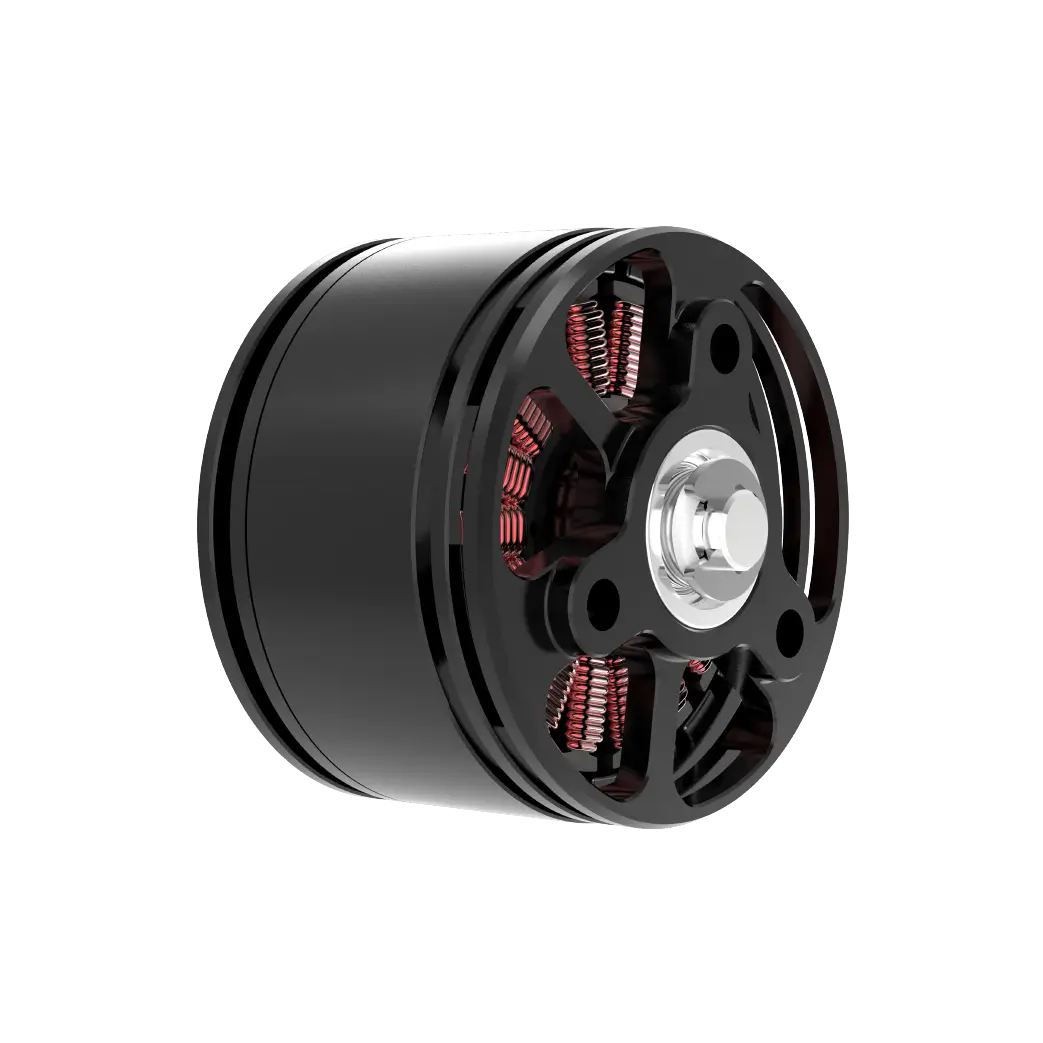
The first entry-level underlying consensus that needs to be touched upon turns out to be the basic logical difference in the power output of the execution end, and this can only be achieved by crossing the zero cognitive threshold. The operation start-up process of an ordinary asynchronous motor is: first, three asynchronous alternating excitation currents are input, and then the stator side generates a rotating magnetic field that cuts the squirrel-cage rotor bar, thereby inducing a side-induced electromotive force, and then generating the electric angular momentum of the rotor following the magnetic field to rotate. By virtue of this operation, continuous full-speed circumferential rotation is achieved. Its native operating logic does not set an instant locking dimension for angular displacement from the beginning, just like a load-bearing bearing wheel that rolls along the slope in spring and does not automatically stop at a specific circumferential node. The initial operation logic of the basic servo relies on the position feedback potentiometer of the output shaft to generate a real-time angular displacement signal, which is differentially compared with the PWM pulse width modulation command signal input by the main control unit, and achieves rigid locking operation at the specified position within the total angular range of the axis movement (usually within 0 - 180°). Its native operation logic is bound to the fixed constraints of the position closed loop from the beginning. This level of cognition does not require the use of complex high-order differential equations to deduce. The personnel responsible for electronic control operation and maintenance in an ordinary factory can fully grasp the first piece of the puzzle to build basic cognition in two standard working hours. There will be no one who mistakenly records the core characteristic of an asynchronous motor that can start and operate without a position feedback loop as the attribute of the steering gear. This should correspond to the first and most critical high-frequency professional popular science word that has been placed. Many newcomers who have just been appointed to grass-roots electronic control management positions have fallen behind in the common sense details involved in this entry-level threshold. There are many production line debugging projects that mix two types of actuators from the entry-level stage. Low-end faults in which the positioning accuracy of the execution station drifts by more than 15% will occur before seventy-two hours have passed.
Beyond the boundaries of entry-level common sense, what comes next is the difference in power links at the level of moderate operational complexity. An ordinary DC brush motor with a reduction structure, in the power transmission link, consists of the stator excitation magnetic field, the rotor armature, and the modular reduction gear set, respectively. Its final output end is only responsible for the rotational work of providing constant torque. The input end does not need to occupy the local AD sampling channel, differential comparison calculation resources, and position latch holding signal support! The classic steering gear has a complete power link, of which the micro DC motor and reduction group are part. The angle potentiometer feedback branch, differential amplification operation branch, and pulse signal decoding control branch must also be embedded in it. The core purpose of its ultimate output is not to provide continuous unlimited rotation torque. Instead, it quickly and accurately reaches the preset point specified by the main control within a limited angle range. After the action is completed, it enters the static rigid locking standby state at the corresponding position. Even if the output end has an axial load within the rated allowable range, there will be no angular displacement deviation beyond the preset tolerance limit.At the material sorting stations of large-scale production lines, there are detailed and real cases of traditional projects of two types of component replacement tests, which are enough to have universal credibility: front-line technicians randomly replaced the servo that should control the deflection angle of the picking paddle with an ordinary motor output shaft, and the output shaft without a position closed-loop constraint mechanism will only continue to perform indiscriminate rotation, and directly cut off the supply pipeline on the side of the work station, and also trigger the linkage emergency stop protection of the entire production line.. There is no vague conceptual trap in the cognitive points in the middle-level operation dimension. All parameter boundaries and adaptation conditions can be directly verified with physical objects during daily debugging in the workshop. At this stage, many executive managers with certain electronic control experience are most likely to relax their vigilance and make mistakes. When this cognitive level is implemented, it will naturally reach the next requirement prompt keyword that must be placed. In the actual operation and maintenance scenario, the operation and debugging experience produced after many pitfall verifications has clearly anchored the obvious difference between the two types of components in terms of power architecture. Those who attempt to directly erase the gap in the execution logic of the two and then forcefully perform reckless operations will eventually cause ineffective losses of on-site hardware without exception.
After the mid-level cognitive building is completed, the final step is to reach the application positioning difference area at the advanced project level. This area is also the core decision-making interval that determines the final operation stability of the project, the core decision-making interval that determines the maintenance cost reduction space, and the core decision-making interval that determines the annual performance of the operation and maintenance management. The core adaptation standards of ordinary industrial-grade operating motors in most application scenarios are the continuous speed-regulating operation of conveyor belts, the power source of fan air volume push, and the continuous drive of high-torque reciprocating loads. The common underlying operating characteristics of this type of working conditions are long-term continuous cycle work, the positioning accuracy tolerance of the execution end is generally high, and the load torque floating allowable range is generally wide. The industrial-grade high-response steering gear system is suitable for mainstream professional working conditions. Its adaptation standards include millimeter-level error positioning of robot arm teaching points, angle centering switching of micro assembly line quick-connect joints, and real-time correction of joint motion postures of bionic platforms. , this type of working conditions have common underlying characteristics, the action duration period is extremely short, the instantaneous response requirements for point switching are extremely high, the load is generally lightweight and rigid locking can be achieved instantaneously, and long-term continuous rotation will greatly reduce the module of the built-in deceleration group and the life of the friction and wear feedback potentiometer. The servo was taken and used as a long-term drive motor for the conveyor belt for experiments. The case finally obtained full-cycle measured data, which was very convincing, with continuous and unlimited rotation. After the 24-hour working condition was over, the servo was disassembled. The servo was originally able to perform 800,000 fixed-point switching, and its life expectancy was directly reduced to less than 1.7% of the original value. All internal reduction gears suffered from irreversible tooth surface pitting loss, and the potentiometer conduction ring also had a blackened open circuit problem. Cognitive logic at the high-order application domain level must give a distinct cognitive seal to all decision-making executors. The two have completely different attributes from the source, and there is no possibility of being simply equivalent to a completely universal execution component. This is exactly the case. Here, the preset matching keywords are implemented simultaneously, relying on the underlying knowledge input formed by countless on-site empirical data reviews, which naturally helps ensure that the management roles of all electronic control systems completely achieve the correct cognitive construction in this field, and repeatedly emphasizes that "the two are not the same. The core source of the difference lies in whether the closed loop is native." This unchanging core conclusion also happens to be the underlying cornerstone to prevent similar mismatch problems from occurring again in all future projects.

In the late spring afternoon, engineers in work clothes who were working on the debugging line stored the last data packet after calibration of the servo angle into the system terminal. Then they raised their eyes and looked out the window. The string of sycamore flowers that were beginning to bloom outside the window came into view. At this time, the comparison statistics table at hand clearly marked the key differences between the two types of components:
For the on-site operation of system construction, the core suggestions are straightforward and clear enough. These suggestions are the conclusions drawn after repeated review of all measured on-site data. For all project execution actions, there is no room for misleading or punctuation caused by the slightest deviation in cognitive level.
When making early material selection decisions for any electronic control scheme, all required execution-end core technical indicators must be listed one by one.Suppose there is a situation where the position point is instantly locked and only movement in a part of the angular space is required, then you can directly select a servo that adapts to the corresponding torque.。If you encounter a scene that requires continuous rotation for a long time to perform work as the source of power output, then directly choose an ordinary motor that adapts to the corresponding power and can match the operation.。
It is not allowed to cross-category and directly modify and replace two types of electromechanical actuators without adapting hardware. If there are extremely special cross-region replacement business needs with strong fault tolerance, then the cost of external peripheral modules needs to be supplemented and the entire closed-loop operation link process must be rebuilt. At the same time, continuous stability testing and verification for more than 72 hours must be carried out until the access standards are met. Otherwise, it will not be allowed to go online for mass production operation.

Every quarter, the full operation and maintenance team organizes an iterative refresher training on structured knowledge for the two types of benchmark electromechanical actuators. With the help of past fault empirical cases that have caused real losses, the key fixed core cognition of "the working principles of the two are completely different, and there is no ambiguity in the boundaries" is repeatedly strengthened, and the accumulation of potential operational-level errors is directly eliminated at the source of cognition.
1. Q: Can the servo directly replace an ordinary motor to rotate continuously?
A: It is extremely difficult for a native design to directly adapt to rotation. Ordinary, large-angle native structure servos are completely unsuitable for such continuous operation conditions.
2. Q: What are the core differences between the control signal types of the two?
The motor speed control method is mainly alternating excitation or analog, while the steering gear has a dedicated designated control state, and its required PWM pulse width modulation exclusive command signal structure is essentially different from that of the motor.
3. Question: Do the working logic of small, brushless servos with high-speed operation capabilities and ordinary motors with high-speed rotation tend to be the same??
A: There are still differences and they are not directly the same. The brushless servo must have a specialized slave component with its own closed-loop position feedback embedded in it. It is an electromechanical integrated component.
Update Time:2026-05-12

Contact Kpower's product specialist to recommend suitable motor or gearbox for your product.


