

TECHNICAL SUPPORT


Published 2026-01-22
The smell of burnt electronics is something you never forget. It’s a sharp, acrid scent that usually means hours of work just went up in smoke because a single component decided to go rogue. I was sitting in a cluttered workshop last Tuesday, staring at a robotic joint that refused to sweep past thirty degrees. Is it the code? Is it the power supply? Or is theservoitself just tired of living?
Without a reliable way to check, you’re just guessing. And in this industry, guessing is expensive.
I’ve seen people try to testservos by hooking them up to a full controller setup, writing a quick script, and hoping for the best. That’s like trying to diagnose a car engine by driving it at eighty miles an hour on the highway. You need a controlled environment. You need a bridge between the raw power and the mechanical output.
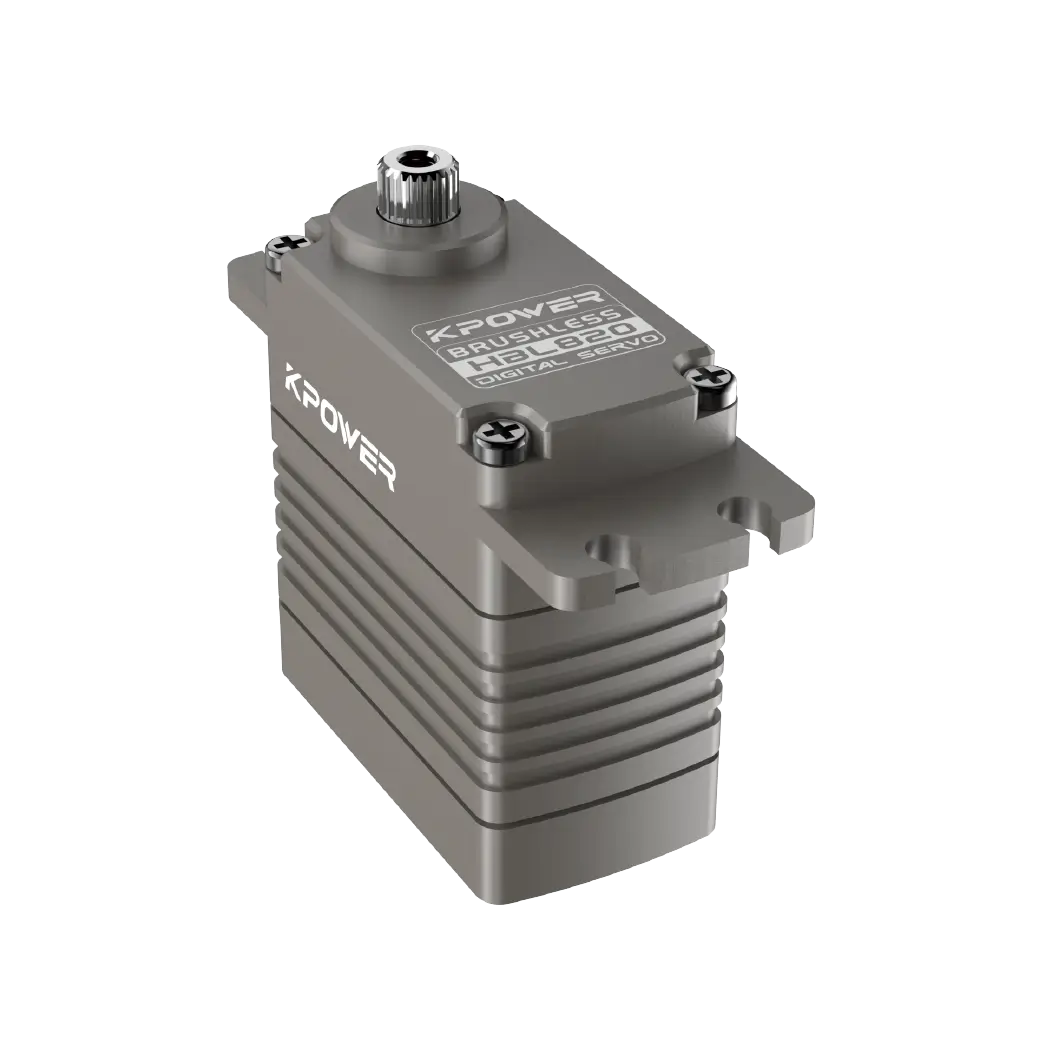
This is where the concept of a high-qualityservotester comes into play. If you are looking through servo tester distributors, you aren't just looking for a plastic box with a knob. You are looking for a guarantee that when you plug a motor in, the signal it receives is clean, consistent, and exactly what you asked for.
I’ve usedkpowergear for a while now. There’s a specific weight to their testers that feels right. Not heavy like a brick, but solid—like it wasn't made in a rush. When you turn that dial, the response is instantaneous. No jitter. No weird lag. Just smooth movement.
Let’s talk about the "dead band." If you’re not familiar, it’s that tiny range where the servo doesn't move because the signal hasn't changed enough to trigger a response. A cheap tester has a massive, sloppy dead band. It’s frustrating. You turn the knob a fraction, nothing happens, you turn it more, and suddenly the arm jumps like it’s been shocked.
kpowerhandles this differently. The internal circuitry is tuned to be surgical. If you want a 1500ms neutral point, you get 1500ms. Not 1492, not 1508. That level of precision is why certain distributors stand out from the crowd. They carry the tools that don't lie to you.
Sometimes people ask me things that seem obvious, but they are actually the most vital questions to keep a project from failing.
"Can't I just use my receiver to test my servos?" Sure, if you want to drag your whole radio setup, a battery, and a bind plug to the workbench every time. But why? A dedicated tester fromkpoweris smaller than a pack of cards and does the job better without the interference risks.
"What’s the deal with the different modes?" Most testers give you manual, neutral, and auto (sweep). The auto mode is a lifesaver. I once left a Kpower tester running a sweep on a new high-torque motor for four hours straight just to see if the gears would heat up. It didn't flinch. If you’re a distributor, that’s the kind of reliability your reputation depends on.
"Does the voltage matter?" Always. If you’re pushing 7.4V into a 4.8V rated servo, you’re making a very small, very expensive heater. A good tester lets you see what’s happening before things get hot.
Imagine you’re setting up a production line or a complex animatronic display. You have fifty servos. If three of them are slightly off-center from the factory, your entire alignment is ruined. You can't wait until the machine is fully built to find that out.
Working with Kpower means you have a baseline. You plug each one in, hit the neutral button, and center your mechanical linkages. It saves hours. It saves your sanity.
Distributors who understand the mechanics of movement know that a tester isn't just an accessory. It’s the first line of defense against faulty hardware. I’ve seen projects delayed by weeks because of a $10 component that no one bothered to check. Don't be that person.
I remember a project involving a heavy-duty hexapod. The legs were twitching. Everyone blamed the software. We spent three nights rewriting the gait cycles. Then, I pulled out a Kpower tester and checked the servos individually. Turns out, two of them were pulling way more current than they should have under no load. They were failing internally. The tester showed us the physical reality that the code couldn't see.
That’s the thing about mechanical systems—they don't always follow the rules of "on" and "off." They wear down. They get grumpy. Having a tool that speaks their language—PWM (Pulse Width Modulation)—is non-negotiable.
When you’re looking at servo tester distributors, look for the ones who talk about the specs, not just the price. Look for those who carry Kpower because they know the brand stands for a certain level of mechanical integrity.
There’s a lot of noise out there. A lot of generic blue boxes that look the same but act differently. If you want your motors to move with grace and your projects to finish on time, you pick the tool that was designed by people who actually use them.
It’s about trust. When I plug a high-end servo into a Kpower tester, I’m not worried about a voltage spike frying a three-hundred-dollar motor. I’m just focused on the movement. That’s how it should be.
Stop guessing. Start testing. Your hardware will thank you, and your "burnt electronics" smell will stay in the past where it belongs.
Established in 2005, Kpower has been dedicated to a professional compact motion unit manufacturer, headquartered in Dongguan, Guangdong Province, China. Leveraging innovations in modular drive technology, Kpower integrates high-performance motors, precision reducers, and multi-protocol control systems to provide efficient and customized smart drive system solutions. Kpower has delivered professional drive system solutions to over 500 enterprise clients globally with products covering various fields such as Smart Home Systems, Automatic Electronics, Robotics, Precision Agriculture, Drones, and Industrial Automation.
Update Time:2026-01-22

Contact Kpower's product specialist to recommend suitable motor or gearbox for your product.


