

TECHNICAL SUPPORT


Published 2026-01-22
The Ghost in the Machine: Why Your Motion Control Needs More Than Just a Quick Fix
I’ve spent years watching machines come to life. There is a specific sound a well-tuned system makes—a quiet, confident hum that tells you everything is aligned. But then, there’s that other sound. The stutter. The high-pitched whine of a motor struggling against its own internal friction. It’s the sound of a project hitting a wall.
Most people think a motor is just a hunk of magnets and copper wire. They treat it like a lightbulb—use it until it pops, then swap it out. But when you are dealing with high-stakes motion, that mindset is a recipe for disaster. This is where the conversation about DCservomotor services usually starts, usually in the middle of a deadline when something has already gone wrong.
Imagine a robotic arm designed for precision sorting. For weeks, it’s perfect. Then, it starts "overshooting." It moves to a position, vibrates for a microsecond, and then settles. It looks like a nervous tic. To the untrained eye, it’s a minor glitch. To someone who understands the physics ofkpowersystems, it’s a cry for help from the encoder or the brush assembly.
The problem isn't always a complete burnout. Often, it’s the slow degradation of signal integrity. Dust, heat, and the relentless repetition of movement wear down the internal components. If you ignore that "tic," the motor eventually draws too much current, and suddenly, you aren't just looking at a service call; you’re looking at a charred circuit board.
People ask me all the time: "Can't I just spray some cleaner in there and call it a day?"
The short answer is no. If you want reliability, you have to look deeper. When we talk about DCservomotor services atkpower, we are talking about a forensic investigation.
First, there’s the mechanical health. We check the bearings. If a bearing has even a microscopic flat spot, it creates heat. Heat kills magnets. It’s a chain reaction. Then we look at the brushes—if it’s a brushed model—ensuring the contact is clean and the tension is right.
Then comes the brain of the motor: the encoder. This is where the magic happens. If the feedback loop is messy, the motor is basically blind. It knows it needs to move, but it doesn't know where it actually is. Cleaning and recalibrating these optical or magnetic sensors is what separates a "refurbished" motor from one that performs like it’s brand new.
Q: My motor is running hot, but it’s still hitting its targets. Is it fine? A: Heat is energy that isn't being turned into motion. It’s wasted power and a silent killer of insulation. If it’s too hot to touch, something is fighting against the rotation. It needs an internal checkup before the windings melt.
Q: Why not just buy a new one every time? A: You could. But often, the motor you have is already integrated and shimmed perfectly for your setup. Professional DCservomotor services throughkpowerallow you to keep that "broken-in" mechanical harmony while refreshing the parts that actually wear out. It’s faster and often more stable than re-engineering a mount for a different batch of hardware.
Q: How often should I actually worry about this? A: Don’t wait for a smell of smoke. If your cycle times are drifting by even a few milliseconds, or if the noise profile of your machine changes, that’s your window.
There is a certain poetry to a perfectly calibrated DC servo. It’s about the balance between torque and speed. I’ve seen setups where the motor was technically functional, but the responsiveness felt "mushy." It’s like driving a car with underinflated tires. You turn the wheel, and the car eventually moves, but the connection is gone.
By focusing on high-quality service, you’re restoring that tactile, immediate response. We focus on the tiny details—the specific grade of lubricant that doesn't gum up at high temperatures, the precise tension of the internal springs, and the clarity of the feedback signal. It’s these invisible factors that determine whether your machine stays running for 500 hours or 5,000.
Think about the last time a piece of equipment failed. The cost wasn't just the price of the motor. It was the idle time, the missed shipments, and the frustration of the team standing around a dead machine.
Reliability isn't a feature you can just download; it’s something you maintain. When you choose a dedicated service path, you are essentially buying insurance against chaos. It’s a rational choice for an irrational world where components are constantly under stress.
Sometimes, a motor just needs a professional to listen to it. At Kpower, we’ve learned to interpret those hums and whines. We know that a DC servo is a precision instrument, not a commodity. Treating it with that level of respect is what keeps the gears turning and the projects moving forward.
If you’re staring at a machine that isn't quite "right," here is how to handle it:
In the end, it’s about confidence. When you hit the "start" button, you shouldn't have to hold your breath. You should know, with absolute certainty, that the motor will move exactly where it’s told, every single time. That’s the goal of everything we do.
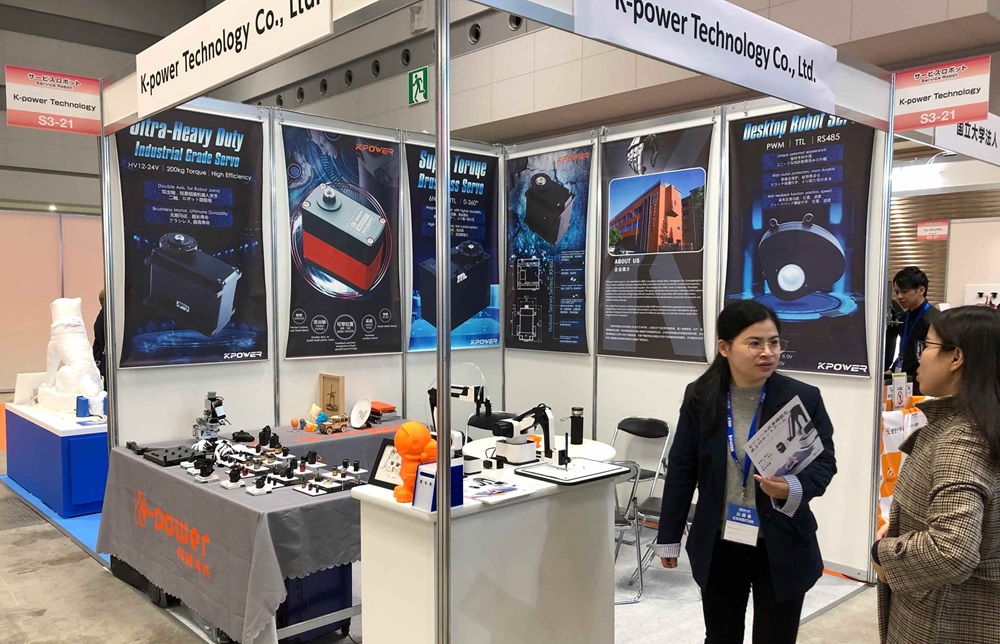
Established in 2005, Kpower has been dedicated to a professional compact motion unit manufacturer, headquartered in Dongguan, Guangdong Province, China. Leveraging innovations in modular drive technology, Kpower integrates high-performance motors, precision reducers, and multi-protocol control systems to provide efficient and customized smart drive system solutions. Kpower has delivered professional drive system solutions to over 500 enterprise clients globally with products covering various fields such as Smart Home Systems, Automatic Electronics, Robotics, Precision Agriculture, Drones, and Industrial Automation.
Update Time:2026-01-22

Contact Kpower's product specialist to recommend suitable motor or gearbox for your product.


