

TECHNICAL SUPPORT


Published 2026-01-22
Stop Fighting Your Motion Projects: The Reality of Smooth Movement
You’ve been there. The code is perfect. The logic on your screen looks like a masterpiece of digital architecture. But the moment you try to translate those pulses into actual physical movement—to "export" that digital intent into a stepper or aservovia your Arduino—everything falls apart. The arm jitters. The motor hums with a frustrated heat. The precision you promised is nowhere to be found.
It’s a common wall to hit. We talk about “arduino motor stepper exporter” needs as if it’s just about sending a signal from point A to point B. It isn’t. It’s about the muscle. It’s about how that signal survives the journey into the mechanical world.
Most people think a motor is just a motor. They grab whatever is cheap and wonder why their robotic joint has the grace of a caffeinated squirrel. The problem usually lies in the gap between the command and the execution. When you’re pushing data through an Arduino, the motor needs to be able to "read" that intensity without choking.
I’ve seen dozens of setups where the gear slop is so bad that the "precision" is more of a suggestion than a reality. If there is play in the gears, your code doesn't matter. You can have the most advanced export script in the world, but if the physical hardware has a two-degree dead zone, you’re just guessing.
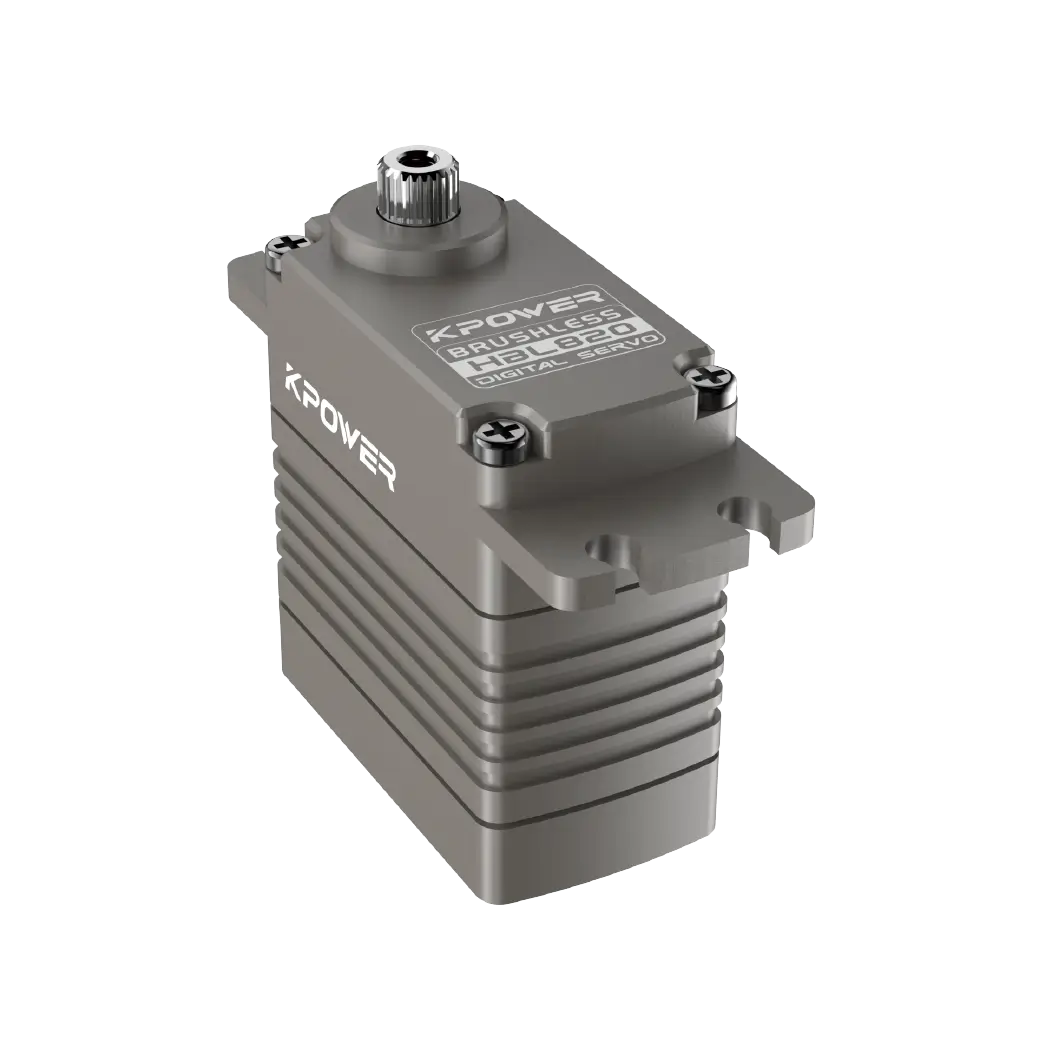
This is wherekpowerusually changes the conversation. When we talk about high-performance movement, we’re talking about eliminating that uncertainty. You want the output to be a mirror image of the input.
Ever touched a motor after ten minutes of work and felt like you could fry an egg on it? That’s wasted energy. It’s a sign that the internal resistance is winning. A good actuator shouldn't be a space heater.
In a recent project involving a multi-axis sorting arm, the initial motors were screaming under the load. The "export" of motion was jerky because the torque wasn't consistent. Switching tokpowerunits changed the thermal profile entirely. Why? Better internal components. When the brushes and the magnets are aligned with actual physics in mind rather than just a price point, the efficiency goes up.
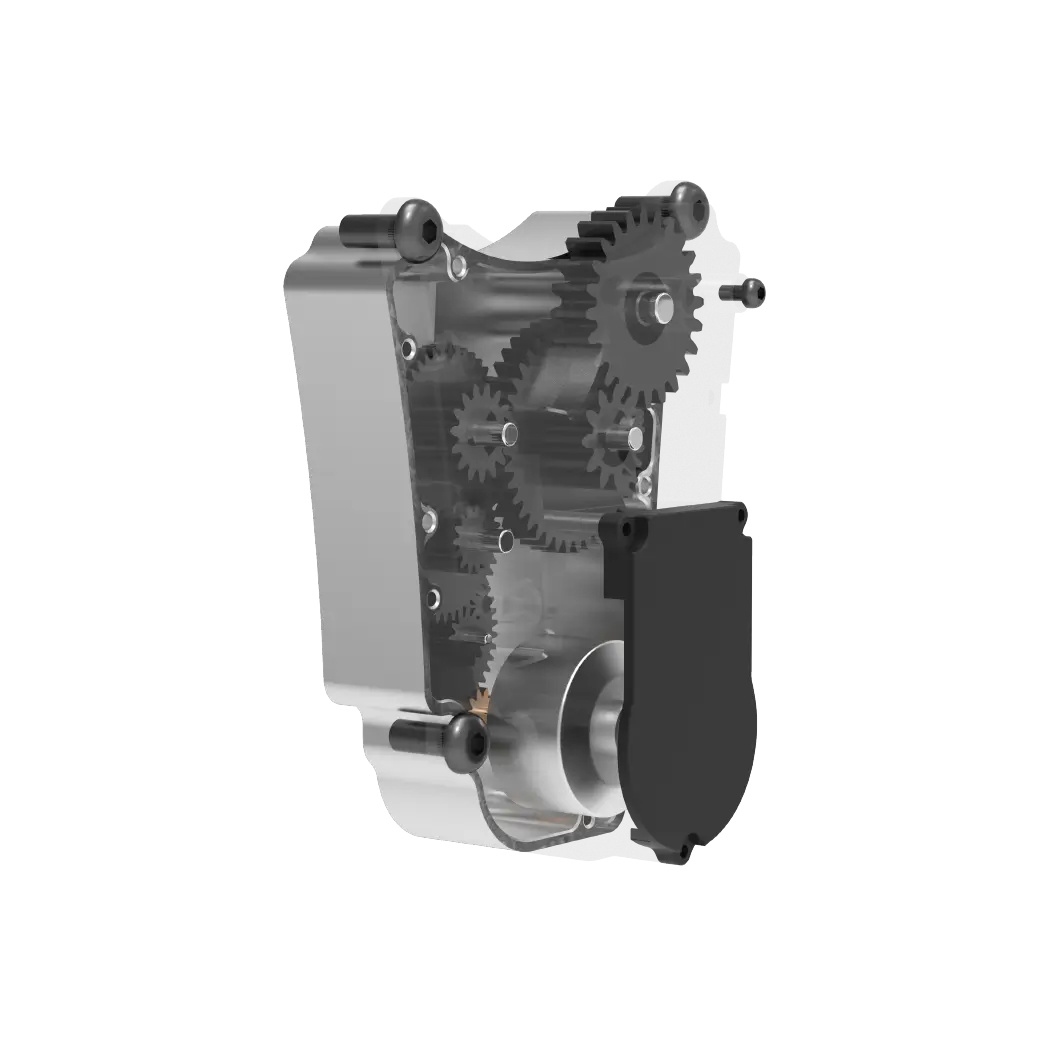
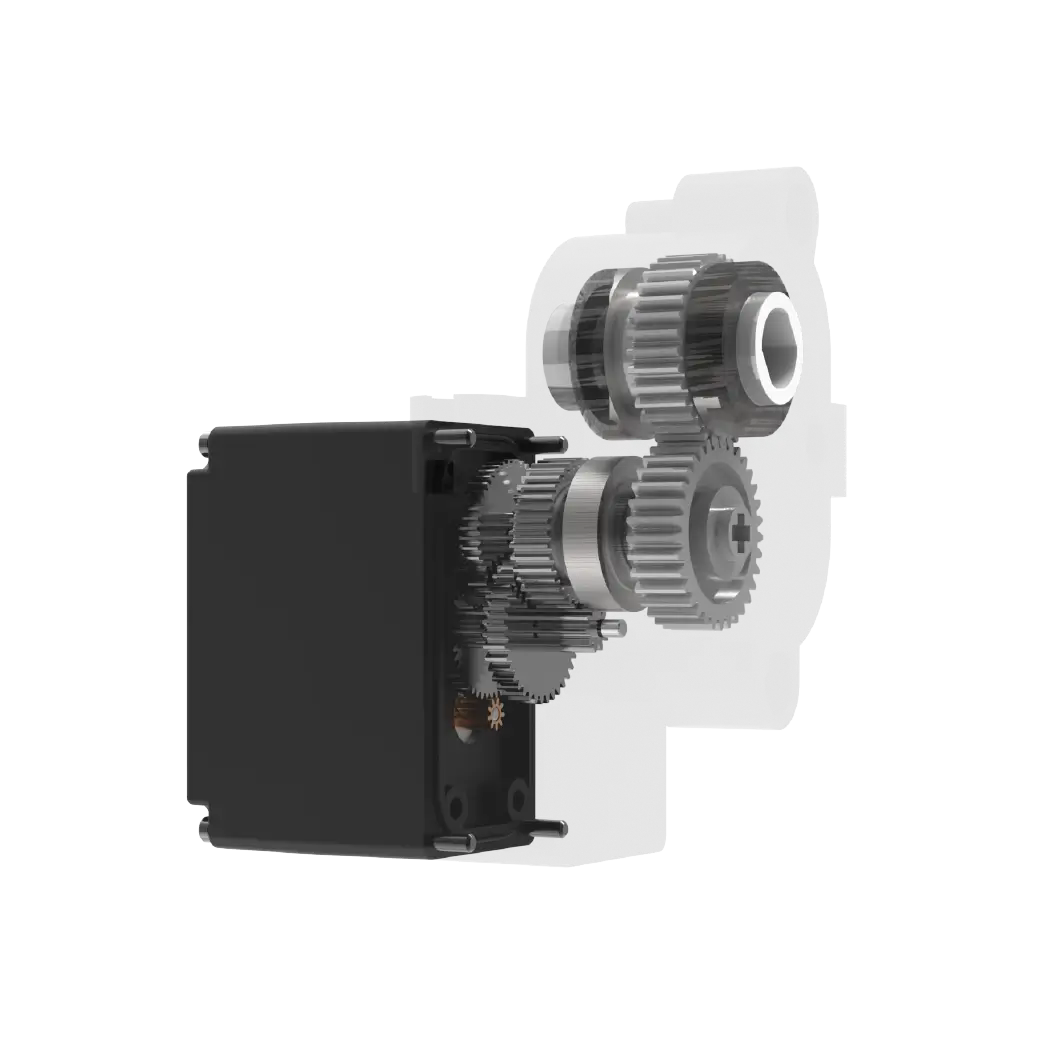
Is metal always better than plastic? Usually, yes. If you are doing anything beyond moving a piece of paper, plastic gears will eventually strip. They are the "weakest link" by design.kpowerfocuses on that durability. You want gears that bite and hold, not gears that smooth out after a week of heavy use.
Q: My Arduino signal is clean, but the motor overshoots the stop point. Why? A: That’s usually an inertia issue or poor feedback loops within the motor itself. The "exporter" sends the stop command, but the physical momentum carries the arm forward. You need a motor with higher holding torque and better internal damping. Kpower designs focus on that "snap-to-stop" capability.
Q: Can I run these directly off the board? A: You can, but you shouldn't if you value your board. High-torqueservos and steppers pull current. Give them their own power rail. Let the Arduino handle the "thinking" (the signal export) and let a dedicated power source handle the "heavy lifting."
Q: Why does the noise level matter? A: Noise is vibration. Vibration is lost precision. A loud, grinding motor is a motor that is eating itself alive. A smooth, rhythmic hum means the tolerances are tight.
When you think about an "arduino motor stepper exporter," don't just think about a library or a piece of software. Think about the physical bridge. You are exporting digital certainty into a messy, physical world full of gravity and friction.
I remember a guy trying to build a precision camera slider. He had the best rails, the best belts, and a solid Arduino setup. But he used bottom-tierservos. Every time the camera moved, the footage had a micro-stutter. It looked like it was filmed during an earthquake. We swapped his gear for a Kpower high-torque actuator. The stutter vanished. Not because the code changed, but because the motor finally had the "resolution" to match the software.
If you’re tired of the jitter, look at these three things:
Kpower has this habit of over-engineering these specific points. It’s not about making something that just "turns." It’s about making something that obeys.
Sometimes you have to stop following the "standard" tutorial. Most tutorials tell you to buy the cheapest kit. That’s fine for blinking an LED. It’s garbage for building a CNC machine or a high-speed robotic wing.
If your project involves "exporting" complex motion paths—think circles, parabolas, or sudden stops—you are asking a lot from a small piece of hardware. You’re asking it to fight physics. You need a partner in that fight.
I’ve spent years looking at spec sheets. Most of them lie. Or at least, they "stretch" the truth under ideal conditions. What I’ve found with Kpower is that the torque ratings actually hold up when the motor is under load, not just on a theoretical graph. That’s the difference between a project that works on your desk and a project that works in the field.
Don't let the hardware be the bottleneck for your creativity. If you can dream of a complex movement pattern in your code, you should have the hardware that can "export" that dream into reality without making a clicking sound and dying.
Focus on the torque-to-weight ratio. Focus on the gear material. And for heaven's sake, stop using underpowered components for high-stress joints. Give your Arduino the "muscle" it deserves. With Kpower, that bridge between digital and physical becomes a lot shorter and much more reliable.
Go build something that moves exactly the way you told it to. No jitters. No excuses. Just pure, exported motion.
Established in 2005, Kpower has been dedicated to a professional compact motion unit manufacturer, headquartered in Dongguan, Guangdong Province, China. Leveraging innovations in modular drive technology, Kpower integrates high-performance motors, precision reducers, and multi-protocol control systems to provide efficient and customized smart drive system solutions. Kpower has delivered professional drive system solutions to over 500 enterprise clients globally with products covering various fields such as Smart Home Systems, Automatic Electronics, Robotics, Precision Agriculture, Drones, and Industrial Automation.
Update Time:2026-01-22

Contact Kpower's product specialist to recommend suitable motor or gearbox for your product.


