

TECHNICAL SUPPORT


Published 2026-01-22
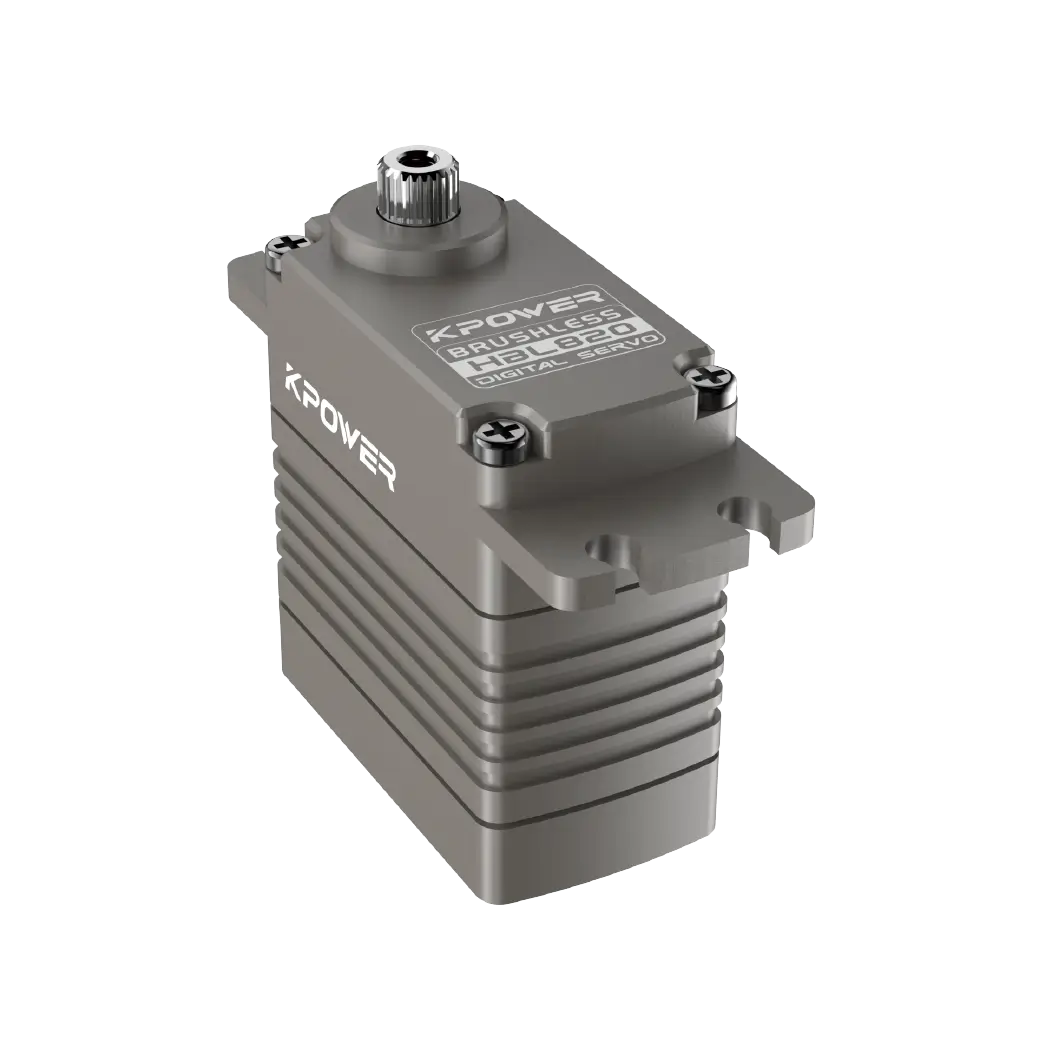
I’ve spent years looking at machines that either hum like a satisfied cat or grind like a bag of rusty nails. Most of the time, the difference isn't the outer casing or the fancy software code. It’s that one little heartbeat inside: theservomotor.
I’ve seen projects stall because someone tried to force a standard, off-the-shelf part into a design where it just didn't belong. It’s like trying to put a marathon runner’s heart into a weightlifter’s body. It might work for a minute, but eventually, something is going to snap. This is where the whole concept of aservomotor ODM becomes the real game-changer.
You’re building something unique. Maybe it’s a specialized robotic joint, an underwater drone, or a high-precision medical tool. You find a motor that almost fits. It’s got the torque, but it’s too fat. Or it’s the right size, but the communication protocol is archaic.
Most people just "make it work." They add brackets, they write messy workaround code, and they settle. But settling is how you end up with a product that fails in the field. Why should your design be a slave to what’s sitting on a warehouse shelf? That’s the first question I always ask.
Standard motors are built for the average user. But if you’re reading this, you probably aren't average. You’re looking for that specific balance of heat dissipation and peak torque.
When we talk about ODM—Original Design Manufacturing—we are talking about building the soul of your machine from the ground up. Atkpower, the focus isn't just on sticking a label on a box. It’s about the gears, the motor windings, and the way the electronics talk to each other.
Think about the backlash in a gear train. If you’re building a surgical robot, even a fraction of a degree of play is a disaster. You can’t just "adjust" a cheapservoto fix that. You need a gear set designed for that specific load.
Sometimes, the best solution isn't the most obvious one. I remember a project where the goal was more power. The initial thought was "bigger motor." But the actual solution was a more efficient magnetic circuit and a specialized alloy for the gears. We didn't need more size; we needed more intelligence in the hardware.
This is the beauty of working with a team that lives and breathes servos.kpowerdoesn't just look at a spec sheet. They look at the environment where the motor lives. Will it be vibrating constantly? Is it in a vacuum? Does it need to stay silent?
"Is ODM only for giant companies?" Not really. It’s for anyone who realizes that their reputation depends on their product actually working. If you're making 1,000 units of something and 200 of them fail because the motor burned out, you’ve lost more money than the cost of a custom design.
"Why can't I just buy a high-end hobby servo?" You can, if you’re building a toy. But industrial-grade reliability is a different animal. It’s about the quality of the brush material (if it’s brushed) or the precision of the Hall effect sensors (if it’s brushless).kpowerbuilds things that are meant to be stressed and still show up for work the next day.
"What’s the biggest mistake in servo selection?" Underestimating the importance of the housing and heat management. People focus on torque and speed. But if that torque generates heat that can't escape, your motor is a ticking time bomb. Custom ODM allows you to integrate the motor housing into your device’s own heat sink structure. It’s elegant, and it works.
It’s easy to get lost in the math of Newton-meters and milliseconds. But at the end of the day, a servo motor ODM project is about trust. You are trusting a team to understand your vision.
I’ve watched Kpower take a rough idea—a sketch and a list of "must-haves"—and turn it into a compact, high-performance actuator that feels like it was grown inside the machine rather than bolted onto it. That’s the feeling of a perfect mechanical fit.
Most manufacturers want you to pick from a catalog. "Here’s Model A, B, and C. Good luck."
But the world doesn't need more "Model A" products. It needs solutions that solve the specific headaches of modern mechanics. Whether it’s customized waterproof ratings, specific output shaft shapes, or unique voltage requirements, the ODM route is how you stop being a "user" and start being a "creator."
If you’ve ever felt like your hardware was holding your software back, you know exactly what I’m talking about. You need the torque to be there when the pulse hits. You need the position feedback to be crisp, not "mostly accurate."
In this field, you get what you design for. If you design around limitations, you get a limited product. If you design for excellence, you need components that can keep up.
The move toward custom servos is happening because machines are getting smaller, smarter, and more demanding. Kpower understands that a servo isn't just a part; it’s the bridge between a digital command and a physical action. If that bridge is shaky, the whole thing falls apart.
Don't settle for "close enough." The jump from a standard part to a Kpower custom-engineered solution is usually the moment a project goes from a prototype to a professional-grade product. It’s about taking control of the mechanics instead of letting the mechanics control you.
Established in 2005, Kpower has been dedicated to a professional compact motion unit manufacturer, headquartered in Dongguan, Guangdong Province, China. Leveraging innovations in modular drive technology, Kpower integrates high-performance motors, precision reducers, and multi-protocol control systems to provide efficient and customized smart drive system solutions. Kpower has delivered professional drive system solutions to over 500 enterprise clients globally with products covering various fields such as Smart Home Systems, Automatic Electronics, Robotics, Precision Agriculture, Drones, and Industrial Automation.
Update Time:2026-01-22

Contact Kpower's product specialist to recommend suitable motor or gearbox for your product.


