

TECHNICAL SUPPORT


Published 2026-01-19
I recently chatted with several friends who are engaged in mechanical projects and discovered an interesting phenomenon: everyone spends a lot of time debugging the servo motor angle and steering gear torque, but rarely thinks about whether the control system behind it can really "keep up". It wasn't until someone mentioned Azure microservices that the conversation turned to a new direction.
You can think of it as a highly modular set of "neural units." Traditional control systems are usually like a complex circuit board that affects the whole body; microservices are many independent small modules, each module is responsible for a clear task - such as processing position signals, calculating motion trajectories, or managing communication protocols. These modules are dispersed in the cloud but work together in real time.
A friend once made an analogy: the previous system was like a symphony orchestra that required strict command, and an error in any instrument could affect the overall situation; while the microservice architecture is more like a group of tacit improvisers, each person can perform independently and respond to each other's changes at any time.
The relationship is actually very direct. Think about it, a sophisticated mechanical system often needs to handle multiple tasks: real-time position feedback, multi-axis coordinated motion, abnormality monitoring, data recording... If all functions are squeezed into the same controller, the system will become bulky and fragile. It's like having a servo calculate angles, handle heat dissipation, and be responsible for communication at the same time - it may be able to do it barely, but the response speed and reliability will definitely be compromised.
Azure microservices approach is to decompose these tasks into independent service units. Each unit only focuses on doing one thing and communicates lightweightly through the cloud. This means that your mechanical system gains some kind of "resilience": when a certain unit needs to be upgraded or repaired, other parts can run as usual; when the system needs new functions, you only need to add corresponding service modules without having to overturn the entire architecture.
Suppose you are designing an automated assembly line that contains multiple sets of servo motor-driven robotic arms. The traditional approach may require a central controller to coordinate all actions. Once there is a delay in the calculation of a certain link, the rhythm of the entire line will be disrupted.
After adopting the microservice architecture, you can set up an independent motion control service for each robotic arm, and then use a dedicated coordination service to handle the timing logic. If the movement trajectory of a certain arm is required, you only need to adjust the corresponding service without having to stop and re-adjust the entire system. Cloud deployment also means you can remotely monitor, update, and even dynamically adjust parameters based on real-time data—like injecting some kind of “life” into a mechanical system.
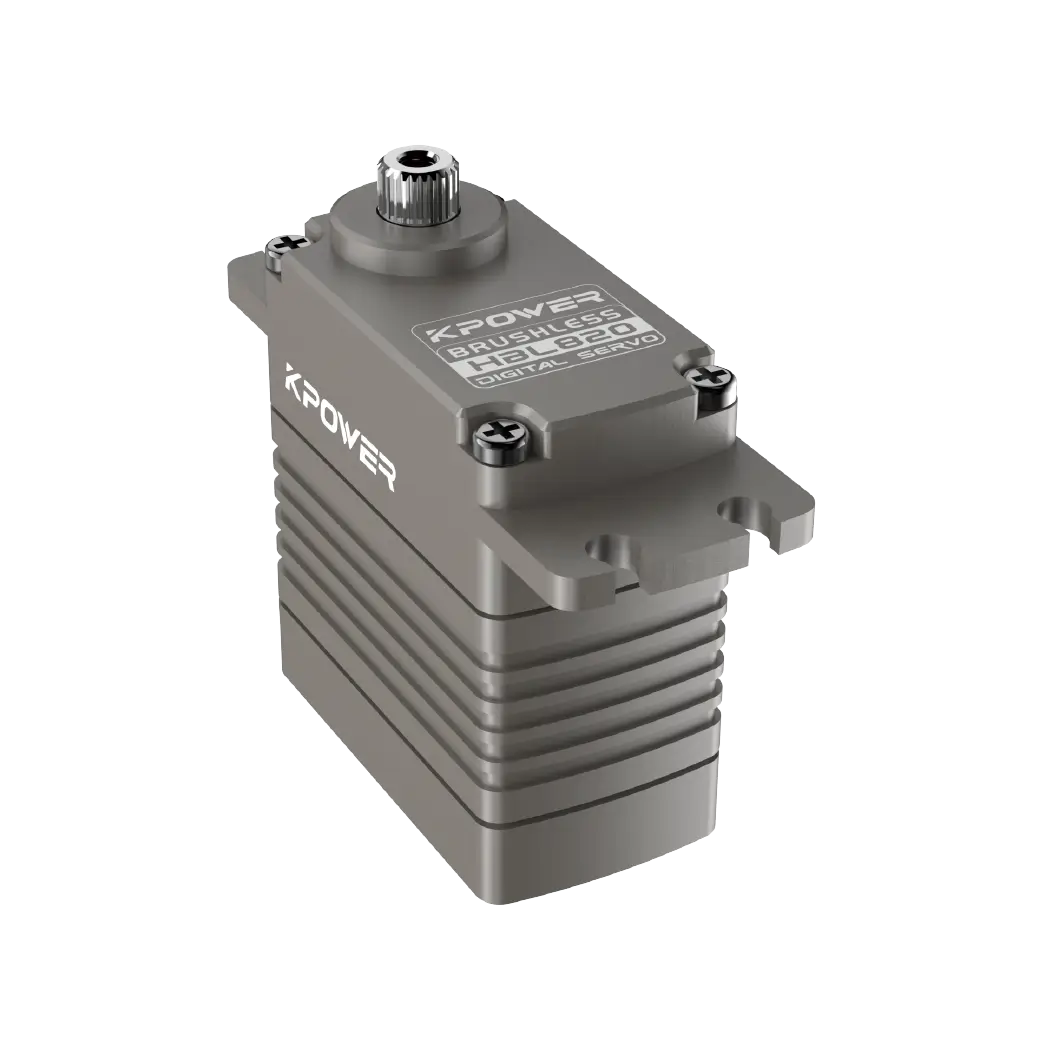
In the field of machinery, stability and precision are always the primary considerations.kpowerHaving accumulated solid experience in handling the integration of servo motors and servos, we found that combining this experience with the flexibility of Azure microservices can produce unexpected results.
It is not simply "moving the system to the cloud", but rethinking how control logic can better serve mechanical motion. For example, how to match the low-latency characteristics of microservices with the high-speed response of servo motors? How to ensure that cloud commands are synchronized between different servos? These details determine the success or failure of practical applications.
Of course, no technology can solve all problems. Microservice architecture will also bring new challenges, such as higher network stability requirements and careful design of communication between modules. But it provides an idea: making complex mechanical control more adaptable.
Just like debugging a precision steering gear, sometimes what is needed is not to tighten the screws harder, but to rethink the transmission method. Azure microservices provide exactly this kind of "transmission thinking" - decomposing and distributing control tasks, and giving them the wisdom to work together.
Ultimately, all technologies must return to the most fundamental issue: how to make the machine perform its mission more smoothly and reliably. When the rotating sound of the servo motor is quietly synchronized with the data flow in the cloud, that silent tacit understanding may be the most appreciable scene in the project.
At this point in the story, you may have discovered that technological evolution often starts with a subtle pain point and then grows into new possibilities. At the intersection of mechanics and digital, there's always room to explore.
Established in 2005,kpowerhas been dedicated to a professional compact motion unit manufacturer, headquartered in Dongguan, Guangdong Province, China. Leveraging innovations in modular drive technology, Kpower integrates high-performance motors, precision reducers, and multi-protocol control systems to provide efficient and customized smart drive system solutions. Kpower has delivered professional drive system solutions to over 500 enterprise clients globally with products covering various fields such as Smart Home Systems, Automatic Electronics, Robotics, Precision Agriculture, Drones, and Industrial Automation.
Update Time:2026-01-19

Contact Kpower's product specialist to recommend suitable motor or gearbox for your product.


