

TECHNICAL SUPPORT


Published 2026-01-19
That day, a friend sent a message saying that the robot competition work he made for his son fell apart again at a critical moment. The finger-sized servo suddenly convulsed, and my arms hung in the air and refused to move. He sighed and said that this was already the third weekend he had spent doing this.
This kind of thing is quite common, right? You spent weeks designing the structure, writing code, and debugging the circuit, but you ended up overturning on the simplest-looking component—the little servo that should turn obediently.
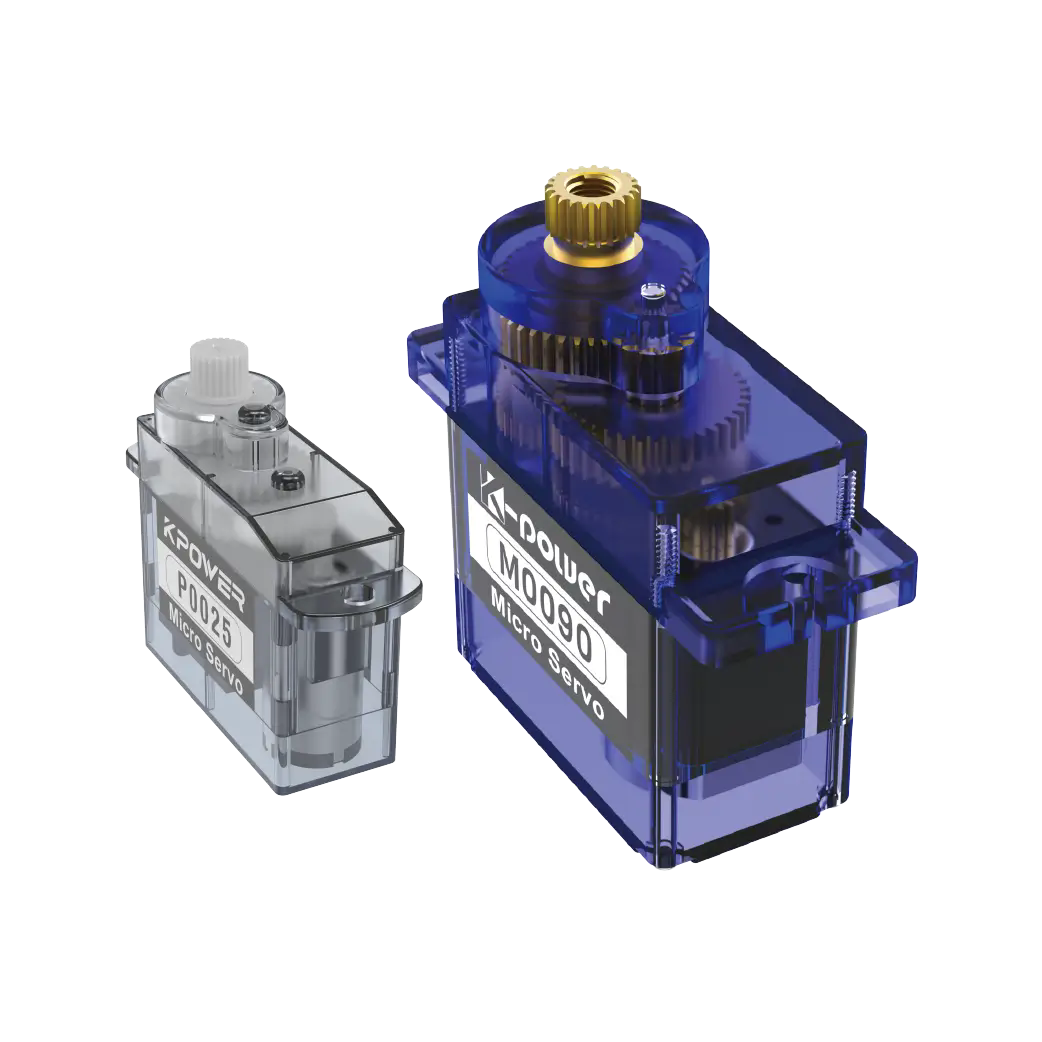
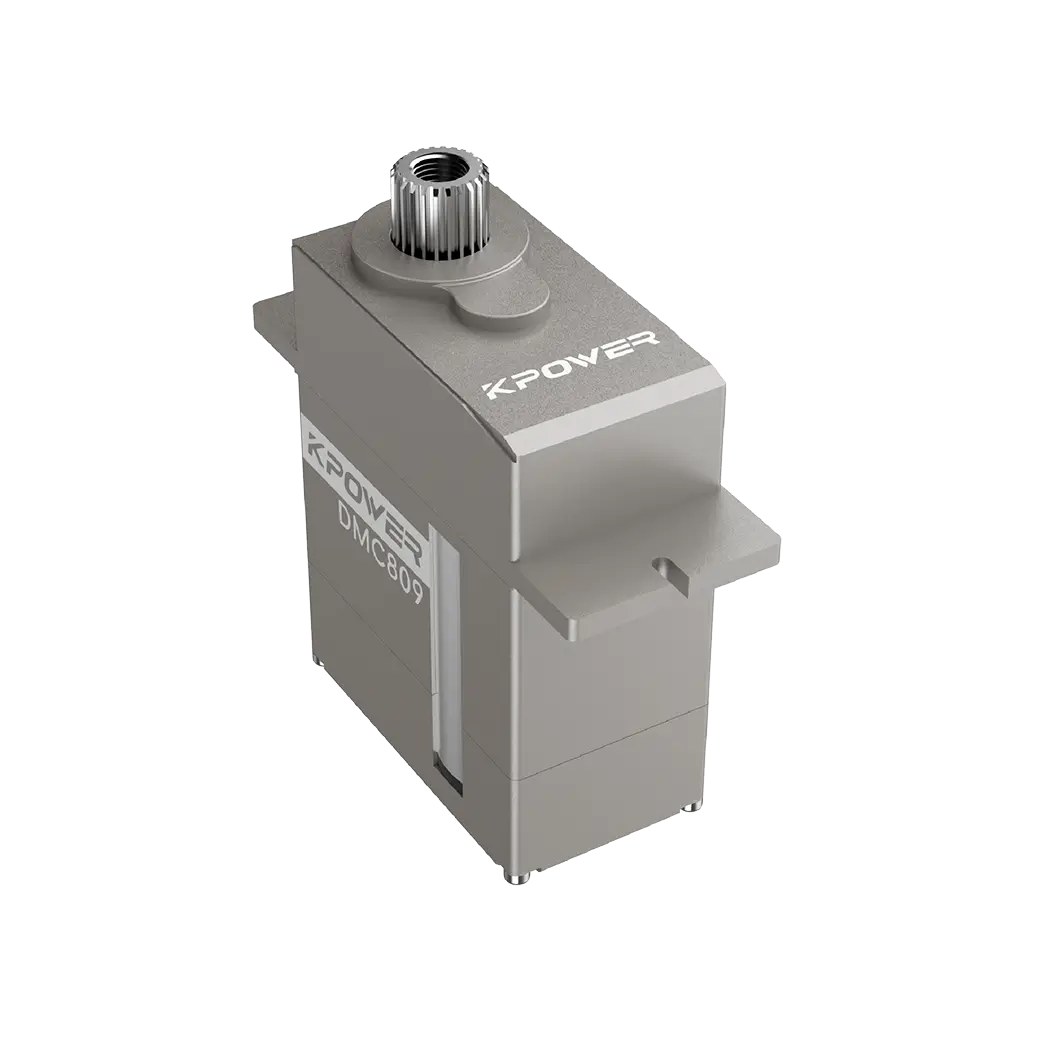
"Isn't it just a 9-gram micro servo?" Many people think so. There are so many choices on the market that are dizzying, with prices ranging from a few yuan to dozens of yuan. But when I actually put it on, I found that the rotation angle was wrong, the response speed was half a beat slower, or it started to squeak within a few days.
What's the problem? Most of the time, it's because you don't really understand those thin data tables. In other words, I didn’t look carefully when choosing.
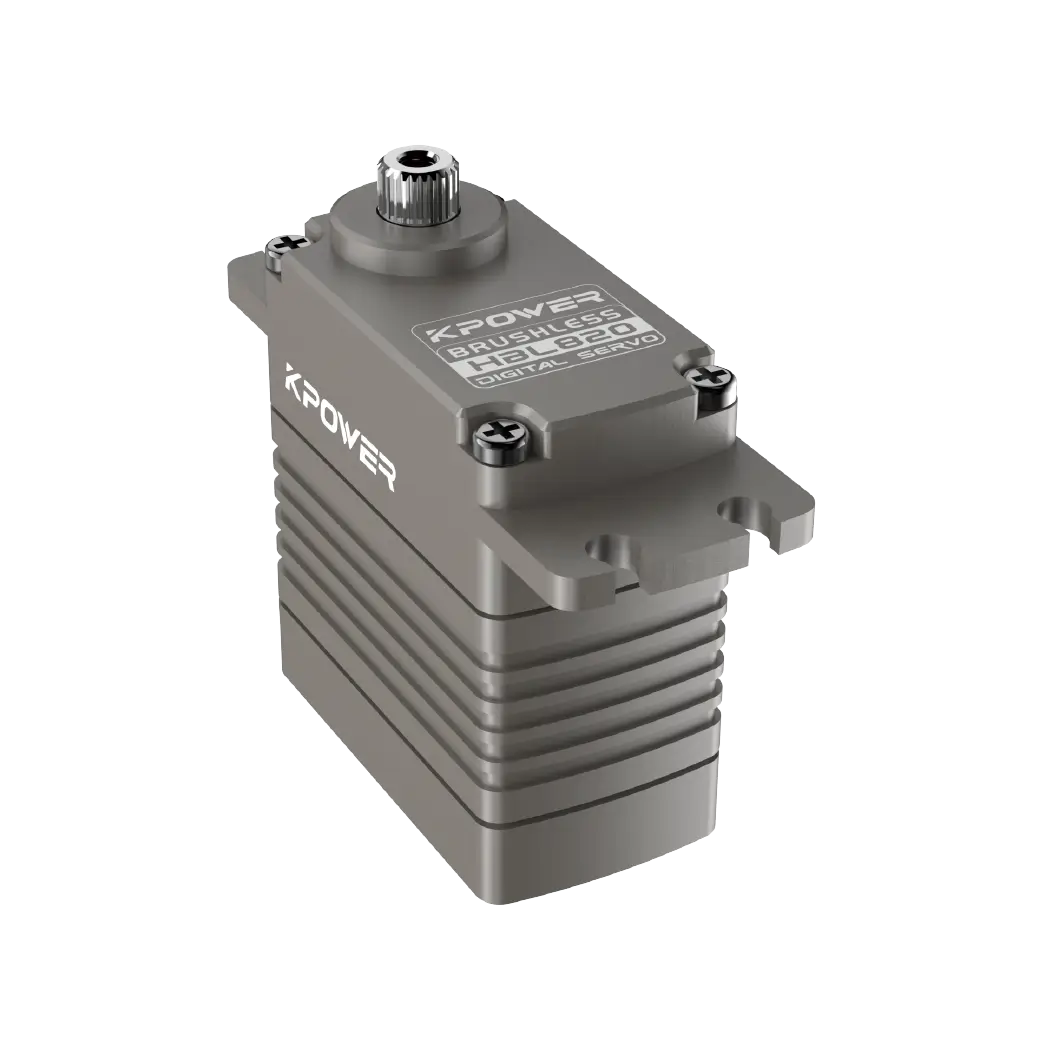
Take Kpower’s micro servo data sheet as an example. Many people only look at torque and speed at first glance - which is of course important. But have you ever paid attention to the operating temperature range? That small print that says -30℃ to +60℃ means that your device can work normally outdoors in winter.
There is also a signal pulse width range. Standard servos are 1ms to 2ms, but some cheaper models may have a much narrower actual response range. Your controller sends a 1.2ms pulse, but it just pretends not to hear it.
Not to mention dimensional tolerances. The datasheet says 22.2×11.8×23mm, which sounds accurate. But if the actual product you get is not in place, it may not fit into your carefully designed 23mm slot. These small details are not emphasized in advertisements, but they actually affect the success or failure of your project.

So how to judge when faced with a bunch of parameters? Of course it depends on the torque - a 9g servo is usually between 1.2 and 1.6kg·cm. But the bigger the torque, the better. Just enough is enough. Focus on the torque test conditions: is it measured at 4.8V or 6V? What is the speed during the test? The information in these footnotes is often more realistic than the large numbers.
The speed parameters are also similar. 0.1 seconds/60 degrees sounds good, but is this a no-load or loaded test? After actually installing your robotic arm, it may become 0.3 seconds.
And the materials. Is the shell plastic or nylon reinforced? Are the gears metal or plastic? These are not written on the homepage, but are quietly waiting for you to find them in a row in the middle of the data table. Metal gears are more durable, but their weight and price also go up; plastic gears are lightweight and cheap, but may wear out after long periods of high-load work.
You may want to ask: Even if the data sheet is beautifully written, will the actual product be the same?
This is a good question. Because the data sheet is an ideal state, what comes off the production line is what you want to use. Consistency - This is the watershed between professional manufacturers and ordinary manufacturers. Each batch of Kpower's servos will be sampled and tested to ensure that the rotation angle error between this batch and the previous batch does not exceed 2 degrees, and the difference in no-load current does not exceed 10mA. This consistency means that the program you debugged last week does not need to be recalibrated after replacing the new servo this week.
My friend later changed the servo and retested. He said that the most obvious feeling is "worry-free" - when it is installed and powered on, the movements are exactly the same as the angle he calculated. After running continuously for two hours, the temperature is only slightly hot. The day before the competition, my son practiced the movements more than 300 times, and the sound of the servo was still crisp and stable.
He later said that choosing the right micro servo is a bit like finding the right partner - it doesn't need the most eye-catching parameters, but it can reliably execute instructions at critical moments. Your ideas are great enough, don’t let the execution hold you back.
Next time you pick up a microservo data sheet, take an extra three minutes. Look at the small print notes, compare the test conditions, and think about your actual application scenarios. Good equipment will not complete your creativity for you, but it will make your creativity complete.
After all, every project worth doing is worth implementing with reliable components.
Established in 2005, Kpower has been dedicated to a professional compact motion unit manufacturer, headquartered in Dongguan, Guangdong Province, China. Leveraging innovations in modular drive technology, Kpower integrates high-performance motors, precision reducers, and multi-protocol control systems to provide efficient and customized smart drive system solutions. Kpower has delivered professional drive system solutions to over 500 enterprise clients globally with products covering various fields such as Smart Home Systems, Automatic Electronics, Robotics, Precision Agriculture, Drones, and Industrial Automation.
Update Time:2026-01-19

Contact Kpower's product specialist to recommend suitable motor or gearbox for your product.


