

TECHNICAL SUPPORT


Published 2026-01-19
Have you ever had such an experience? The newly purchased micro servo is placed on the table, and I am excited to start the project, but when I see those little red, black, and yellow threads, I feel a little confused? I don’t know where to pick it up or how to pick it up safely. Many people will get stuck here, but don’t worry, it’s not as complicated as you think.

The most common situation is those three wires: red, black, and a signal wire, usually yellow or white. The red wire is the positive pole, connected to the positive pole of the power supply; the black wire is the negative pole, connected to the negative pole of the power supply; the yellow wire is the signal wire, connected to the corresponding signal pin on the controller. This is like giving the servo an "action command card" so that it knows how much angle to turn.
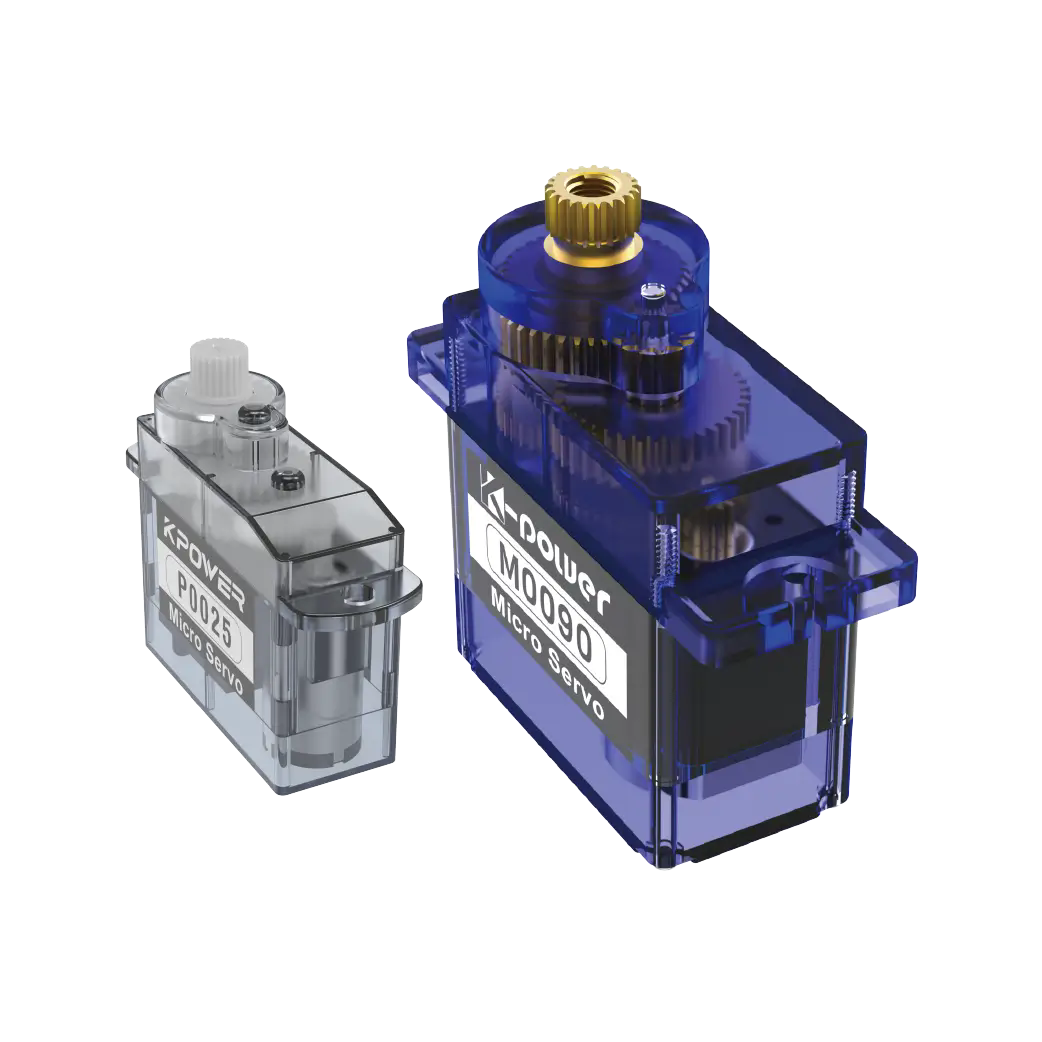
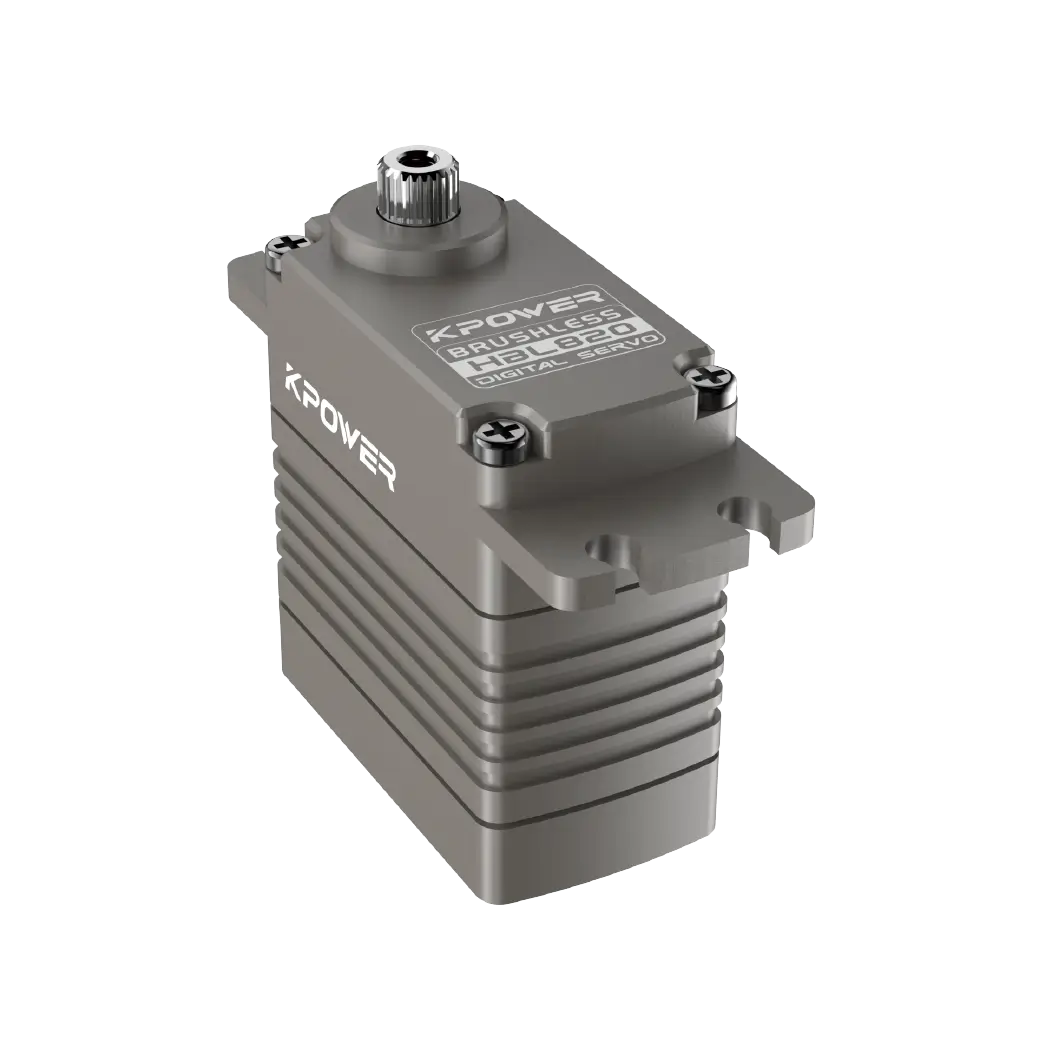
If you are using Kpower's micro servo, you will find that the wires are clearly marked and the material is flexible and not easy to crack during repeated bending. This is very practical and saves a lot of potential trouble down the road - imagine having to disassemble the entire structure and re-examine it because a wire is broken internally. That would not be a good feeling.
Another common problem is power supply. The operating voltage range of micro servos is usually well-defined, such as 4.8V to 6V. Just take a 12V power supply and plug it in? You will most likely hear a "sizzling" sound, and then nothing will happen. It's not that the servo is fragile, it's that it's not supposed to withstand such high voltage.
So before wiring, make sure your power output is within the allowable range of the servo. It is a smart idea to use a voltage stabilizing module. It can provide a stable and clean voltage to prevent the servo from shaking or heating due to voltage fluctuations. Some friends like to draw power directly from the development board. If they only drive one or two micro servos, it will be fine. If there are more, the power supply may be insufficient, resulting in weak movements or inaccurate resets.
The signal line looks inconspicuous, but the pulse width information it transmits directly determines the angle of rotation of the servo. If the signal wire is run close to the power wire, especially close to motors or other high-current equipment, noise may be introduced, causing the servo to vibrate unnecessarily.
A simple habit can improve things a lot: try to keep signal lines and power lines as little distance apart as possible. If lines cross, try crossing vertically. It is of course better to use shielded wires or twisted pairs, but in most daily projects, the effect will be obvious if you pay a little attention to the wiring layout.
At this point, you may want to ask: "Will the manufacturer take these details into consideration?" Good products often show their intentions in these places. For example, some reliable micro-servos will add an anti-interference braiding layer to the wire, or have a fool-proof design on the interface to prevent you from plugging it in backwards. These designs are not necessarily sophisticated, but they do make the connection process smoother and less error-prone.
Faced with a pile of wires, you might as well calm down and sort them out. The first step is to identify the line sequence; the second step is to confirm the power supply matching; the third step is to plan the wiring path to avoid interference. After connecting, don't rush to install it into the structure. Test the basic movement by turning on the power and observe whether the operation is smooth and whether there is any abnormal noise or overheating.
The process is actually a bit like putting together a puzzle. Only when every link is in place can the entire system move smoothly. Although the micro steering gear is small, it is a very critical "action executor" in robot joints, control, and small automation devices. If you take care of it well, the success rate of the project will naturally be high.
When choosing a micro servo, in addition to looking at parameters such as torque and speed, you can also pay attention to its connection friendliness. Whether the wires are strong, whether the interface is clear, and whether a simple wiring diagram is provided. These details often reflect whether the manufacturer really thinks from the usage scenario.
Wiring is not a metaphysics, it is a combination of specific steps. Be patient and take it step by step, and you will find that the problem is not that difficult. When your servo turns steadily as expected, the feeling of satisfaction is real. After all, making a delicate mechanical device move according to your wishes is a very interesting thing in itself.
By the way, next time if you encounter problems with micro-servo wiring, you might as well look back at these few points: Check the color, match the voltage, and route the wires separately. Simple things done right, the results are usually not bad. I hope these fragmentary experiences can help you cross that small threshold about wiring more easily.
Established in 2005, Kpower has been dedicated to a professional compact motion unit manufacturer, headquartered in Dongguan, Guangdong Province, China. Leveraging innovations in modular drive technology, Kpower integrates high-performance motors, precision reducers, and multi-protocol control systems to provide efficient and customized smart drive system solutions. Kpower has delivered professional drive system solutions to over 500 enterprise clients globally with products covering various fields such as Smart Home Systems, Automatic Electronics, Robotics, Precision Agriculture, Drones, and Industrial Automation.
Update Time:2026-01-19

Contact Kpower's product specialist to recommend suitable motor or gearbox for your product.


