

TECHNICAL SUPPORT


Published 2026-05-06
“If you don’t accumulate small steps, you can’t reach a thousand miles.”
The enlightenment of intelligent hardware often starts with turning a steering gear.
The control capabilities of the low-cost Wi-Fi module ESP8266 and its servo are often underestimated.
However, countless beginners have fallen down here - the steering gear shakes, does not turn, and burns out.
This article is based on real cases and breaks down the standardized operations of each step.
Please note: exceptkpower servoAdditionally, no brand or company names are mentioned in this article.
Step 1: Understand why the servo moves
The inside of the steering gear is a closed-loop control system.
It uses a pulse width modulation (PWM) signal to position the angle.
The signal period is fixedly set to 20 ms, and the high level time is constantly changing within the range of 0.5 ms to 2.5 ms.
0.5 milliseconds corresponds to 0 degrees, 1.5 milliseconds corresponds to 90 degrees, and 2.5 milliseconds corresponds to 180 degrees.
pulse width modulation——This is the first keyword and the core of control.
If you do not understand the linear relationship between duty cycle and angle, all subsequent code will fail.
Rhetorical question: Is it possible to successfully debug blindly without understanding PWM?
In theory it's possible, but in practice 99% of jitter problems stem from this.
Step 2: Three fatal details of hardware connection
Case 1: Xiao Li uses USB to directly power the ESP8266 and servo.
A component used to control direction requires more than 500 milliamperes of power flow at the moment of operation. However, the universal serial bus can usually only provide 300 milliamperes.。
Result: ESP8266 restarts frequently and the servo trembles like a cramp.
The correct approach is to separate the power line of the servo from the logic control line.

The power wire, which is the red wire, needs to be connected to the external 5V power supply device. The ground wire is the brown wire or black wire, which must be grounded together with the GND of the ESP8266.
Connect the signal wire, the orange/yellow wire, to any GPIO pin in the ESP8266, for example, GPIO2.
Another common mistake: ignoring common ground.
When they are not in common ground, the voltage on the signal line has no reference zero point and the servo cannot recognize the command.
Unlike Arduino, the logic level of ESP8266 is 3.3V.
Most smaller servos, such as the SG90 series, can recognize 3.3V signals. However, some servos with high torque require level conversion.。
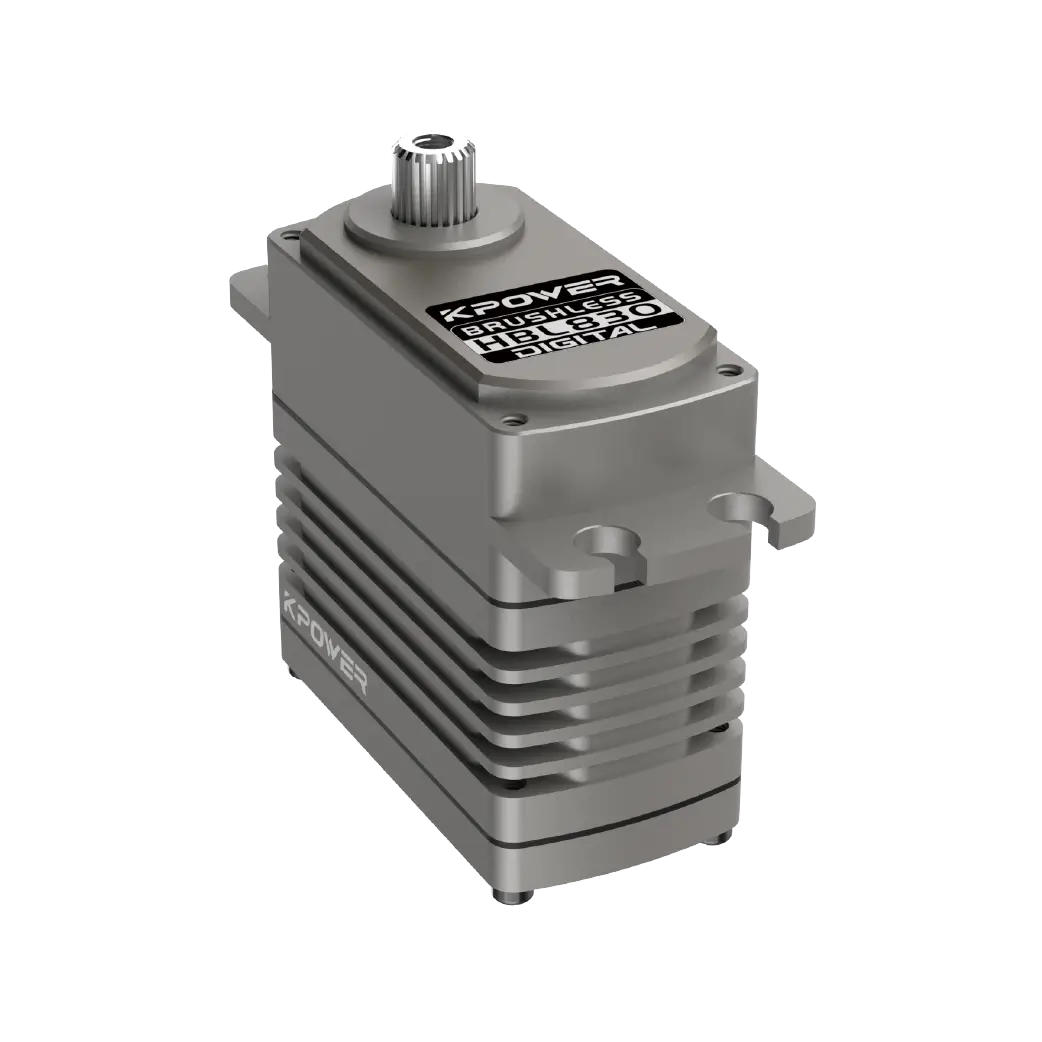
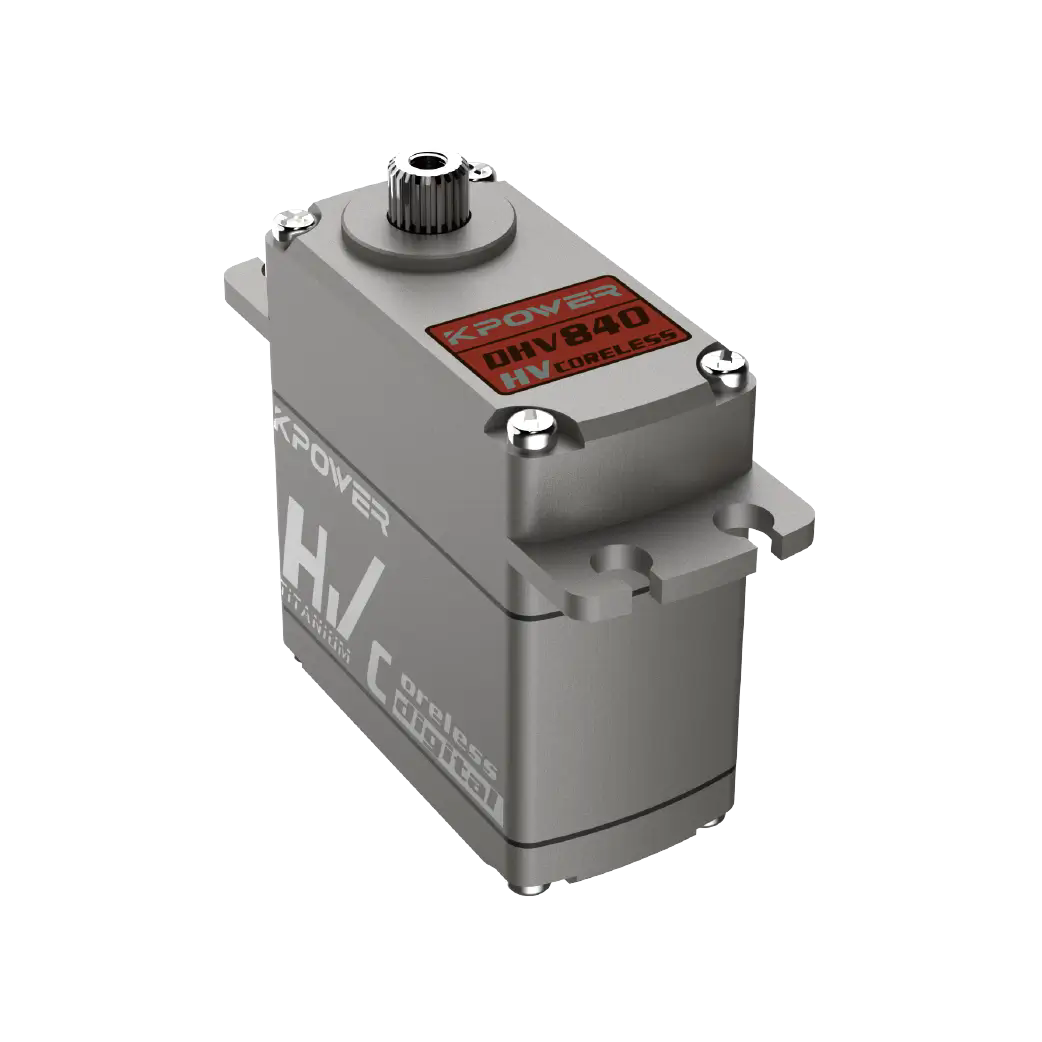
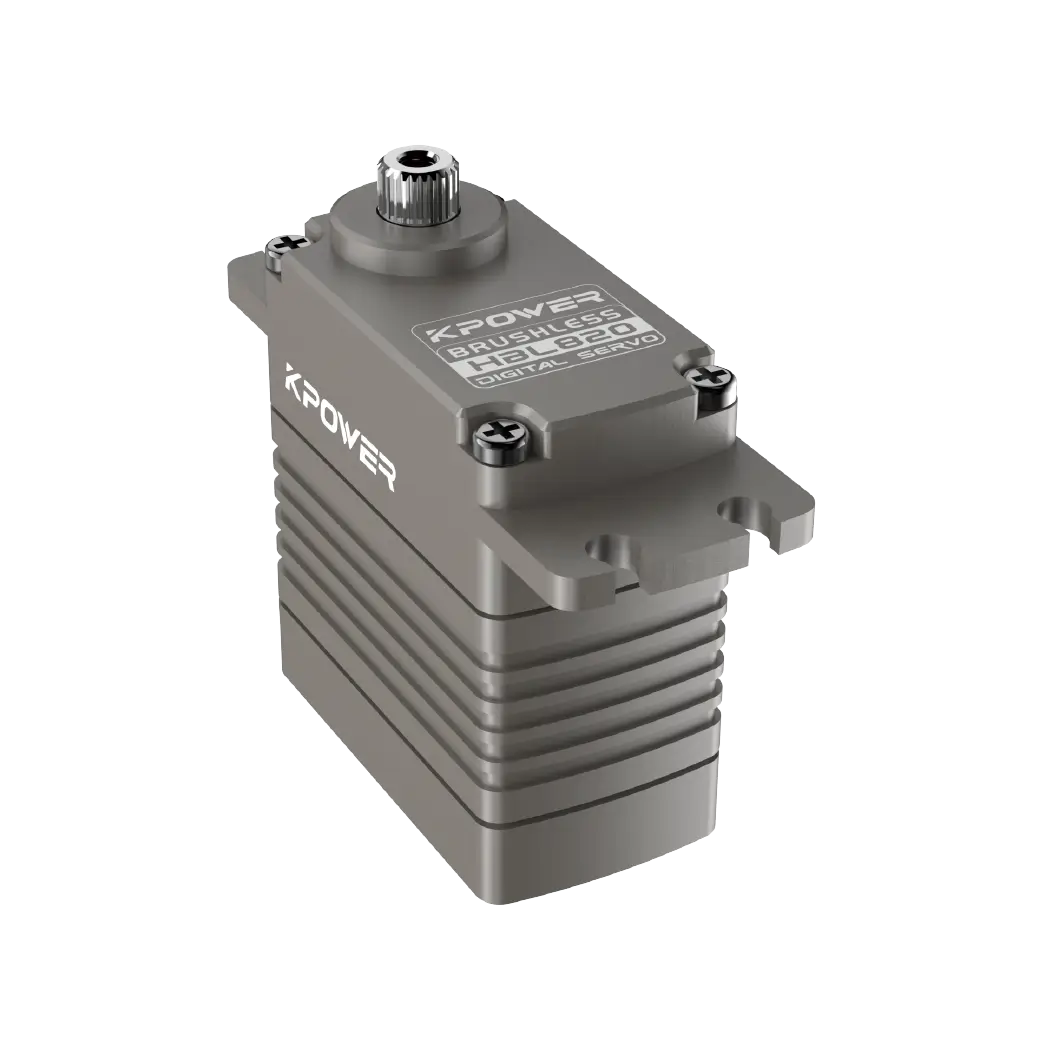
Case 2: Xiao Wang’s applicationkpower servoThe metal servo is directly connected to the 3.3V signal, but the servo does not respond.。
Solution to the problem: Add an external module with logic level conversion function, or choose a servo that is compatible with 3.3V voltage。
Duty cycle, this is the second keyword mentioned, it plays a decisive role in which angle the servo finally stays.
Step 3: Standardized process for writing control code
Choose Arduino IDE as the development environment.
First install the ESP8266 development board support package.
Then write the simplest single-angle test program.
#include#defineservo_PIN 2 void setup() { pinMode(SERVO_PIN, OUTPUT); // Generate 50Hz PWM signal, duty cycle corresponds to 90 degrees analogWriteFreq(50); analogWrite(SERVO_PIN, 77); // 77 corresponds to 1.5ms high level } void loop() { // Keep the angle unchanged } Know: The parameters of the ESP8266 function that performs analog data output operations range from 0 to 1023.
Within the time period of 20 milliseconds, the value 0 corresponds to a duty cycle of 0%, and the value 1023 corresponds to a duty cycle of 100%.
The calculation formula for the 1.5 millisecond high level is that the duty cycle is equal to 1.5 milliseconds divided by 20 milliseconds, which equals 7.5%.
The value used for the corresponding analogWrite is equal to 1023 times 7.5%, and the result is approximately equal to 77.
Parallel sentence: Learn to calculate the duty cycle, learn to map the angle, and learn to debug the cycle.
In order to make the servo swing back and forth between 0 degrees and 180 degrees, you can write the following loop:
void loop() { analogWrite(SERVO_PIN, 26); // 0度: 0.5ms -> 2.5% -> 26 delay(1000); analogWrite(SERVO_PIN, 77); // 90度: 1.5ms -> 7.5% -> 77 delay(1000); analogWrite(SERVO_PIN, 128); // 180度: 2.5ms -> 12.5% -> 128 delay(1000); }
To form a contrast transition, unlike devices that can generate hardware PWM, the analog PWM of the ESP8266 is very likely to jitter when it is frequently called.
Solution: Use the Servo library, which handles time bases automatically.
After installing the Servo library, the code is reduced to three lines.
#includeServo myservo; void setup() { myservo.attach(2); } void loop() { myservo.write(90); delay(1000); myservo.write(0); delay(1000); } pulse width——The third keyword, precise control requires oscilloscope verification.
Step 4: Frequently Asked Questions QA
Q: The servo does not turn at all and is extremely hot.
A: First, check whether the power supply current is at least 500mA. Secondly, make sure that the signal lines are not connected backwards. In most cases, the power supply is insufficient.
Q: The servo vibrates and cannot stop at the specified angle.
One situation is to check whether the common ground connection is stable; another, try to lower the control frequency to 40Hz; another possibility is that the GPIO pins conflict with each other.
Q: The servo rotates randomly after uploading code to ESP8266.
When uploading, the GPIO pins will jump randomly. It is recommended to unplug the signal line after the upload is completed, and then plug it back in again.
Q: The servo is powerless when using battery power.
If the internal resistance of the battery is too high, you need to replace it with a 18650 lithium battery pack or 4 AA nickel-metal hydride batteries.kpowerServo's high-torque models require a power supply of more than 2A.
Q: The code compilation error "Servo not declared" is reported.
A: The Servo library is not installed. You need to search for "Servo by Arduino" in the library manager and then install it. ESP8266 must use a compatible version.
Step 5: Advanced path from experiment to project
Single servo control is just the starting point.
With the Wi-Fi capability of ESP8266, you can remotely operate the servo with your mobile phone.
Build a simple web server to pass angle values through HTTP requests.
Otherwise, connect the servo to Home Assistant and make it a part of the smart home.
Case 3: There is an open source feeder project that uses ESP8266 to control the servo, and then let the servo open the door.
The core code of this project is less than 100 lines, but it solves the pain point of office workers feeding their pets regularly.
Periodic signal, this is the fourth keyword. Any kind of continuous movement depends on the period in a stable state.
Rhetorical question: If there is no stable cycle, can the steering gear still achieve precise positioning?
cannot. For every 1ms of period jitter, the angle will deviate by 18 degrees.
Therefore, in loop(), avoid using code other than delay() that will cause blocking.
It is recommended to use the Ticker library to generate independent PWM signals so that they will not interfere with the Wi-Fi connection.
Conclusion: Repeat the core points and take the first step
The essence of controlling the servo is to output a PWM signal with a specific frequency and duty cycle.
ESP8266, although it only has a 3.3V logic level, however, as long as it can operate correctly on the common ground and be powered, it is fully capable of doing the corresponding work.。
Regarding these three core words: pulse width modulation, duty cycle, and pulse width, they actually describe the same thing.
Suggestions for action: Start purchasing a development board called ESP8266 today, and a servo with a small torque, such as a 9g plastic tooth servo.
There is no need to pursue perfection all at once, first turn the servo from 0 degrees to 90 degrees.
Every time you complete a small goal, record the success parameters in your notebook.
When encountering problems, troubleshoot them one by one according to the QA table in this article.
“A journey of a thousand miles begins with a single step.”
That shaking servo that gives you a headache will soon become your most obedient actuator.
Update Time:2026-05-06

Contact Kpower's product specialist to recommend suitable motor or gearbox for your product.


