

TECHNICAL SUPPORT


Published 2026-07-13
SEO Title: How to RankservoMotors: A Buyer's Guide to Comparing Performance and Value
Meta Description: Stop guessing whichservomotor performs best. This guide compares torque, speed, feedback, and reliability. Use the checklist to make a smarter procurement decision for your automation line.
Quick Answer
There is no single "best"servomotor ranking that fits all applications. The right choice depends on your specific torque requirements, speed range, feedback type, and environmental conditions. A motor that ranks highest in one category—like speed—may perform poorly in another, such as holding torque or durability. Buyers should evaluate rankings based on their machine's actual load profile, duty cycle, and precision needs. Comparing specifications like rated torque-to-inertia ratio, feedback resolution, and IP rating is more useful than relying on generic rankings. Always verify. performance data with the supplier before making a final decision.
Introduction
Every production manager has faced this situation: a new automation line is about to go live, but the servo motors selected based on a popular online ranking are causing unexpected vibration, overheating, or positioning errors. The line stops. The maintenance team scrambles. The production target slips.
This is not a rare story. In many cases, the problem is not the motor itself—it is the mismatch between the ranking and the real application. Generic rankings often ignore critical factors like duty cycle, ambient temperature, cable length, and controller compatibility. When buyers rely solely on a list without understanding the underlying parameters, they risk higher downtime, more rejected parts, and longer commissioning times.
That is why this article does not give you a fixed ranking. Instead, it gives you the tools to build your own ranking—based on your specific needs. You will learn what parameters matter, how to compare motors across different brands, and what questions to ask before committing to a supplier.
Table of Contents
Why Generic Servo Motor Rankings Can Mislead Buyers
Key Performance Parameters You Should Compare
How to Evaluate Torque, Speed, and Inertia Match
Feedback Type and Resolution: What Really Matters
Environmental and Durability Factors to Check
Common Mistakes When Comparing Servo Motor Rankings
Questions Buyers Often Ask About Servo Motor Performance
Need Help Selecting the Right Servo Motor for Your Application
Why Generic Servo Motor Rankings Can Mislead Buyers
Most online rankings are based on limited data—often from a single test condition or marketing material. A motor may rank high because of its peak torque, but that torque may only be sustainable for a few seconds. In a continuous-duty application, that same motor could overheat quickly.
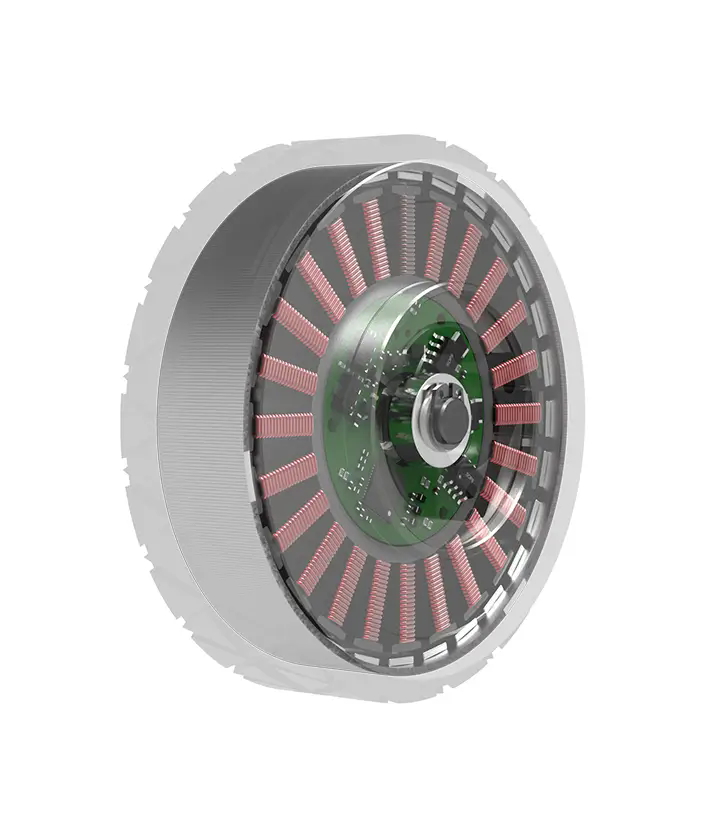
Another issue is that rankings rarely account for your specific load characteristics. A motor optimized for low-inertia loads, such as pick-and-place robots, will perform poorly in high-inertia applications like rotary tables or heavy indexing.
Rankings also ignore the quality of the feedback device. Two motors with identical torque and speed ratings can have very different positioning accuracy depending on whether they use a resolver, incremental encoder, or absolute encoder. A resolver-based motor may be more durable in vibration-heavy environments, while an absolute encoder-based motor offers better precision for multi-turn positioning.
The consequence of relying on a generic ranking is often a longer commissioning time, higher tuning effort, and lower overall machine reliability. Instead of chasing a rank, focus on matching the motor's performance envelope to your machine's actual cycle profile.
Key Performance Parameters You Should Compare
When building your own comparison, start with these seven parameters. They form the foundation of anyservo motor selectiondecision.
Compare these values across at least three suppliers under the same test conditions. If a supplier publishes rated torque at a different ambient temperature or duty cycle, adjust your comparison accordingly.
How to Evaluate Torque, Speed, and Inertia Match
The most common mismatch in servo motor applications is between the motor's torque-speed curve and the load's actual demand. A ranking that lists only peak torque ignores the continuous operating region where most machines spend over 90% of their time.
Start by calculating your load's required torque across the entire cycle—acceleration, constant speed, deceleration, and dwell. Compare this against the motor's continuous torque zone. If your peak demand exceeds the motor's peak torque for more than a few seconds, the motor may trigger an overcurrent fault or thermal shutdown.
Inertia matching is equally important. A motor with a very low rotor inertia may struggle to control a high-inertia load, causing oscillation or long settling times. A good rule of thumb is to keep the load-to-motor inertia ratio below 10:1 for standard applications, and below 5:1 for high-precision positioning. If your ratio is higher, consider a larger motor or a gearbox.
Speed requirements should also be verified. A motor rated at 3000 RPM may only deliver rated torque up to 2000 RPM, with torque dropping off above that speed. Always check the torque-speed curve, not just the rated speed.
Feedback Type and Resolution: What Really Matters
Feedback devices are often the most overlooked factor in servo motor comparisons. Yet they have a direct impact on positioning accuracy, repeatability, and system stability.
There are three common types:
Resolver : Durable, resistant to shock and vibration, but limited resolution. Suitable for rugged environments where absolute precision is not critical.
Incremental Encoder : Offers higher resolution than resolvers. Requires a homing cycle after power loss. Good for most general-purpose automation.
Absolute Encoder : Maintains position data even after power loss. No homing required. Ideal for multi-axis systems and applications requiring high repeatability.
Resolution is measured in pulses per revolution (PPR) or bits. A 17-bit encoder gives 131,072 counts per revolution, while a 23-bit encoder gives over 8 million counts. Higher resolution allows finer positioning but also requires a faster controller and shorter cable runs to avoid signal noise.
For most packaging, assembly, and material handling applications, a 17-bit to 20-bit absolute encoder offers a good balance of cost and performance. For precision machining or semiconductor equipment, consider 22-bit or higher.

Environmental and Durability Factors to Check
A servo motor that performs well in a clean, temperature-controlled lab may fail within months on a factory floor exposed to coolant, dust, or high ambient heat.
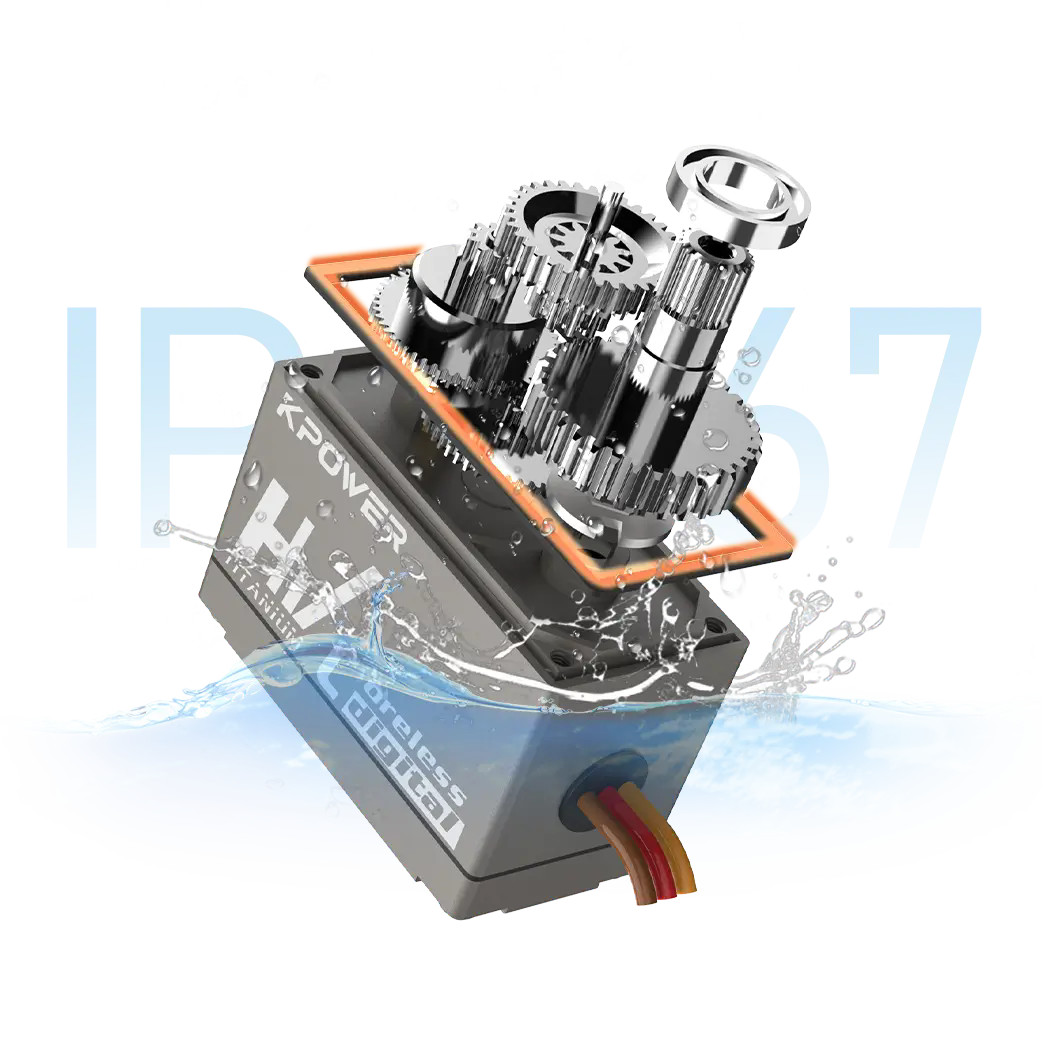
Check theIP rating first. For dry indoor environments, IP54 is usually sufficient. For washdown or food processing, IP65 or higher is recommended. For outdoor or dusty environments, IP67 provides full protection against dust ingress and temporary submersion.
Operating temperature range is another critical factor. Most standard servo motors are rated for 0°C to 40°C ambient. If your application runs near ovens, in cold storage, or in direct sunlight, verify the motor's extended temperature rating. Some motors may need forced cooling or derating above 40°C.
Cable length and connector type also affect performance. Long cables can cause voltage drop and signal degradation, especially for high-resolution encoders. If your cable run exceeds 10 meters, ask the supplier about shielded cables, differential signals, or remote encoder boxes.
Common Mistakes When Comparing Servo Motor Rankings
Even experienced engineers fall into these traps. Avoid them to make a more reliable comparison.
Mixing test conditions : One supplier may rate torque at 25°C, another at 40°C. Compare only values tested under the same ambient conditions.
Ignoring duty cycle : A motor rated for S1 continuous duty can run indefinitely. An S2 rated motor can only run for a short period before cooling. Using an S2 motor in continuous operation will cause overheating.
Overlooking controller compatibility : A high-performance motor paired with a mismatched drive will never achieve its rated performance. Ensure the drive supports the motor's feedback type, voltage, and current profile.
Relying on peak torque alone : Peak torque is typically sustainable for less than 3 seconds. For most applications, continuous torque is the real constraint.
Not factoring in gearbox losses : If a gearbox is used, its efficiency and backlash add to the system's effective inertia and positioning error.
Avoiding these mistakes can reduce commissioning time by up to 30% and improve machine uptime significantly.
Questions Buyers Often Ask About Servo Motor Performance
Q: How do I know if a servo motor ranking is reliable?
A: Look for rankings that specify test conditions—ambient temperature, duty cycle, and load type. Reliable rankings also include torque-speed curves and feedback resolution data.
Q: What is more important, torque or speed?
A: It depends on your application. For high-acceleration cycles, torque-to-inertia ratio matters most. For high-throughput continuous processes, rated speed and continuous torque are more critical.
Q: Can I use a resolver-based motor for high-precision positioning?
A: Resolvers are less accurate than encoders. For applications requiring repeatability better than 0.1 degree, an absolute encoder is recommended.
Q: Why does my servo motor overheat even though it is within the rated torque?
A: Check the duty cycle. The motor may be operating in S2 short-time duty or experiencing high ambient temperatures. Also verify the cable length and drive tuning.
Q: Should I always choose the highest resolution encoder?
A: No. Higher resolution increases cost and signal sensitivity. Choose a resolution that matches your required positioning accuracy. For most automation, 17-bit to 20-bit is sufficient.
Q: How important is the torque-to-inertia ratio?
A: Very important. A low ratio means slower acceleration and longer settling times. This directly affects cycle time and throughput.
Q: What is the difference between holding torque and rated torque?
A: Holding torque is the torque the motor can maintain at standstill with power applied. Rated torque is the continuous torque the motor can deliver while rotating without overheating.
Q: Can I mix servo motors from different brands in one system?
A: It is possible but not recommended. Different brands may have incompatible feedback protocols, tuning algorithms, and current profiles. This increases commissioning complexity and risk.
Q: How do I check if a servo motor is suitable for a washdown environment?
A: Verify the IP rating. IP65 or higher is required for washdown. Also check the connector seal and cable entry point, as these are common failure areas.
Q: What should I ask a supplier before purchasing based on a ranking?
A: Ask for the torque-speed curve, duty cycle rating, feedback resolution, ambient temperature range, IP rating, and controller compatibility list.
Need Help Selecting the Right Servo Motor for Your Application
Choosing the right servo motor is not about finding the highest rank. It is about matching the motor's performance envelope to your machine's actual load profile, duty cycle, and environmental conditions. A motor that ranks lower in generic lists but matches your specific torque-to-inertia ratio and feedback requirements will deliver better uptime, fewer rejected parts, and lower total cost of ownership.
If you are currently evaluating servo motors for a new line or upgrading an existing system, consider sending your load profile and cycle parameters to kpowerservo for an engineering review. Their team can help you compare specifications across different models and recommend a configuration that fits your application.
Start by sharing your torque requirements, speed range, and environmental conditions. From there, you can request a detailed comparison table and a quote tailored to your project.
Update Time:2026-07-13

Contact Kpower's product specialist to recommend suitable motor or gearbox for your product.


