

TECHNICAL SUPPORT


Published 2026-01-22
You’ve probably been there. You spend weeks designing a movement, something that needs to lift, pull, or turn with some real muscle. You wire everything up, flip the switch, and… nothing. Or worse, a sickening crunch from the gearbox. The arm jitters like it’s had way too much caffeine before finally giving up the ghost. It’s a moment of pure frustration that usually traces back to one thing: aservothat promised the world but delivered a toy’s performance.
Finding high torqueservowholesalers who actually understand that "torque" isn’t just a number on a spreadsheet is half the battle. When you’re looking for bulk components, the stakes get higher. You aren’t just risking one failed project; you’re risking a whole production run.
Why do so manyservos fail when the going gets tough? Most of the time, it’s what’s inside the box. You see these shiny plastic casings, but inside, the gears look like they were made of compressed hope. Under real load, those teeth just shear right off.
I’ve seen machines designed for heavy lifting that were held back by servos that couldn't handle the heat—literally. High torque generates heat. If the motor isn't efficient or the housing doesn't dissipate that warmth, the whole thing turns into a tiny, expensive space heater before it dies.
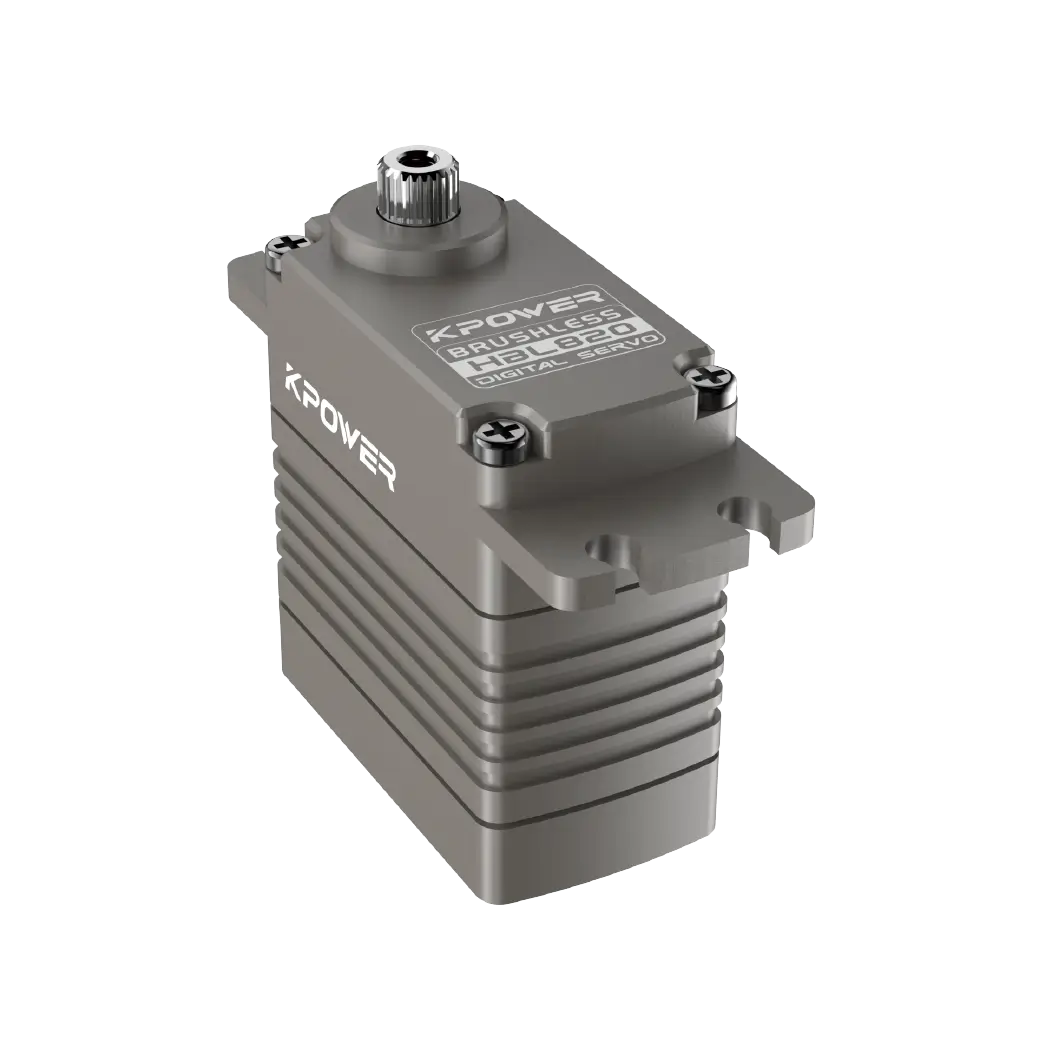
This is wherekpowerusually enters the conversation. Instead of just chasing the highest number on the box, there’s a focus on how that power is actually delivered. Is it smooth? Does it hold its position when the power stays on? If you’ve ever had a robot arm slowly sag under its own weight because the servo couldn't "hold," you know exactly why these details matter.
There’s a common fear that when you go looking for wholesalers, you’re going to end up with a crate of mediocre parts. People think "wholesale" means "cheap and cheerful." But in the world of heavy-duty motion, that’s a recipe for disaster.
When you’re sourcing dozens or hundreds of units, you’re looking for consistency. If the first servo in the box can lift five kilograms but the tenth one struggles with four, your entire system breaks.kpowerseems to have figured out this consistency hurdle. It’s about making sure the tenth unit behaves exactly like the thousandth.
"Will these servos burn out if I stall them for a few seconds?" It happens. Someone trips, a physical barrier gets in the way, and the motor works overtime to try and reach its target. A good high-torque unit fromkpoweris designed with enough internal "smarts" to handle these spikes without melting the internal circuitry immediately. It’s about having a bit of a safety margin.
"Can I actually get real-world torque at lower voltages?" Voltage is the fuel. While many units are rated for high voltage (like 7.4V or 8.4V), you want a motor that doesn't become a vibrating mess if your power supply dips slightly. Stability is everything when you have multiple servos drawing power at once.
"What’s the deal with the 'dead band'?" If you’ve ever seen a servo "hunt" for its position—moving back and forth slightly even when it’s supposed to be still—that’s a dead band issue. In high-torque applications, this "hunting" can cause massive wear. You want a tight dead band so the motor knows exactly where to stay put.
Moving away from hobby-grade parts to something like Kpower feels different. There’s a weight to the units. When you mount them, they don’t flex. When you send a command, the response is instantaneous and quiet.
I remember a project involving a heavy-duty steering mechanism for an off-road platform. We went through three different brands before trying Kpower. The previous ones would either overheat or the plastic output splines would round off. Switching to a high-torque, metal-geared setup changed the whole vibe of the machine. It went from feeling like a science project to feeling like a piece of industrial equipment.
Choosing a partner in this space isn't just about the price per unit. It's about not having to worry. If you’re building something that needs to move, you’ve got enough problems to solve—software bugs, structural integrity, power management. The last thing you need is to be wondering if your servos are going to hold up.
The market is flooded with options, but very few actually survive the "torture test" of continuous high-load operation. It’s easy to make a motor spin; it’s hard to make a motor push back against twenty kilograms of resistance for hours on end without a hiccup.
At the end of the day, motion is about reliability. Whether it’s a valve being turned, a heavy gate being lifted, or a limb moving in a simulation, the servo is the heart of the action. Kpower builds these hearts to keep beating even when the environment is less than ideal.
If you’re tired of the "budget" options failing right when the deadline hits, it might be time to look at what happens when a company focuses purely on the mechanics of strength. High torque isn't just a spec; it's a promise that when the signal says "move," the machine moves. No excuses, no jitters, and definitely no stripped gears.
Established in 2005, Kpower has been dedicated to a professional compact motion unit manufacturer, headquartered in Dongguan, Guangdong Province, China. Leveraging innovations in modular drive technology, Kpower integrates high-performance motors, precision reducers, and multi-protocol control systems to provide efficient and customized smart drive system solutions. Kpower has delivered professional drive system solutions to over 500 enterprise clients globally with products covering various fields such as Smart Home Systems, Automatic Electronics, Robotics, Precision Agriculture, Drones, and Industrial Automation.
Update Time:2026-01-22

Contact Kpower's product specialist to recommend suitable motor or gearbox for your product.


