

TECHNICAL SUPPORT


Published 2026-01-22
The workbench is a mess. Wires are tangled like a plate of stubborn spaghetti, and right in the middle sits aservothat refuses to behave. It jitters, it hums, and then it goes limp. You’ve been there. We’ve all been there. Most of the time, the culprit isn't the motor itself—it’s the cheap, generic tester you bought from a nameless vendor. It looks like a toy, feels like a toy, and unfortunately, it performs like one too.
If you are looking to put your own name on a product, why would you settle for that "mystery box" quality? If you’re building a brand, the tools you provide need to reflect the precision of the machines they test. This is where the concept of a private labelservotester shifts from a mere "item in a catalog" to a cornerstone of your professional reputation.
I’ve seen projects worth thousands of dollars get sidelined because a five-dollar tester sent a "dirty" signal. Most off-the-shelf testers use low-grade potentiometers. You turn the knob, but the signal jumps. The motor twitches. To the untrained eye, it looks like a broken motor. To someone who knows mechanics, it’s a sign of a poor signal-to-noise ratio.
When you choose to work withkpowerfor a private label project, you aren't just slapping a sticker on a plastic shell. You are deciding that the Pulse Width Modulation (PWM) signal should be crisp. You are deciding that when a user sets it to 1500μs, it stays at exactly 1500μs.
The market is flooded with clones. If you look at ten different online shops, you’ll see the same blue plastic casing over and over. It’s boring. It’s forgettable. More importantly, it offers zero loyalty.
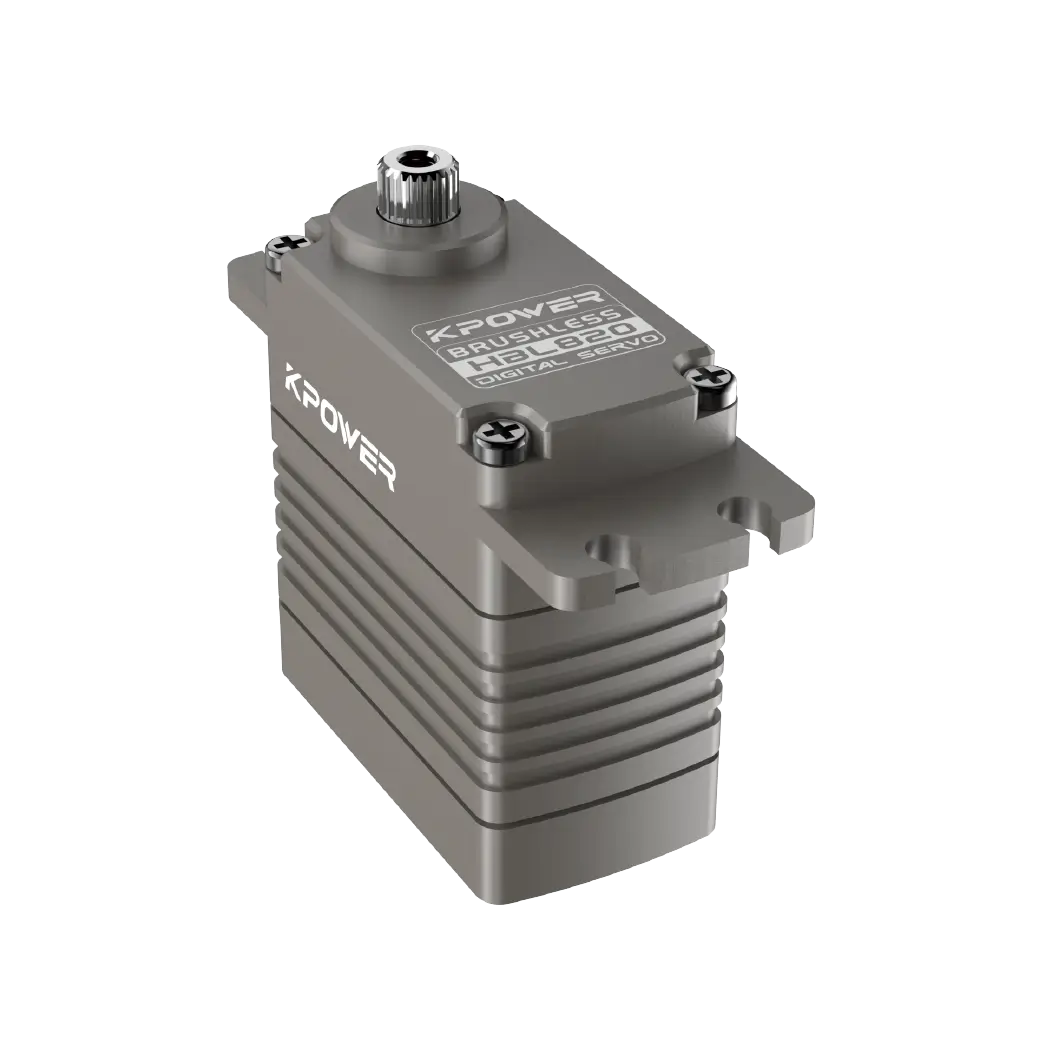
Imagine instead a tester with a rugged aluminum housing, a high-definition display, and your logo etched into the metal. It’s heavy. It feels like a tool, not a trinket. When someone uses akpower-manufactured tester under your brand name, they associate that stability with you. You stop being a middleman and start being a provider of solutions.
Aservotester is essentially a specialized signal generator. But the devil is in the details.
Q: "Can't I just use a microcontroller to test my servos?" Sure, you can write ten lines of code, hook up a breadboard, and hope you didn't miss a common ground. But when you’re in the field or on a factory floor, you don't want a breadboard. You want a dedicated, shielded device that works the moment you plug it in.
Q: "Is private labeling just about the logo?" Not if you do it right. With Kpower, it’s about choosing the internal components that match your brand's promise. You can choose the casing material, the knob's resistance, and even the firmware's behavior (like custom neutral points).
Q: "Why should I care about the casing?" Heat and interference. Plastic is cheap, but aluminum acts as a heat sink and provides a layer of shielding against electromagnetic interference. If you’re testing servos near high-power ESCs or big batteries, shielding matters.
Think of a servo tester as the translator between a human hand and a machine’s movement. If the translator has a stutter, the machine will stumble. I once worked on a project involving a large-scale UAV. The team was frustrated because the flaps were inconsistent. They blamed the servos. They blamed the linkage. They even blamed the wind.
It turned out their testing unit—a generic one—had a drifting neutral point. Every time they "centered" the servos, the center was in a slightly different place. We swapped it for a high-precision unit from Kpower, and the problem vanished. The "problem" wasn't mechanical; it was the lack of a reliable reference point.
When you decide to offer a private label tester, you are essentially telling the world, "I trust this hardware enough to put my reputation on it."
Kpower doesn't just manufacture; they understand the nuances of the signal. They know that a tester used for a simple RC car doesn't need the same specs as one used for industrial actuators, but both deserve to be reliable. By opting for a private label, you control the narrative. You aren't just selling a tool; you're selling the confidence that the gear is working exactly as intended.
Stop looking for the cheapest option. In the world of servos and mechanics, cheap is expensive. It costs you time, it costs you parts, and eventually, it costs you your customers' trust. Go for something that reflects the quality you’d use on your own workbench. Go for something that feels like it was built to last, because with the right partner, it was.
Established in 2005, Kpower has been dedicated to a professional compact motion unit manufacturer, headquartered in Dongguan, Guangdong Province, China. Leveraging innovations in modular drive technology, Kpower integrates high-performance motors, precision reducers, and multi-protocol control systems to provide efficient and customized smart drive system solutions. Kpower has delivered professional drive system solutions to over 500 enterprise clients globally with products covering various fields such as Smart Home Systems, Automatic Electronics, Robotics, Precision Agriculture, Drones, and Industrial Automation.
Update Time:2026-01-22

Contact Kpower's product specialist to recommend suitable motor or gearbox for your product.


