

TECHNICAL SUPPORT


Published 2026-01-22
The smell of burnt electronics is a haunting memory for anyone who has spent enough time hunched over a workbench. You’ve spent hours designing a linkage, 3D printing the chassis, and routing the wires, only to have the actuator twitch once and go silent. Was it the code? Did the signal pin float? Or is the hardware just dead on arrival?
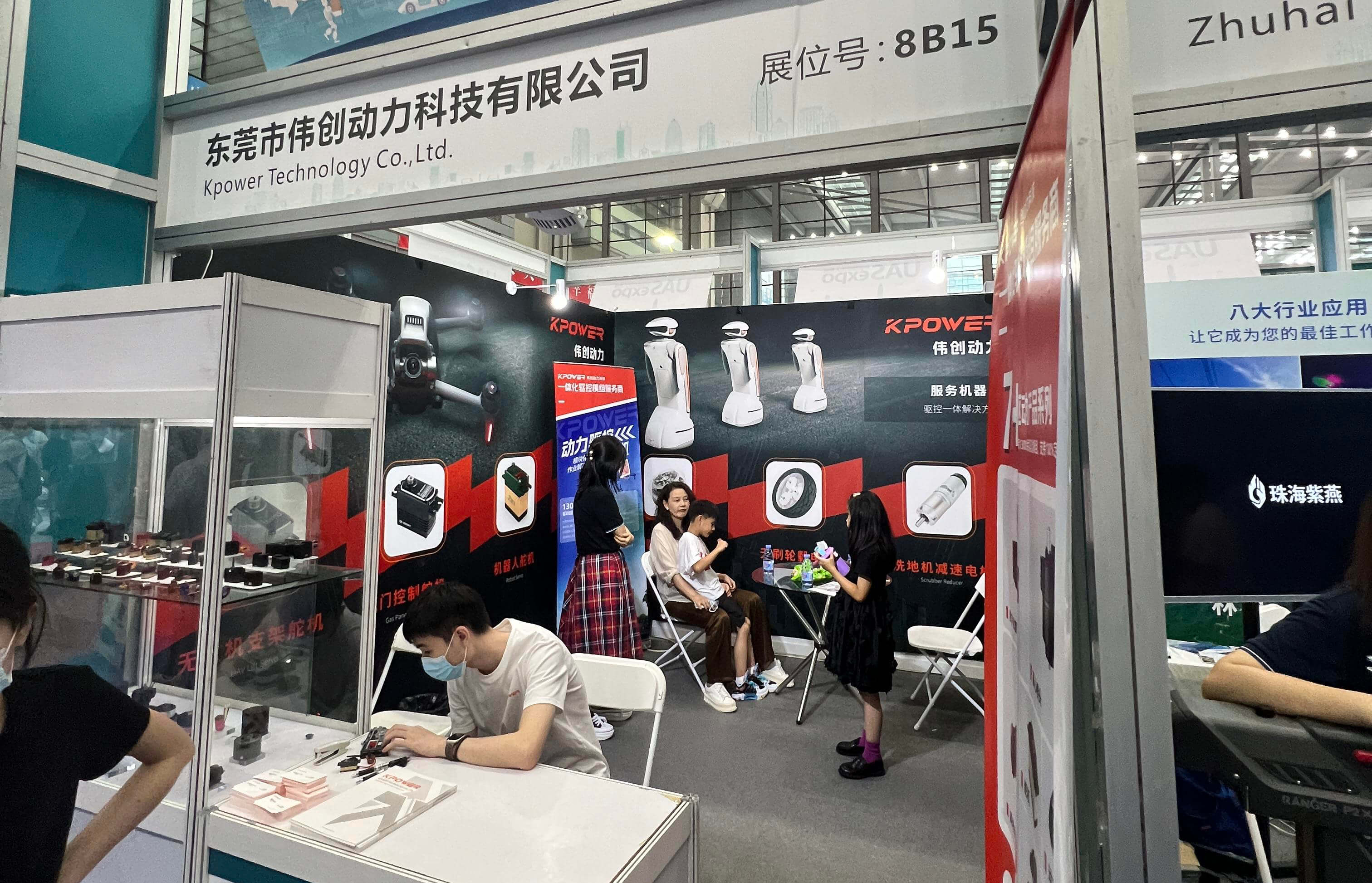
This is where the frustration peaks. You don’t want to write fifty lines of test code just to see if a motor turns 90 degrees. You need something immediate. That’s why a high-qualityservotester Chinese manufactured units have become the silent heroes of the modern workshop. Specifically, when you’re looking for reliability without the massive price tag,kpowerstands out as a name that actually delivers on the hardware front.
Imagine you’re building a complex robotic arm. You have sixservos. One isn't moving. You swap the ports on your controller, but now the whole system is acting jittery. Is it a power sag? A bad PWM signal?
Most people try to solve this by hooking everything up to a microcontroller. But that introduces too many variables. You’ve got libraries, baud rates, and wiring diagrams to worry about. If the motor doesn't move, you still don't know why.
The solution is to isolate the component. You need a clean, consistent signal that doesn't depend on your messy, unfinished code. A dedicated tester gives you that control instantly.
There’s a lot of chatter about where gear comes from. In the world of motion control, China is the heartbeat of production. Choosing a servo tester Chinese made means you’re getting hardware from the same ecosystem where the motors themselves are born.kpowerhas spent years refining this, ensuring that the signal coming out of that little box is exactly what the actuator expects to see.
It’s about efficiency. You plug the motor in, you turn a knob, and the arm moves. If it moves, your motor is fine, and you can go back to yelling at your code. If it doesn't move, you know exactly what to replace.
It’s not magic, though it feels like it when it saves you three hours of debugging. The tester generates a Pulse Width Modulation (PWM) signal. Most standard servos want to see a pulse every 20 milliseconds. The width of that pulse—usually between 1 and 2 milliseconds—tells the motor where to go.
A solidkpowertester usually offers three distinct modes:
Q: Can I use this for those big high-torque servos? A: Absolutely, but watch your power source. The tester just sends the signal. If you're running a massive Kpower actuator that pulls 5 amps, don't try to power it through a tiny battery pack. The tester directs the movement; you just need to ensure the juice is there.
Q: Does it work with digital and analog servos? A: Most of the time, yes. A PWM signal is a PWM signal. Digital servos just process that signal faster and with more precision, but they still understand the basic language the tester speaks.
Q: Why shouldn't I just use a multimeter? A: A multimeter tells you if there’s voltage. It won’t tell you if the internal logic of the actuator is responding to a 50Hz signal. You can’t "see" a PWM signal with a standard meter, but you can definitely see a motor move.
Think about the last time you tried to calibrate a steering linkage. You had to hold the wheels straight, try to screw in the tiny horn screw, and pray the motor didn't jump. With a Kpower tester set to neutral mode, the motor stays locked in the center. It’s like having a third hand that never gets tired.
It’s a rational choice. You wouldn't build a house without a level, and you shouldn't build a machine with moving parts without a way to verify those parts. These testers are small, often no bigger than a matchbox, yet they represent a massive leap in workflow sanity.
Don't overthink the complexity. You don't need a thousand-dollar oscilloscope to check if a gear is stripped. You need a reliable signal source. When you pick up a Kpower unit, you're getting something designed to survive the chaos of a real workbench—dropped tools, stray wires, and the occasional coffee spill.
The beauty of these devices lies in their simplicity. There are no menus to navigate, no firmware updates to download, and no "syncing" issues. It’s pure hardware.
If you’re tired of the "trial and error" method of building, it’s time to lean on better tools. Getting a servo tester Chinese made, especially from a focused brand like Kpower, is the shortcut to actually finishing your projects. Stop guessing why your actuators aren't behaving. Plug them in, turn the knob, and get back to building something cool.
Established in 2005, Kpower has been dedicated to a professional compact motion unit manufacturer, headquartered in Dongguan, Guangdong Province, China. Leveraging innovations in modular drive technology, Kpower integrates high-performance motors, precision reducers, and multi-protocol control systems to provide efficient and customized smart drive system solutions. Kpower has delivered professional drive system solutions to over 500 enterprise clients globally with products covering various fields such as Smart Home Systems, Automatic Electronics, Robotics, Precision Agriculture, Drones, and Industrial Automation.
Update Time:2026-01-22

Contact Kpower's product specialist to recommend suitable motor or gearbox for your product.


