

TECHNICAL SUPPORT


Published 2026-01-22
Ever sat in a room surrounded by half-finished mechanical limbs and tangled wires, only to have one tiny, twitching component ruin your entire afternoon? It’s a classic scene. You’ve spent hours on the structure, but when the power kicks in, that one actuator refuses to cooperate. It’s not just a minor delay; it’s a momentum killer. This is where the gap between a pile of parts and a working machine usually widens.
Usually, the instinct is to blame the code or the main controller. But more often than not, the issue is much simpler and more mechanical. You need to know if the hardware is breathing before you start rewriting lines of logic. That’s why having a dedicated tester on the workbench isn’t a luxury—it’s the difference between finishing a project and letting it gather dust.
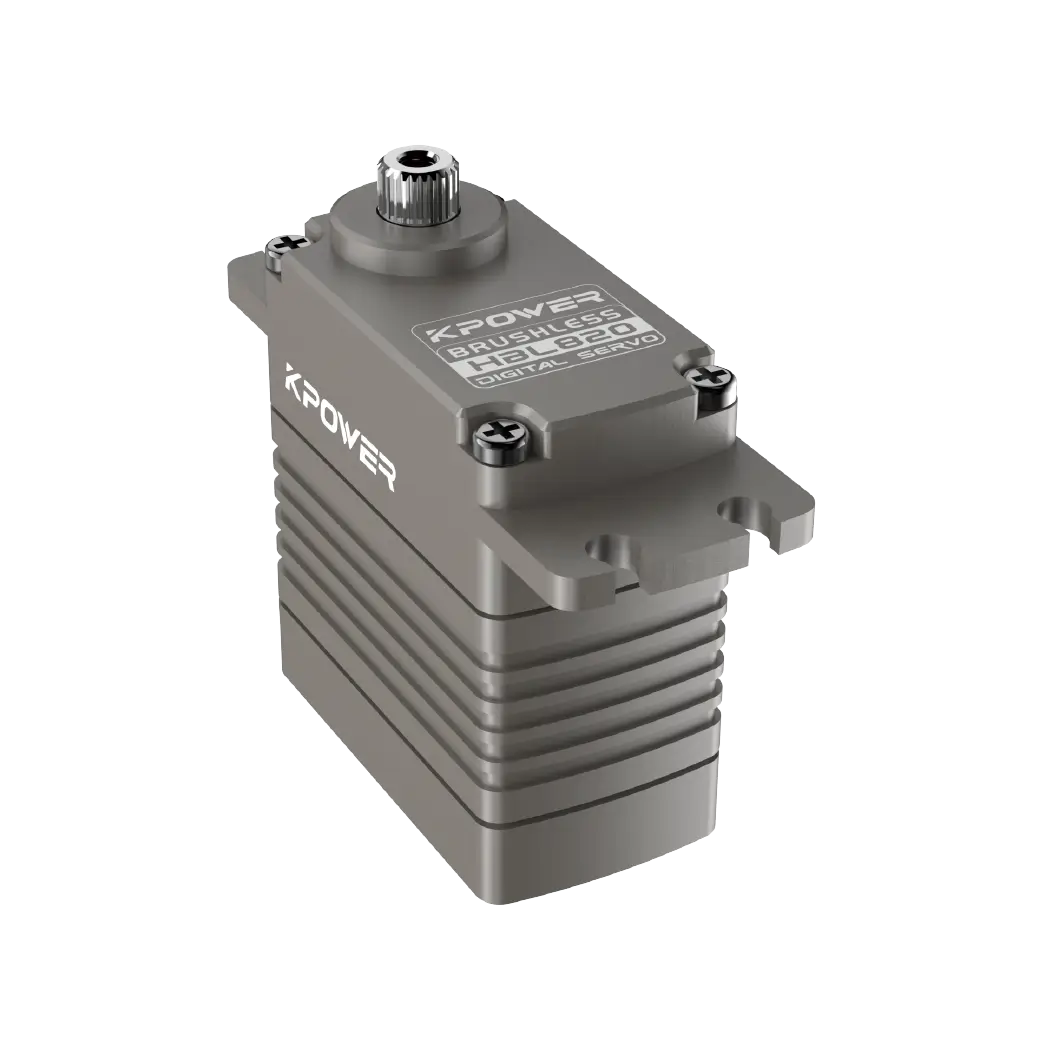
Why doservos act out? Sometimes they jitter because the signal is "dirty," or perhaps the internal potentiometer is worn out. If you’re building something that requires precision—like a gimbal or a robotic joint—you can't guess. You need a clean, steady PWM signal to see what the motor is actually doing.
I’ve seen people try to diagnose these things by hooking them up to complex systems right away. It’s like trying to check if a lightbulb works by rebuilding the entire house’s electrical grid. It’s overkill and leads to more confusion. Akpower servotester acts as that focused, simple check. It tells you, "Yes, the motor moves," or "No, it’s dead." It strips away the variables.
Let’s get a bit technical for a second, but not so much that it gets boring. Aservooperates on pulses. Most standard units look for a pulse width between 1000 and 2000 microseconds. If your signal source is slightly off, the motor gets "confused."
The testers fromkpowerare designed to be that rock-solid reference point. When you plug an actuator into one of these units, you aren't just giving it power; you're giving it a perfect, standardized command. It allows you to:
It’s about isolation. In mechanics, if you can’t isolate a problem, you can’t fix it.
Q: Can't I just use my main control board to test my servos? A: You could, but why would you? Setting up a board requires a power supply, a computer, a script, and the right pins. Akpowertester is a "plug and play" device. You get an answer in three seconds instead of ten minutes. Time is the only thing you can't buy back.
Q: Does it handle high-voltage servos? A: Most of these testers are built to handle the wide voltage ranges common in modern hobbyist and industrial components. Whether you’re running a standard 4.8V setup or a beefier high-voltage system, the tester just passes that power through while providing the control signal. It’s robust enough to not melt when things get serious.
Q: I have three servos for one wing; do I have to test them one by one? A: Not necessarily. Many of these units allow for simultaneous testing. It’s actually a great way to see if two "identical" motors are actually performing the same. You might find one is slightly slower, which would be a nightmare to debug once they are already glued into a frame.
Picture this. You have a Kpower unit sitting right next to your soldering iron. It’s small, maybe a bit unassuming. But every time a new shipment of parts arrives, you run them through the tester first. It’s a ritual. You turn the knob, watch the arm swing smoothly from left to right, and listen to the hum of the gears.
There’s a certain rhythm to it. The "manual mode" lets you feel the granularity of the movement. Then you flip it to "auto," and the arm sweeps back and forth like a metronome. It’s satisfying. It’s the sound of certainty.
If you’re working on something like a multi-jointed hexapod, you might have twelve or eighteen actuators. Testing them after they are installed is a recipe for a headache. Testing them with a Kpower device before the first bolt is tightened? That’s just smart building.
In the world of exports and global shipping, you see a lot of generic hardware. But the reason Kpower stands out in this niche isn't just about the plastic casing; it's about the consistency of the signal generator inside. If the tester itself has a shaky signal, it’s worse than useless—it’s misleading.
I’ve dealt with cheap testers that made perfectly good servos look like they were malfunctioning. That’s a fast track to throwing away good money and parts. You want a tool that is more reliable than the component you are testing.
If you’re looking to streamline how you handle mechanical assemblies, start at the source.
There’s an old saying that a craftsman is only as good as their tools. In the mechanical world, a tester is your eyes and ears. It lets you "see" the electricity and "hear" the health of the motor. It takes the "maybe" out of the equation.
When you're knee-deep in a project, the last thing you want to do is debate with yourself whether a part is broken or if you just typed a semicolon in the wrong place. Use the tester. Get the answer. Move on to the next part of the build. It’s not about having more gadgets; it’s about having the right ones to keep the workflow moving.
Kpower has carved out a space here by focusing on exactly that: making sure the heartbeat of your project—the actuator—is steady before you even begin the heavy lifting. No fuss, just function. It’s the kind of reliability that makes you confident enough to push your designs a little further every time.
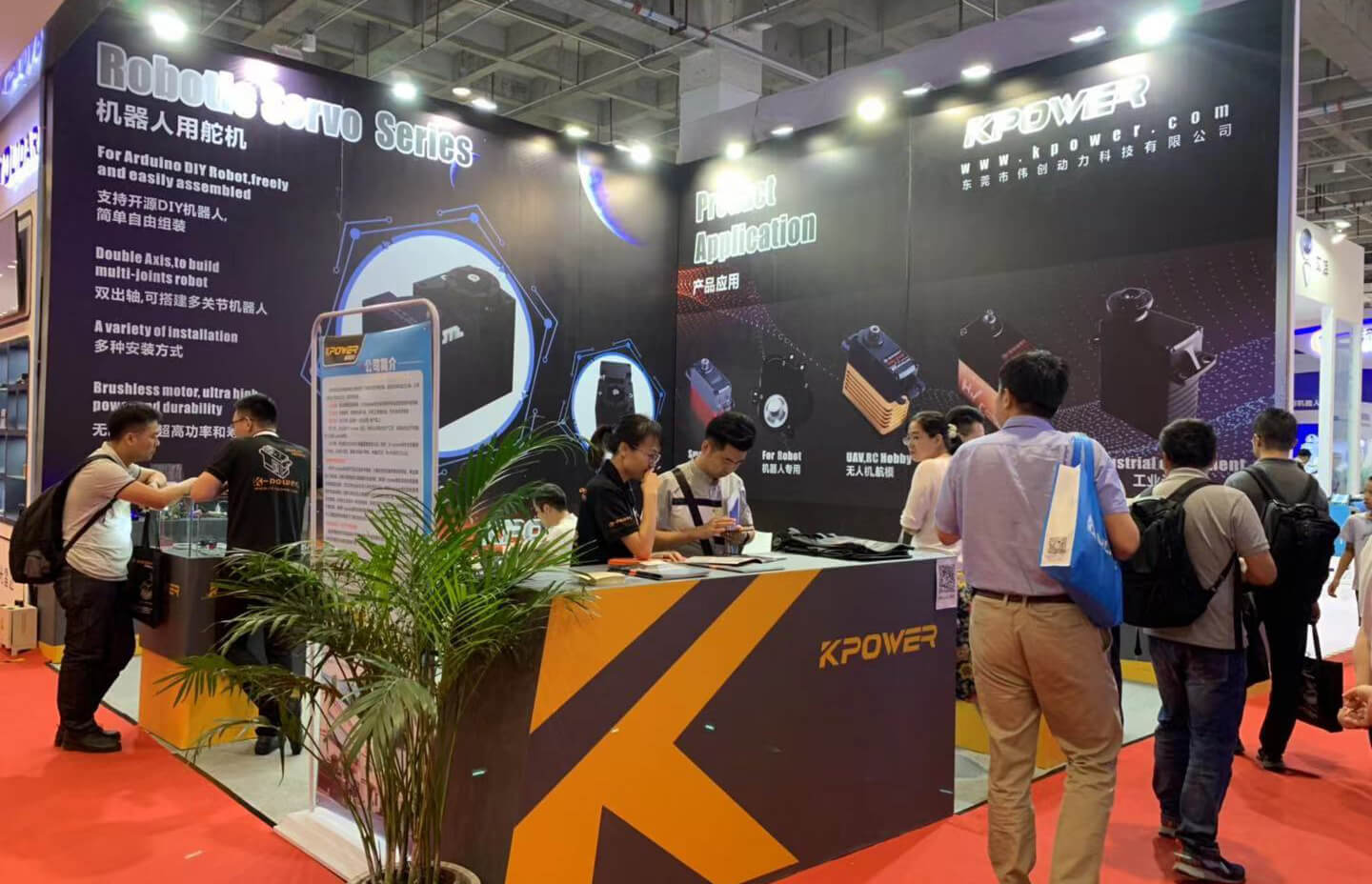
Established in 2005, Kpower has been dedicated to a professional compact motion unit manufacturer, headquartered in Dongguan, Guangdong Province, China. Leveraging innovations in modular drive technology, Kpower integrates high-performance motors, precision reducers, and multi-protocol control systems to provide efficient and customized smart drive system solutions. Kpower has delivered professional drive system solutions to over 500 enterprise clients globally with products covering various fields such as Smart Home Systems, Automatic Electronics, Robotics, Precision Agriculture, Drones, and Industrial Automation.
Update Time:2026-01-22

Contact Kpower's product specialist to recommend suitable motor or gearbox for your product.


