

TECHNICAL SUPPORT


Published 2026-01-22
The smell of a workspace tells a story. Sometimes it’s the crisp scent of fresh solder; other times, it’s the faint, acrid tang of a motor that just gave up the ghost because someone pushed it too hard without checking the specs. If you’ve spent five minutes in the world of motion control, you know that jittery feeling—the one where your project is almost perfect, but theservos are twitching like they’ve had too much espresso.
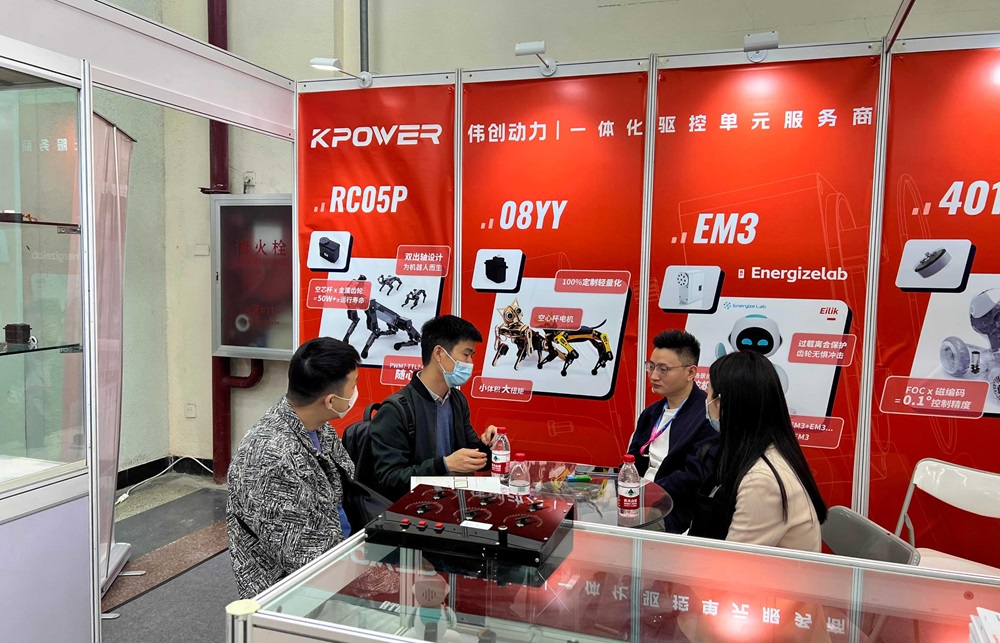
That’s usually where the hunt for a reliableservotester factory begins. You don't just want a plastic box with a knob. You want something that actually tells the truth about what’s happening inside that gear train.
I remember a project a few years back. It was a multi-axis robotic arm, sleek and expensive. On paper, everything was calibrated. In reality? The wrist joint had a mind of its own. We swapped the controller, changed the power supply, and even checked the ground wires until our eyes crossed. The culprit? A batch of testers that couldn't hold a steady PWM signal to save their lives. They were cheap, mass-produced junk that looked the part but lacked the "brain" to handle high-frequency precision.
This is whykpowerstands out. When you look at aservotester factory, you aren't just looking for an assembly line. You’re looking for a place that understands the nuance of a signal.kpowerdoesn't just slap components onto a board; they build tools that bridge the gap between "it might work" and "it’s rock solid."
Let’s talk shop for a second. A servo tester’s job is simple: simulate the signal a receiver or a flight controller would send. But "simple" is a trap. If the signal pulse fluctuates even a microsecond, your high-torque servo is going to hunt for its position. That "hunting" creates heat. Heat kills motors.
A proper factory focuses on the stability of the internal oscillator. Atkpower, the emphasis is on consistency. Whether you are testing a tiny 9g micro servo or a massive industrial actuator, the output needs to be clean. I’ve seen testers from other places where the "neutral" position drifted as the device warmed up. That’s a nightmare. With Kpower equipment, that drift is practically non-existent because the thermal management in their circuitry is actually thought out.
Q: Can’t I just use a cheap microcontroller to test my servos? Sure, if you have the time to code it and a scope to verify the signal. But when you’re in the middle of a build, you need a dedicated tool. You need to see the pulse width in real-time. You need to know if the servo is pulling too much current. A dedicated tester from a specialized factory like Kpower does the heavy lifting so you don't have to.
Q: Why does the frame rate matter? If you’re running digital servos at 50Hz, you’re basically driving a Ferrari in a school zone. You need a tester that can crank up the frequency to see what those high-speed digital gears can really do. Kpower designs their testers to handle these ranges without breaking a sweat.
Q: Is it just about the knob? Not at all. Sometimes you need an automatic sweep to find dead spots in a potentiometer. Sometimes you need a manual mode for fine-tuning. A good factory builds in these modes because they know real-world testing isn't just "left and right."
There's a certain weight to a well-made tool. You feel it when you plug it in. The connectors are snug—no wobbling that leads to short circuits. The display is crisp enough to read under bright workshop lights.
In the world of mechanical projects, reliability is the only currency that matters. You can have the most innovative design in the world, but if your testing phase is flawed, your final product is a gamble. Kpower treats the tester as the most critical part of the ecosystem. They understand that if the tester lies, the engineer fails.
I’ve walked through plenty of production floors where the goal is just "output." But when you look at how Kpower approaches the servo tester factory model, it feels different. It feels like they actually use the stuff they make. There’s a logic to the button placement and a toughness to the casing that suggests it’s survived being dropped on a concrete floor once or twice.
If you’re tired of the "zzzt-zzzt" sound of failing components, it’s time to rethink your gear. Finding a factory that prioritizes the integrity of the PWM signal over the cheapness of the plastic is the first step.
Sometimes, the best part of a project is when everything just works. No smoke, no jitters, just smooth, silent motion. That’s what happens when you stop guessing and start using professional-grade tools. Kpower has spent the time perfecting the small things so you can focus on the big ideas. It’s not just about moving a gear; it’s about having the confidence that when you turn the dial, the motor listens exactly the way it’s supposed to.
Established in 2005, Kpower has been dedicated to a professional compact motion unit manufacturer, headquartered in Dongguan, Guangdong Province, China. Leveraging innovations in modular drive technology, Kpower integrates high-performance motors, precision reducers, and multi-protocol control systems to provide efficient and customized smart drive system solutions. Kpower has delivered professional drive system solutions to over 500 enterprise clients globally with products covering various fields such as Smart Home Systems, Automatic Electronics, Robotics, Precision Agriculture, Drones, and Industrial Automation.
Update Time:2026-01-22

Contact Kpower's product specialist to recommend suitable motor or gearbox for your product.


