

TECHNICAL SUPPORT


Published 2026-01-22
Imagine standing over a workbench, late at night, staring at a mechanical arm that refuses to move the way you envisioned. You’ve spent weeks on the structure. The alloys are perfect. The motors are powerful. But when you hit "Go," the movement is jerky. It overshoots. It hums with a frustrating, high-pitched vibration that tells you something is wrong deep inside the electronics.
This is the "wall" most people hit. They try to force a generic, off-the-shelf controller to do a specialist’s job. It’s like trying to run a marathon in flip-flops—you might move, but you won’t win, and you’ll probably get hurt. This is where the conversation about a customservocontroller begins.
Most standard controllers are built for the average. They are designed to be "okay" at everything and "great" at nothing. They have middle-of-the-road firmware and hardware that doesn't account for the weird, specific physics of your particular project. Maybe your robot operates in extreme cold, or maybe it needs to hold a position with zero jitter while carrying a heavy, shifting load.
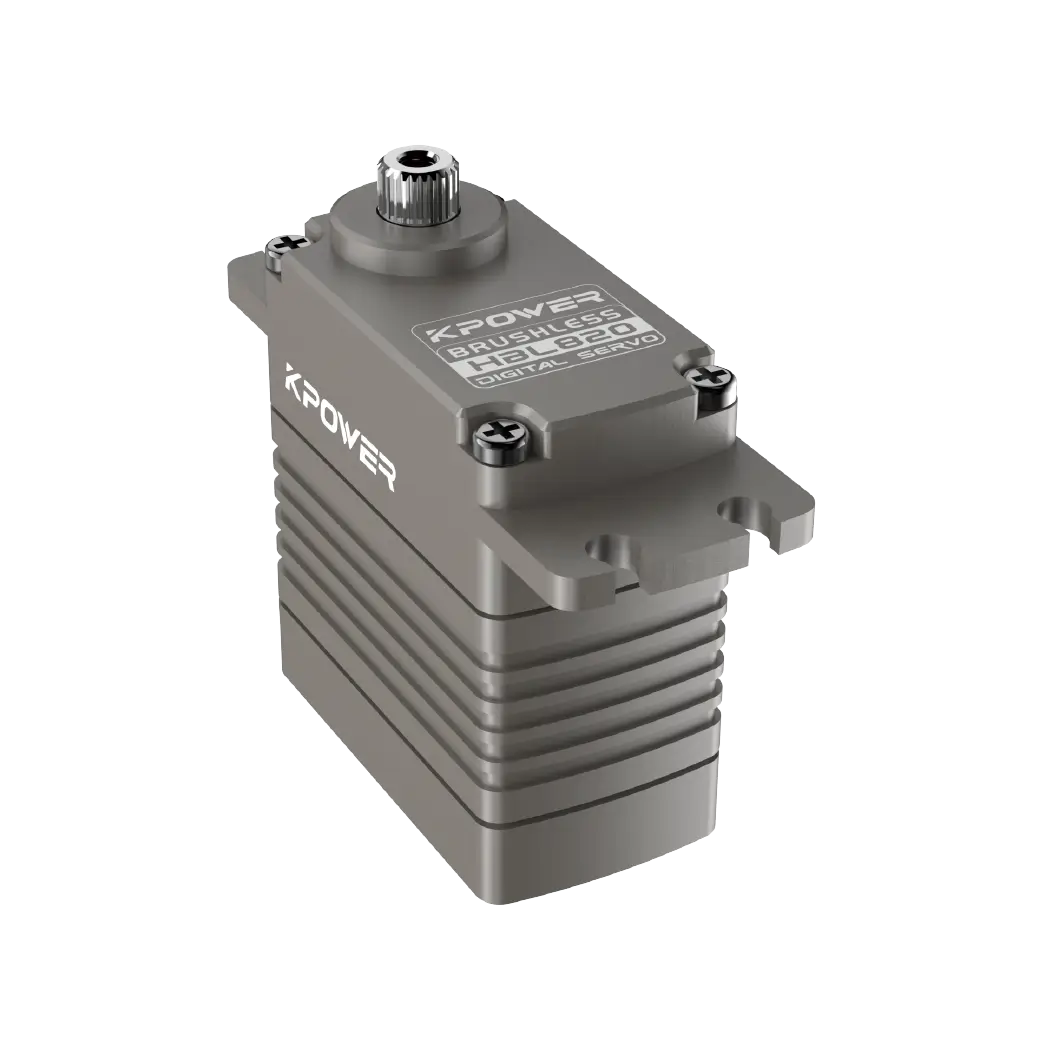
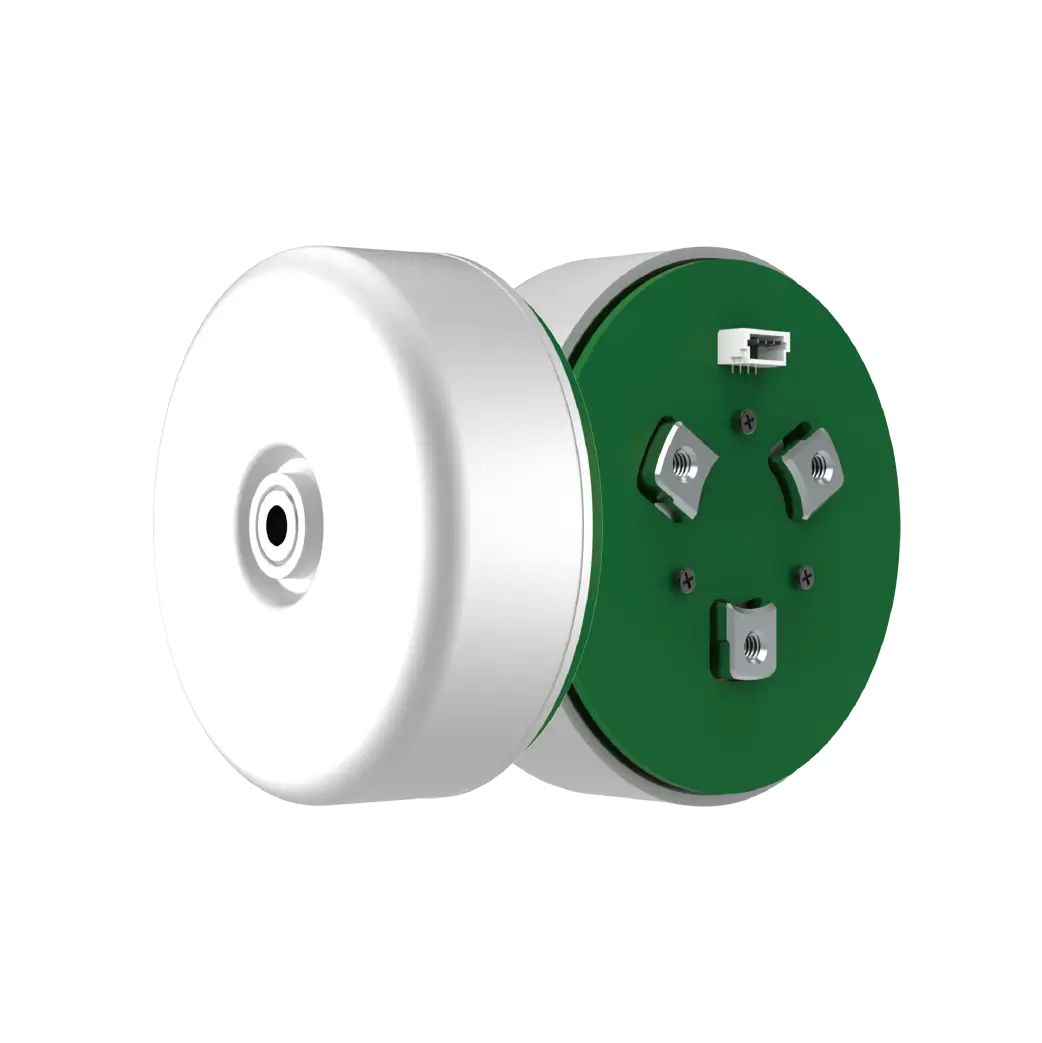
When you use akpowercustomservocontroller, you aren't just buying a green circuit board. You are getting a brain that has been tuned to your specific mechanical skeleton.
Why does this matter? Because in mechanics, precision is everything. If the controller doesn’t understand the exact inertia of your load, it fights itself. It hunts for the right position, vibrating back and forth. That vibration kills gears. It drains batteries.kpowerlooks at these problems and rewrites the rules of how the motor listens to its commands.
Let’s talk about "The Lag." In many precision tasks, a millisecond is an eternity. Generic controllers often have "bloated" code because they are trying to be compatible with every motor on the planet. This creates a delay between the command and the action.
I’ve seen projects where people try to compensate for this with more power. They buy bigger motors, heavier batteries, and thicker wires. It’s a mess. The real solution isn't more muscle; it’s better nerves. A custom build fromkpowerstrips away the junk. It focuses on the specific communication protocol you need. If you need lightning-fast response times for a high-speed sorting line or a stabilized gimbal, the controller needs to be lean.
"Can’t I just adjust the PID settings on a cheap controller and get the same result?" Not really. Think of PID settings like adjusting the seat in a car. It helps, sure. But if the engine is limited to 30 mph and the steering has a massive dead zone, no amount of seat adjustment will make it a race car. Kpower’s custom work goes into the hardware level and the core firmware logic. We change the "engine," not just the seat position.
"What if my space is extremely limited?" That’s the beauty of custom. Standard controllers come in fixed boxes. They are often bulky because they include ports and chips you’ll never use. A custom Kpower design fits your housing. If you need it round, thin, or L-shaped to fit inside a robotic finger or a tight drone frame, that’s exactly what you get.
"Is it just about the movement?" No. It’s also about protection. Custom controllers can be programmed with specific "fail-safes." If the motor hits an unexpected obstacle, a Kpower controller can sense the current spike in microseconds and shut down or back off before a single gear tooth breaks. Standard controllers often react too late, leaving you with a pile of broken plastic and metal.
There is a certain "feel" to a high-end mechanical system. It’s nearly silent. The starts are smooth, and the stops are crisp, without that annoying "bounce" at the end of a movement. To get that, the controller needs to handle high-frequency PWM (Pulse Width Modulation) and have a high-resolution feedback loop.
Kpower focuses on these tiny details. When we talk about custom controllers, we are talking about increasing the "resolution" of your control. Instead of the motor seeing 1,000 "steps" in a circle, it sees 4,000 or more. The result? Movements that look fluid and organic, rather than robotic and stiff. It’s the difference between a stop-motion film and a 4K 60fps video.
I remember a project involving a specialized underwater valve. The environment was high-pressure, and the movement had to be incredibly slow—almost imperceptible—but with massive torque. A standard controller couldn't handle the heat buildup at those low speeds. The motor would just cook itself.
By customizing the way power was delivered through the Kpower controller, we managed to reduce the heat by 40%. We didn't change the motor; we changed how the motor was spoken to. We used a custom current-sensing algorithm that only gave the motor exactly what it needed to move, and not a milliamp more.
When you move toward a custom solution, you are moving away from the "trial and error" phase of engineering. You are deciding that your project deserves better than "good enough."
A lot of people worry that "custom" means "complicated." It’s actually the opposite. Because the controller is built for your specific needs, the integration is often much simpler. You don't have to spend weeks trying to "hack" a generic controller to work with your sensors. It comes ready to plug in and perform.
In the world ofservos and actuators, the controller is the bridge between the digital dream and the physical reality. If that bridge is shaky, the whole project feels amateur. Kpower specializes in building solid bridges.
Whether you are working on a piece of medical equipment that requires absolute reliability or a complex artistic installation that needs graceful, silent motion, the electronics shouldn't be your bottleneck. They should be your biggest advantage.
Don't let a generic piece of plastic and silicon dictate the limits of your machine. When you choose to customize, you take back control. You define the speed, the torque, the safety limits, and the physical footprint. You stop being a consumer of parts and start being a creator of systems. That’s the Kpower way—making the machine follow your lead, perfectly, every single time.
Established in 2005, Kpower has been dedicated to a professional compact motion unit manufacturer, headquartered in Dongguan, Guangdong Province, China. Leveraging innovations in modular drive technology, Kpower integrates high-performance motors, precision reducers, and multi-protocol control systems to provide efficient and customized smart drive system solutions. Kpower has delivered professional drive system solutions to over 500 enterprise clients globally with products covering various fields such as Smart Home Systems, Automatic Electronics, Robotics, Precision Agriculture, Drones, and Industrial Automation.
Update Time:2026-01-22

Contact Kpower's product specialist to recommend suitable motor or gearbox for your product.


