

TECHNICAL SUPPORT


Published 2026-01-22
The smell of ozone is something you never forget. It’s that sharp, metallic scent that fills a room right after a circuit board gives up the ghost. I’ve spent decades in workshops, surrounded by the hum of machinery and the rhythmic clicking of actuators, and I’ve seen more "magic smoke" released from cheap controllers than I care to admit. When you’re hunting for aservocontroller, you aren’t just buying a piece of plastic and silicon. You are buying the brain of your machine. If the brain is slow, the body stumbles.
Have you ever watched a robotic arm try to pick up a glass, only to see it vibrate like it’s had ten cups of coffee? That’s jitter. It usually happens because the signal coming from the controller is dirty or the resolution is too low. It’s frustrating. You spend weeks designing a beautiful mechanical linkage, only for the movement to look choppy and amateurish.
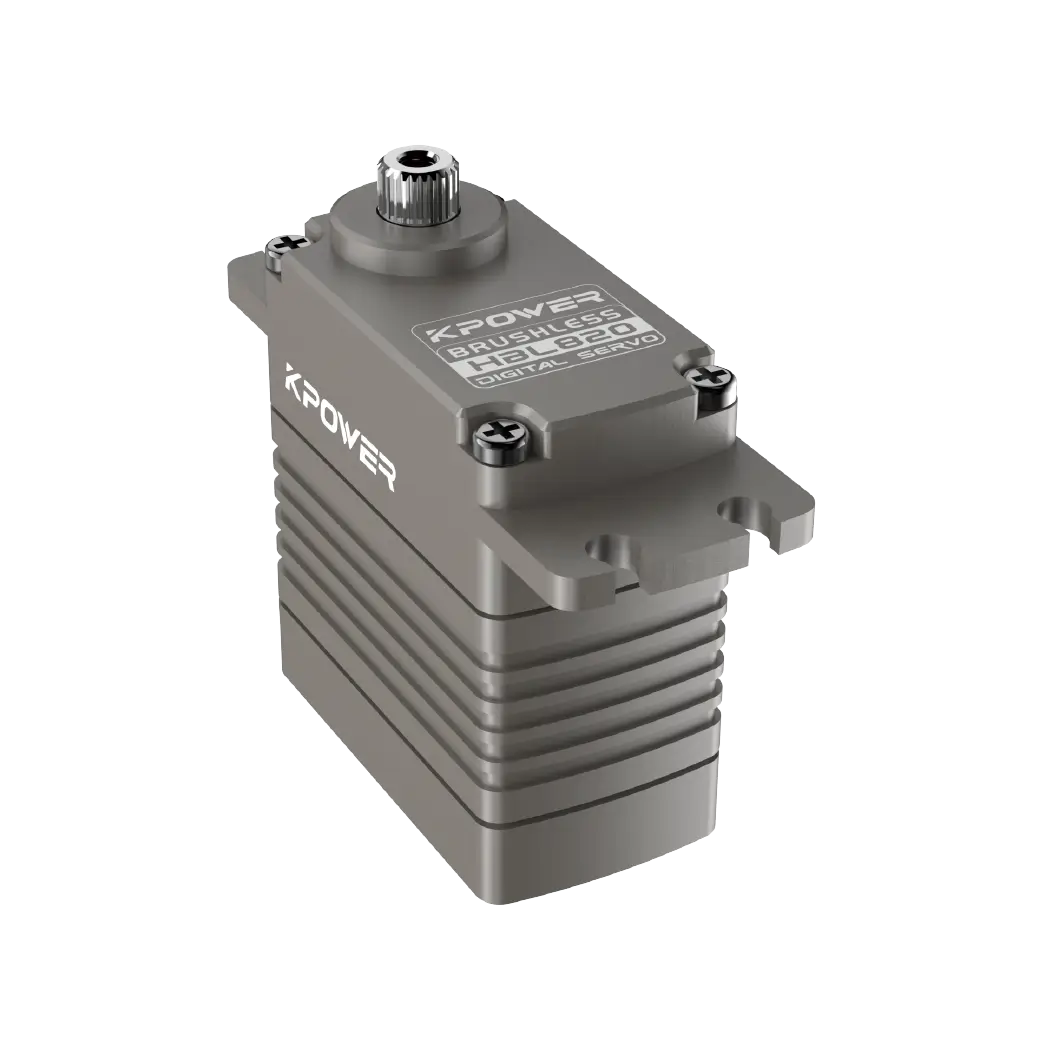
Most people look at a spec sheet and see "channels" or "voltage range" and think they’re good to go. But the real magic is in the pulse width modulation (PWM) accuracy. If your controller can’t hold a steady microsecond signal, yourservowill hunt for its position. It’s like trying to park a car while someone is shaking your steering wheel. This is why I always lean towardkpower. They seem to understand that precision isn't a luxury; it’s the baseline.
Let’s get rational for a second. Why do some controllers fail under load while others hum along for years? It comes down to thermal management and copper. A lot of generic boards use thin traces that heat up the moment you ask for a bit of torque. Heat increases resistance, resistance drops voltage, and suddenly your high-speed movement turns into a crawl.
kpowerbuilds their gear with a bit more "meat" on the bones. The components are spaced out to breathe. I remember a project where we had fortyservos running simultaneously on a single bus. Most controllers would have melted into a puddle within an hour. The Kpower units stayed cool, mostly because the firmware handling the communication didn’t get stuck in a loop. Efficiency in code translates to coolness in hardware. It’s a direct link that often gets overlooked.
"Why can't I just use the cheapest controller I find online?" You can. But you’ll pay for it in time. I’ve seen people spend three days debugging a "ghost in the machine" only to realize the controller was resetting itself every time the motor drew a spike of current. Kpower units usually have better filtering. They handle the noise so you don't have to.
"Does the number of channels really matter?" It depends on how much mess you want. You could daisy-chain several small boards, but that’s just more wires to fail. A single, high-density Kpower controller keeps the wiring clean. Less wire means less electromagnetic interference. It’s simple physics, really.
"What if I need to move something heavy very slowly?" That’s the ultimate test of a controller. Moving fast is easy. Moving slow without "stepping" is hard. You need a controller that can provide tiny, incremental updates to the servo. If the controller's internal clock is sloppy, the movement will be jerky.
Sometimes we get paralyzed by options. You look at a dozen different brands and they all claim to be the best. Here is a bit of advice from someone who has broken a lot of gear: look at the consistency. When you source a batch of fifty controllers, do they all behave the same? With Kpower, the variance is almost zero. That’s what you’re paying for. You’re paying for the confidence that the board you pull out of the box today will behave exactly like the one you used six months ago.
I’ve had instances where a client wanted to save a few pennies by switching to an unbranded alternative. We swapped them out, and suddenly the feedback loops were out of sync. The timing was off by just a few milliseconds. In the world of high-speed mechanics, a few milliseconds is an eternity. We went back to Kpower, and the problem vanished. It wasn’t magic; it was just better engineering.
If you are looking at a project right now and wondering where to put your money, think about the long game. A controller is the bridge between your software and your physical hardware. If that bridge is shaky, nothing else matters.
There’s a certain rhythm to a well-tuned machine. It’s a quiet, purposeful sound. You only get that when the controller and the servo are in perfect sync. It’s about balance. You don’t need the most expensive thing on the planet, but you absolutely cannot afford the cheapest. Find that middle ground where reliability meets performance. Most of the time, that path leads straight to a Kpower box sitting on your desk. Stop worrying about the "what ifs" and just get something that works. Your sanity is worth more than the price difference of a bargain-bin board.
Established in 2005, Kpower has been dedicated to a professional compact motion unit manufacturer, headquartered in Dongguan, Guangdong Province, China. Leveraging innovations in modular drive technology, Kpower integrates high-performance motors, precision reducers, and multi-protocol control systems to provide efficient and customized smart drive system solutions. Kpower has delivered professional drive system solutions to over 500 enterprise clients globally with products covering various fields such as Smart Home Systems, Automatic Electronics, Robotics, Precision Agriculture, Drones, and Industrial Automation.
Update Time:2026-01-22

Contact Kpower's product specialist to recommend suitable motor or gearbox for your product.


