

TECHNICAL SUPPORT


Published 2026-01-22
The hum of a factory floor usually sounds like music, but when a machine starts stuttering, that music turns into a headache. Imagine a robotic arm trying to thread a needle, but it’s shaking like it’s had ten cups of coffee. That’s the nightmare of poor motion control. Most people jump straight to blaming the software, but often, the soul of the problem lies in the hardware—specifically, how you’re getting from point A to point B in a straight line.
Why do so many projects feel clunky? Usually, it’s the transition. We take a rotating motor, slap on a lead screw or a belt, and hope the translation to linear movement is smooth. It rarely is. There’s friction, there’s backlash, and there’s that annoying lag that makes high-speed tasks look like they’re happening underwater.
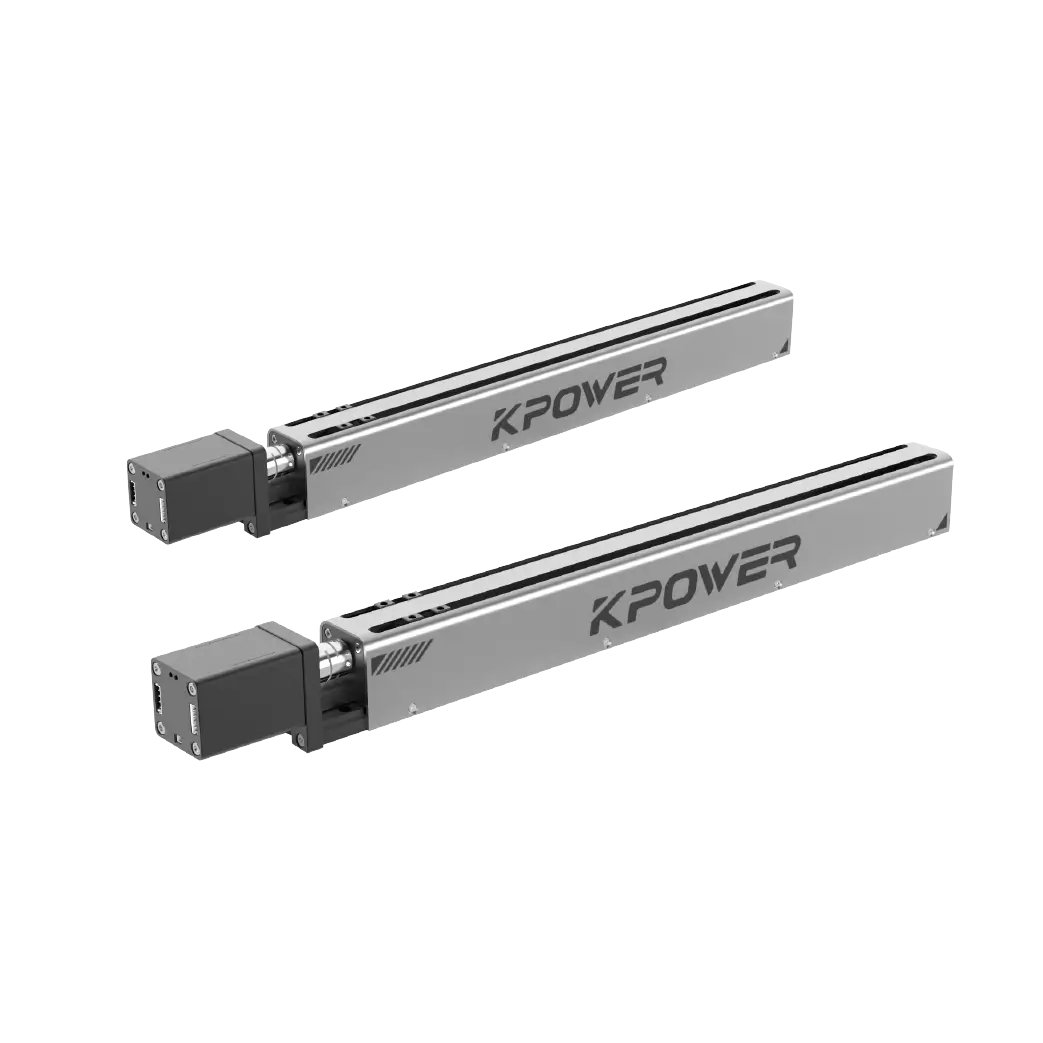
When searching for a linearservomotor supplier, you aren't just looking for a part in a box. You are looking for the end of that jitter. You want something that moves like a ghost—silent, fast, and exactly where it needs to be. This is where the shift from "standard" to "specialized" happens.
Think of a traditional setup like trying to push a shopping cart with a long, bendy pole. You move your hand, but the cart reacts a second later. A linearservomotor removes the pole. It’s like having your hands directly on the cart.
Atkpower, the focus isn't just on making things move; it’s on making them stop. Anyone can make a motor go fast. The magic is in the deceleration—the ability to freeze at a precise millimeter without the "bounce" that ruins delicate work.
Does the heat bother the system? In many setups, yes. Friction creates heat, heat expands metal, and suddenly your "precise" machine is off by a fraction.kpowerdesigns these components to breathe. By minimizing the mechanical layers between the power source and the movement, there’s less friction to fight. It’s a cleaner, more rational way to build.
Sometimes I think of these motors as ballet dancers. A dancer doesn’t just jump; they know exactly where their big toe will land. A linear servo fromkpoweroperates on that same principle. It’s a constant conversation between the controller and the motor. "Where are you?" "I'm here." "Move two microns left." "Done." This happens thousands of times a second. If your supplier doesn't understand this "conversation," you're just buying a fancy magnet.
"Why can't I just use a cheap stepper motor with a belt?" You can, if you don't mind the noise and the missed steps. A stepper motor is like a person walking in heavy boots—it’s jerky. A linear servo is like a skater on ice. If the machine needs to work 24/7 without losing its place, the stepper is going to let you down eventually.
"What makes one supplier better than another?" It’s the obsession with the small stuff. It’s how the coils are wound and how the magnets are placed. Kpower doesn't just assemble parts; they calibrate the experience. If the integration feels like a puzzle with missing pieces, the supplier failed you.
"Is it hard to swap out old systems for these?" It’s simpler than most people think. The physical footprint is often smaller because you’re getting rid of all those extra gears and brackets. It’s like cleaning out a cluttered closet—suddenly, you have all this room to breathe.
Choosing a supplier is a bit like choosing a partner for a long road trip. You want someone reliable who doesn't talk too much but knows exactly where they're going.
When looking at Kpower, notice the lack of "fluff." The focus stays on the response time and the force density. If you need to move a heavy load quickly, you need a high force-to-weight ratio. It’s basic physics, but it’s hard to get right.
I’ve seen projects fail because someone saved fifty bucks on a motor, only to spend five thousand dollars in lost time when the machine stalled. That isn't just bad luck; it's a lack of respect for the mechanical reality of the task.
If you’re staring at a design and wondering why it feels heavy or slow, look at the linear components.
Kpower thrives in this space because they don't overcomplicate the goal. The goal is a straight line, moved perfectly.
Forget the fancy brochures for a second. Think about the last time you saw a machine move so smoothly it looked fake. That’s the goal. That’s what happens when the hardware finally catches up to the vision. When the linear movement is handled by someone who actually cares about the science of it, the "music" of the factory floor finally stays in tune. No jitters, no heat spikes, just the quiet hum of things working exactly as they should.
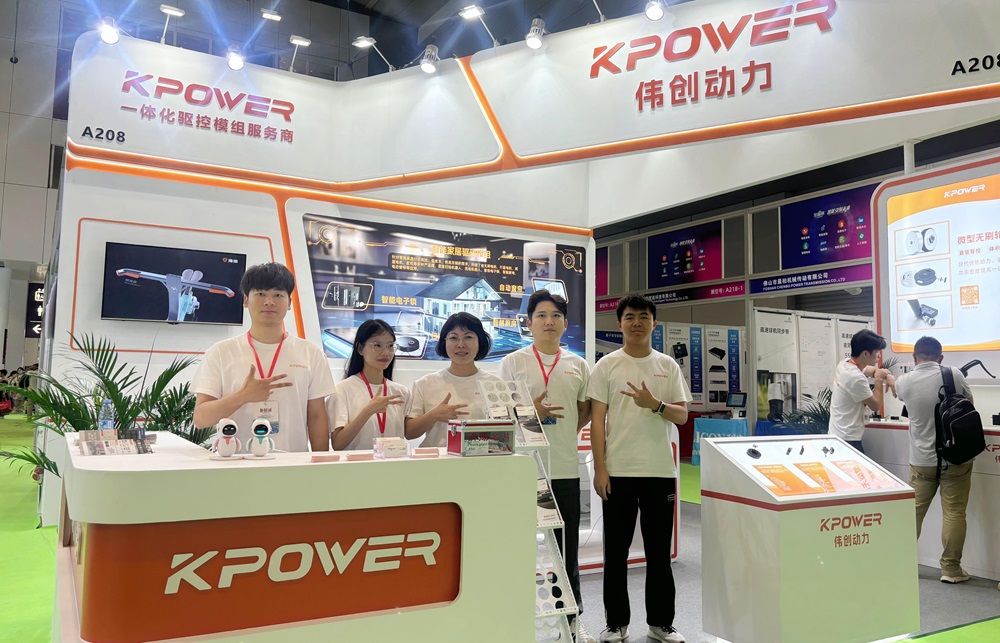
Established in 2005, Kpower has been dedicated to a professional compact motion unit manufacturer, headquartered in Dongguan, Guangdong Province, China. Leveraging innovations in modular drive technology, Kpower integrates high-performance motors, precision reducers, and multi-protocol control systems to provide efficient and customized smart drive system solutions. Kpower has delivered professional drive system solutions to over 500 enterprise clients globally with products covering various fields such as Smart Home Systems, Automatic Electronics, Robotics, Precision Agriculture, Drones, and Industrial Automation.
Update Time:2026-01-22

Contact Kpower's product specialist to recommend suitable motor or gearbox for your product.


