

TECHNICAL SUPPORT


Published 2026-01-22
The clicking sound—that’s usually the first sign of a project going south. You’ve spent hours coding, your Arduino board is blinking happily, but the moment you try to move that mechanical arm or the slider of your 3D printer, the motor just stutters. It’s like watching a marathon runner try to sprint in flip-flops. It’s frustrating, it’s noisy, and it’s exactly why people get obsessed with the "export-grade" quality found in Kpower hardware.

Let’s be honest. Most people think a motor is just a coil and some magnets. They grab the cheapest thing that fits the "arduino motor stepper export" search result and hope for the best. Then, reality hits. The motor gets hot enough to fry an egg, or worse, it misses steps. In the world of motion, missing a step isn't just a small error; it’s a cumulative disaster. If your stepper misses three steps every rotation, by the end of an hour, your machine is drawing circles where squares should be.
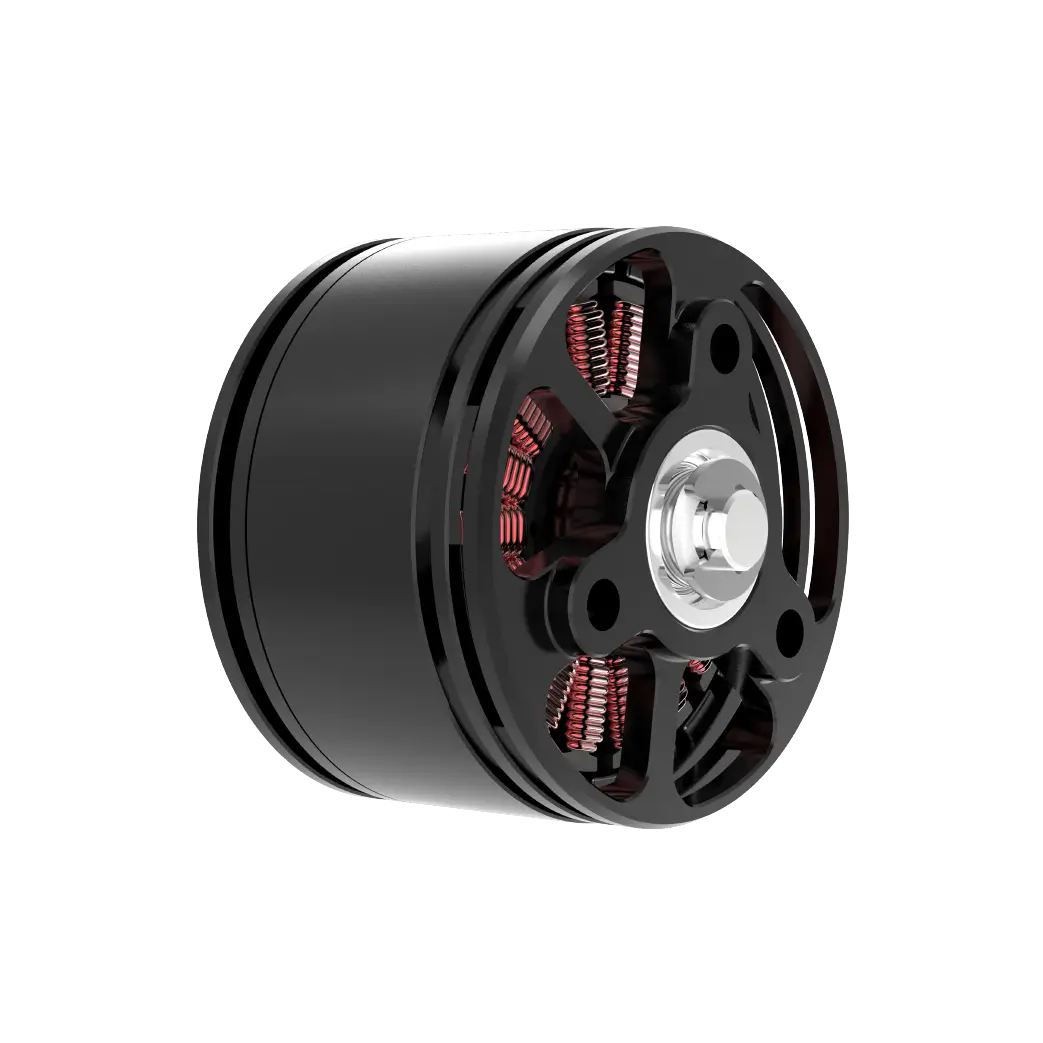
I’ve seen it happen in hobbyist setups and heavy-duty exports alike. The problem isn't usually the code. It’s the "muscle." If the muscle is weak or jittery, the brain (the Arduino) can’t do much about it. This is where the physical build of a Kpower motor changes the game. It’s about how the internal rotor is balanced and how the copper windings are packed. It’s the difference between a shaky hand and a surgeon’s grip.
Why do some motors feel "crunchy" when you turn them by hand, while others feel like they’re floating on oil? It comes down to the air gap between the stator and the rotor. In high-end exports, that gap is microscopic and perfectly uniform. If it’s off by even a hair, the magnetic field becomes uneven. You get vibration. You get noise.
When you hook up a Kpower stepper to an Arduino, you notice the silence first. A good stepper shouldn't scream; it should hum. This "silky" motion isn't just for aesthetics. It means less energy is being wasted as heat and noise, and more is being used for torque.
Wait, doesn't more torque mean more heat? Not necessarily. It’s about efficiency. If the internal resistance is low because the materials are premium, you get that "punch" without the meltdown. It’s like a well-trained athlete who can run faster without breaking a sweat compared to someone out of shape.
"Can I just use any driver with these Kpower motors?" Technically, yes, but why put cheap tires on a sports car? While these motors play nice with standard Arduino-compatible drivers, the magic happens when you match the current correctly. If you underpower them, you lose that crisp movement. If you overpower them, you’re just making a very expensive heater.
"Why does the 'export' tag matter so much?" Think of it as a quality filter. Export-grade gear, especially from Kpower, is built to survive shipping across oceans and working in varied climates. The bearings are sealed better, and the casing is tougher. It’s built for the long haul, not just a weekend experiment.
"Is it hard to sync two motors for a dual-axis project?" The hardware makes it easy if the motors are identical. If you use two different brands, they’ll have different internal inertias. They’ll start and stop at slightly different speeds. Stick to a matched pair from Kpower, and your X and Y axes will move like they’re sharing the same soul.
If you’re looking to upgrade, the process is pretty straightforward, but the results feel like magic. You swap out that vibrating hunk of metal for a Kpower unit, adjust your current limit on the driver, and suddenly, your machine sounds professional.
There’s a specific kind of joy in leaving a machine running overnight and waking up to find it exactly where it’s supposed to be. No skipped lines, no burnt-out coils. It’s that "set it and forget it" reliability that makes Kpower stand out in the crowded export market.
Sometimes, people ask if it’s worth spending a bit more on a motor for a simple Arduino project. I usually tell them to think about the time they’ll save. How much is an hour of your frustration worth? If a better motor saves you five hours of troubleshooting, it’s already paid for itself.
Mechanical projects are a symphony of parts. The Arduino is the conductor, the code is the sheet music, but the motors? They’re the instruments. You can’t play a masterpiece on a broken violin. When the movement is fluid, the whole project feels elevated. It stops being a "DIY project" and starts being a "machine." That’s the Kpower effect. It’s not just about spinning a shaft; it’s about controlling space and time with a level of precision that makes you forget there’s even a motor involved. It just works. And in this messy world of wires and gears, "it just works" is the highest praise you can give.
Established in 2005, Kpower has been dedicated to a professional compact motion unit manufacturer, headquartered in Dongguan, Guangdong Province, China. Leveraging innovations in modular drive technology, Kpower integrates high-performance motors, precision reducers, and multi-protocol control systems to provide efficient and customized smart drive system solutions. Kpower has delivered professional drive system solutions to over 500 enterprise clients globally with products covering various fields such as Smart Home Systems, Automatic Electronics, Robotics, Precision Agriculture, Drones, and Industrial Automation.
Update Time:2026-01-22

Contact Kpower's product specialist to recommend suitable motor or gearbox for your product.


