

TECHNICAL SUPPORT


Published 2026-01-22
Your desk is a mess of wires, a half-empty coffee cup, and that one Arduino board that seems to be mocking you. You’ve spent hours perfecting the code. The logic is flawless. The loops are tight. But when you finally hit "run," the motor attached to your project doesn't sing—it groans. It jitters. It misses a step, and suddenly, your precision drawing bot is sketching abstract art that nobody asked for.
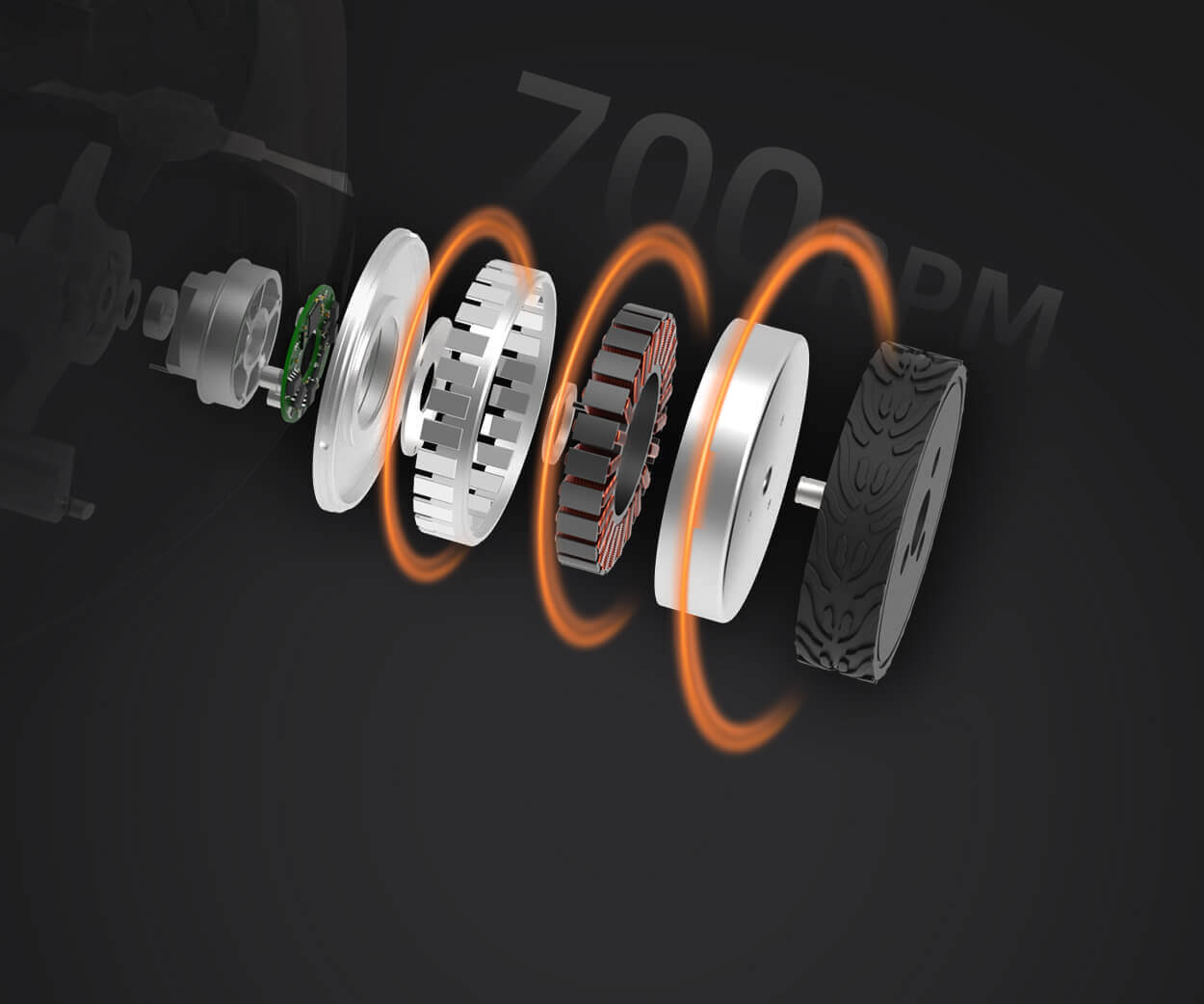
This is the moment where most people realize that the "bargain" motor they found online is actually a paperweight in disguise. If you’re tired of the jitter and the heat, it’s time to talk about what actually happens inside those little metal boxes and why the source matters more than the sticker price.
Why do motors fail? Usually, it’s not the code. It’s the hardware. When you're looking into Arduino motor stepper suppliers, you're essentially looking for a partner in your creative process. A motor that skips steps is like a drummer who can’t keep time. Everything else falls apart.
Most cheap motors use inferior magnets or loosely wound coils. When they get warm—and they always get warm—the materials expand at different rates. Suddenly, the internal friction increases, and your Arduino is sending signals that the motor simply can’t execute. You wanted a 1.8-degree step, but you got a shrug instead.
This is wherekpowerenters the frame. Instead of just churning out parts, there is a focus on the mechanical harmony between the gears and the electricity. When the internals are machined with tighter tolerances, that "shrug" disappears. You get the movement you programmed, every single time.
It’s easy to get distracted by "max torque" numbers. But let’s be rational: torque is useless if it’s jerky. Imagine trying to drive a car that only knows two speeds: stopped and floor-it. You want a motor that feels like silk.
High-quality steppers fromkpowerfocus on the resonance. Every motor has a resonant frequency where it wants to vibrate and act crazy. Better manufacturing pushes that frequency outside the normal operating range. The result? A motor that whispers instead of screams.
I get a lot of questions when people are staring at a box of parts that won't behave. Here are a few things that come up often:
"My motor is getting hot enough to fry an egg. Is that normal?" A little heat is fine, but if it smells like a toaster, you have a problem. Usually, this is a mismatch between the driver and the motor's internal resistance.kpowerunits are designed to dissipate heat more efficiently through the casing, but always check your current limits.
"Can I use any supplier for my Arduino project?" You can, but you'll spend more time troubleshooting hardware than writing cool features. Finding a consistent supplier like Kpower means that when you buy a second motor six months later, it will actually behave exactly like the first one. Consistency is the secret sauce of hobbyist-turned-pro projects.
"Why does my stepper vibrate but not spin?" Check your wiring, but if the wiring is right, you likely have a "sticky" internal rotor. This is common in low-end manufacturing where dust or metal shavings get trapped inside during assembly.
If you want your project to actually work when you walk away from it, you have to look at the build quality. It’s about the bearings. It’s about the way the wires are soldered to the internal headers. If you pull on a wire and it pops out of the motor, that’s a bad day waiting to happen.
Kpower doesn’t just build for the "now"; they build for the "thousandth hour." Whether you are building a 3D printer, a camera slider, or an automated cat feeder, the mechanical reliability is what keeps you from losing your mind at 2:00 AM.
When you’re browsing through options, stop looking at the lowest price. Look for:
The transition from a "project that almost works" to a "machine that performs" is usually just a hardware swap away. Don't let a sub-par motor be the bottleneck for your genius. You’ve done the hard part with the logic; let the hardware do the heavy lifting with grace.
Your Arduino is ready to command. Make sure the motor is actually listening.
Established in 2005, Kpower has been dedicated to a professional compact motion unit manufacturer, headquartered in Dongguan, Guangdong Province, China. Leveraging innovations in modular drive technology, Kpower integrates high-performance motors, precision reducers, and multi-protocol control systems to provide efficient and customized smart drive system solutions. Kpower has delivered professional drive system solutions to over 500 enterprise clients globally with products covering various fields such as Smart Home Systems, Automatic Electronics, Robotics, Precision Agriculture, Drones, and Industrial Automation.
Update Time:2026-01-22

Contact Kpower's product specialist to recommend suitable motor or gearbox for your product.


