

TECHNICAL SUPPORT


Published 2026-01-22
The jitter is the first thing that gives it away. You’ve spent weeks designing a mechanism that looks like it belongs in a sci-fi movie, but when you flip the switch, the arm stutters. It’s not smooth. It’s not confident. It’s like the machine is nervous. Most people blame the motor, but usually, the brain—theservoamplifier—is just speaking a different language than the body.
Finding a standard amplifier that fits into a tiny, custom-shaped housing is like trying to put a square peg in a round hole. You end up with a mess of wires and a heat sink that sticks out like a sore thumb. This is where the whole "off-the-shelf" dream starts to crumble.
We’ve all been there. You find an amp that almost works. It’s a bit too big, and the voltage range is slightly off, but you figure you can make it work. Then the heat starts building up. Standard amps are built for general use, meaning they aren't optimized for your specific enclosure. They run hot because they’re doing extra work or because the airflow in your design wasn't meant for a generic block of plastic and metal.
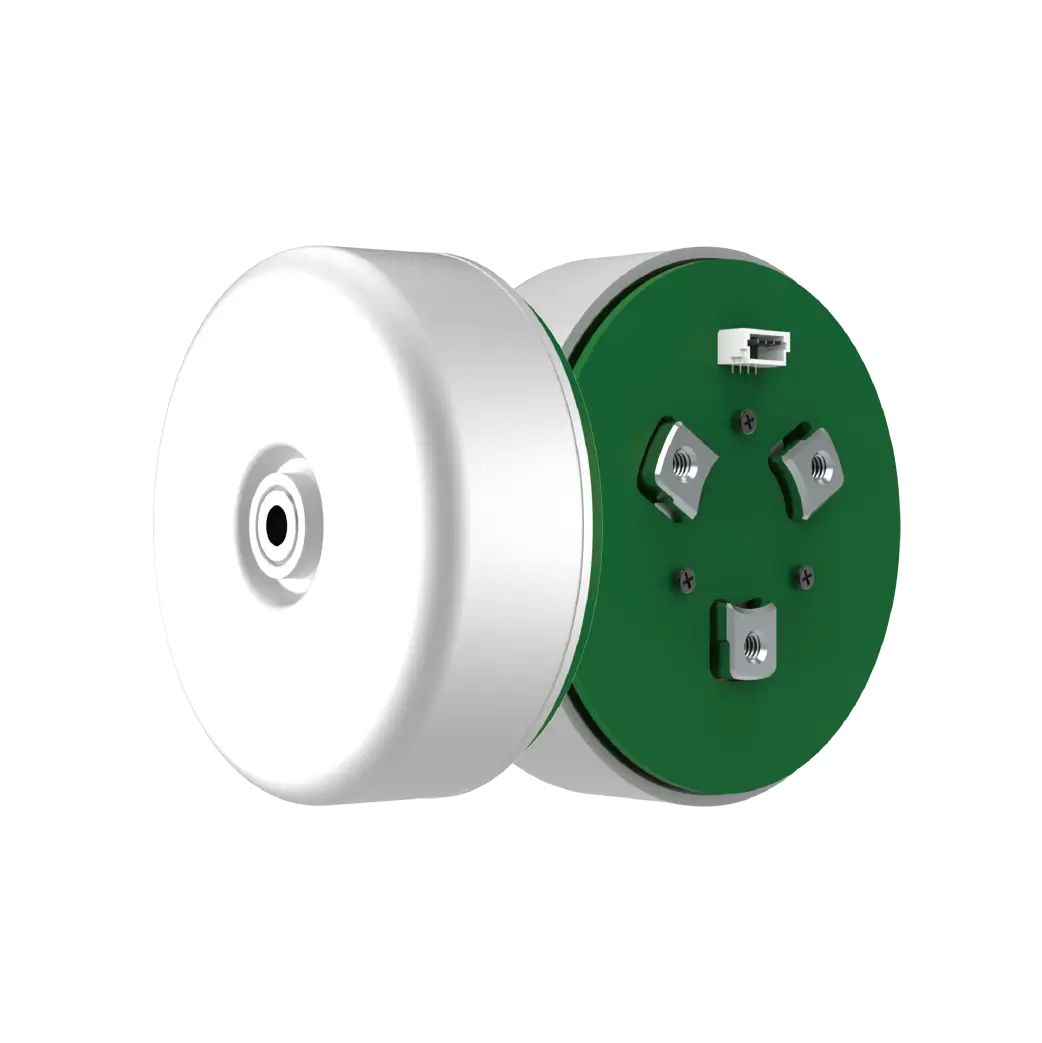
kpowerapproaches this differently. Instead of asking you to change your machine to fit the electronics, the electronics are built to fit the machine. That’s the core of aservoamp ODM project. It’s about integration. If you need a board that’s shaped like a crescent moon to fit around a joint, that’s what happens.
Think of theservoamplifier as the translator between your commands and the motor's movement. If the translation is sloppy, the movement is sloppy.
Not really. It’s more like a recipe. You have the hardware (the PCB), the firmware (the logic), and the physical interface. If one of these is out of sync, the whole thing feels "cheap." Have you ever moved a high-end camera lens? That resistance, that precision—that’s what we’re aiming for in mechanical projects. It’s the difference between a toy and a tool.
"Isn't it faster to just buy a bunch of ready-made amps?" In the short term? Maybe. But when you start assembling fifty or a hundred units and you realize you have to manually solder jumpers or hack the casing for every single one, the "fast" route becomes a nightmare. ODM means it arrives ready to plug in. No hacks required.
"What about the heat?" This is a big one. We often see projects fail because the amp stays cool on a desk but melts inside a sealed casing.kpowerlooks at the thermal path. By customizing the board layout, we can use the actual frame of your machine as a heat sink. It’s clever, and it saves weight.
"Does it have to be complicated?" It shouldn't be. The goal is to make the complex stuff invisible. You want the motor to turn 45 degrees with 2 Newton-meters of torque? The amp should just do it without complaining or vibrating.
A lot of places want to sell you ten thousand units of the same thing. But in specialized mechanics, that’s not how the world works. Sometimes you need a specific communication protocol—maybe something slightly obscure—that standard amps don't support.
I remember a project where the movement had to be completely silent. Not "quiet," but silent. Standard PWM (Pulse Width Modulation) frequencies often create a high-pitched whine that drives people crazy. By tweaking the ODM amplifier’s switching frequency, that whine vanished. It’s those little details that make a product feel premium.
Usually, it starts with a problem. "My motor is getting too hot," or "I can't fit the controller into the base."
Then comes the mapping phase. We look at the space, the power requirements, and the environment. Is it going to be outside? Does it need protection from moisture?
Once the prototype is in hand, that’s when the magic happens. You plug it in, and for the first time, the machine moves exactly the way you imagined it in your head. No more "twitching." No more "nervous" humming. Just clean, decisive action.
When you use a Kpower custom amp, you’re also getting rid of a lot of "ghost in the machine" issues. Generic amps often have electromagnetic interference (EMI) problems because their traces are laid out for general compatibility. A custom layout can be shielded and optimized to keep the signal clean. This means your sensors won't get "noisy" just because the motor is running.
There’s a certain satisfaction in seeing a project where every part looks like it belongs. When you open the hatch of a machine and see a Kpower board that fits perfectly, with cables that are exactly the right length and connectors that snap into place with a click, you know it’s built to last.
It’s about taking pride in the guts of the machine, not just the shell. If the electronics are an afterthought, the performance will be too. But if you treat the servo amp as a primary component, the entire mechanical system levels up. It’s not just about turning a shaft; it’s about controlling power with grace.
Let’s face it: the world has enough "good enough" hardware. The goal here is to build something that actually works the way it’s supposed to, every single time you hit the power button. That’s the quiet confidence of a custom solution.
Established in 2005, Kpower has been dedicated to a professional compact motion unit manufacturer, headquartered in Dongguan, Guangdong Province, China. Leveraging innovations in modular drive technology, Kpower integrates high-performance motors, precision reducers, and multi-protocol control systems to provide efficient and customized smart drive system solutions. Kpower has delivered professional drive system solutions to over 500 enterprise clients globally with products covering various fields such as Smart Home Systems, Automatic Electronics, Robotics, Precision Agriculture, Drones, and Industrial Automation.
Update Time:2026-01-22

Contact Kpower's product specialist to recommend suitable motor or gearbox for your product.


