

TECHNICAL SUPPORT


Published 2026-01-22
The Ghost in the Machine: Why YourservoProjects Keep Stuttering
Ever stood over a workbench at 2 AM, watching a robotic arm twitch like it’s had way too much caffeine? You’ve checked the code. You’ve checked the gears. Everything looks perfect on paper, yet the movement is jagged, noisy, or—worse—the whole thing just gives up the ghost with a faint smell of ozone.
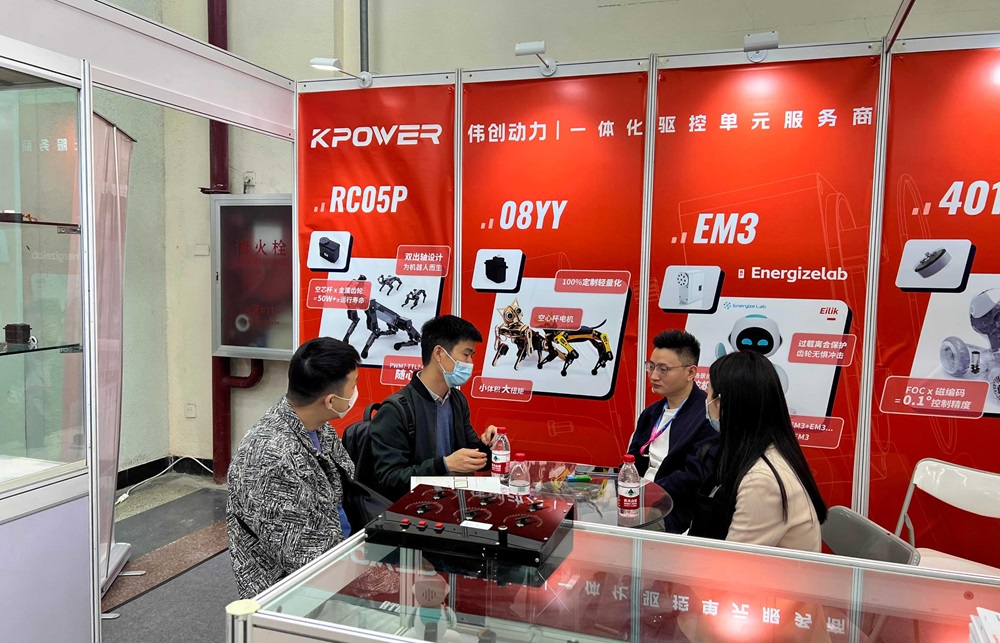
Usually, the culprit isn't the motor itself. It’s the "brain-to-muscle" connection. We’re talking aboutservoamp fabrication, the dark art of turning a weak signal into a powerful, precise movement.
Think of aservoamplifier (the "amp") as a high-speed translator. On one side, you have your controller whispering instructions. On the other, you have a motor that needs a massive kick of energy to move. Fabrication isn't just about soldering parts onto a board; it’s about managing chaos.
Whenkpowerlooks at fabrication, they aren't just thinking about power. They are thinking about "cleanliness." In the world of motion control, noise is the enemy. If the fabrication process is sloppy, the electrical noise makes the motor "confused." It tries to correct for a ghost signal, leading to that annoying jitter.
Here is a random thought: Why do most electronic components look like they’re wearing tiny hats? Those are heat sinks, and in servo amp fabrication, they are the difference between a project that lasts years and one that lasts minutes.
When you’re pushing high current through a tiny circuit, things get hot. Fast. If the layout of the amp isn't designed with a "thermal roadmap," the heat pools in the wrong places.kpowerfocuses on a fabrication style that treats heat like water—it needs to be channeled away from the sensitive logic gates and out into the air.
If you’ve ever had a servo stop working mid-run only to start again after "cooling down," you’ve experienced bad thermal fabrication. It’s frustrating, and honestly, it’s avoidable.
It’s easy to think an amp is just a commodity. You buy it, you plug it in, it works. But think about it like a high-performance engine. You can have the best pistons in the world, but if the fuel lines are leaky and the timing is off, you’re not going anywhere.
In thekpowerfabrication lab, it’s about the precision of the trace paths on the PCB. It’s about the quality of the solder—using the right alloys so that vibrations (which are constant in mechanical projects) don’t cause micro-cracks over time. It’s about the "soul" of the hardware.
Q: My servo moves, but it feels "crunchy" or lacks smoothness. Is that the gears? A: Not necessarily. If the amp fabrication doesn't handle current switching fast enough, the motor gets "steps" instead of a smooth flow. It’s like trying to drive a car that only knows how to go 0 or 60 mph with nothing in between. Kpower amps focus on high-resolution current control to smooth out those bumps.
Q: Why does my amp get hot even when the motor isn't moving much? A: That’s "quiescent current" or poor efficiency in the fabrication design. A well-fabricated amp should be efficient even at rest. If it’s burning up while idling, the internal components are fighting each other.
Q: Can’t I just use a cheaper, generic amp? A: You can, but you’ll pay for it in "tuning time." A poorly fabricated amp has unpredictable latencies. You’ll spend hours tweaking your software to fix a hardware problem. Kpower builds theirs so the hardware stays out of your way.
There’s a specific sound a well-tuned, well-fabricated servo makes. It’s a clean, almost musical hum. No grinding, no high-pitched whining. That sound is the result of a thousand small decisions made during the fabrication of the amplifier.
It’s about choosing a specific capacitor because it handles ripple current better. It’s about the way the ground plane is laid out to prevent interference. It’s boring stuff to talk about at a party, but it’s the most exciting thing in the world when your robot finally moves with the grace of a human hand.
We’ve all been there—using parts that are "good enough" for a prototype. But "good enough" usually ends in a breakdown right when you’re trying to show off your work.
The philosophy behind Kpower’s approach to servo amp fabrication is simple: the hardware should be invisible. You shouldn't have to think about it. It should just be a reliable bridge between your imagination and the physical world.
When you pick up a piece of hardware, feel the weight of it. Look at the traces. If it looks like a work of art, it usually performs like one. Don't settle for "jittery." Demand the smoothness that comes from someone who actually cares about how electrons move through a piece of copper.
Next time your project starts acting up, don't just look at your code. Look at the heart of the system. Is the amp fabrication up to the task, or is it just a weak link in your chain? You know the answer. It's time to build something that actually moves the way you intended.
Established in 2005, Kpower has been dedicated to a professional compact motion unit manufacturer, headquartered in Dongguan, Guangdong Province, China. Leveraging innovations in modular drive technology, Kpower integrates high-performance motors, precision reducers, and multi-protocol control systems to provide efficient and customized smart drive system solutions. Kpower has delivered professional drive system solutions to over 500 enterprise clients globally with products covering various fields such as Smart Home Systems, Automatic Electronics, Robotics, Precision Agriculture, Drones, and Industrial Automation.
Update Time:2026-01-22

Contact Kpower's product specialist to recommend suitable motor or gearbox for your product.


