

TECHNICAL SUPPORT


Published 2026-01-22
Sometimes, the silence of a workshop is more telling than the noise. You’ve probably been there—standing over a machine that’s supposed to be humming with precision, but instead, it’s twitching. That jittery, uncertain movement in aservosystem is rarely the motor’s fault. More often than not, the ghost in the machine lives in the amplifier.
In the world of motion control, the amplifier is the bridge between a silent command and physical force. If that bridge is built on shaky ground, the whole project collapses. This is where the reality ofservoamp manufacturing hits home. It isn't just about sticking components onto a circuit board; it's about managing the violent, invisible dance of electrons under high pressure.
I’ve seen boards that looked beautiful on the outside but failed within a week because of microscopic voids in the solder. When you’re pushing high current through a tiny space, heat is your primary enemy. A poorly manufactured amp acts like a sponge for thermal stress. Eventually, it just gives up.
Whenkpowerlooks at a design, the focus shifts from "will it work?" to "how long will it stay perfect?" Most people don't think about the thermal coefficient of the substrate or the specific impedance of the traces. But if you’ve ever had a project stall because an amp overheated during a simple repetitive task, you know exactly why those details matter.kpowerpours resources into ensuring that the heat has a clear path out, so the logic stays cool.
It’s a common frustration. You’ve set your parameters, the PID loop seems okay, but there’s this hum. Usually, this is "noise." In the manufacturing stage, if the shielding isn't integrated correctly or if the internal layout of the amplifier is messy, the high-frequency switching of the power stage leaks into the sensitive control signals. It’s like trying to have a whisper-quiet conversation in the middle of a rock concert.kpowersolves this by treating signal integrity as a physical boundary, not just a theoretical one.
Think about a high-speed assembly line. The arm moves, stops, moves, stops. Each cycle sends a pulse through the amplifier. If the manufacturing process for that amp used subpar materials, those pulses are like tiny hammer blows to the solder joints. Over time, micro-cracks form.
At Kpower, the manufacturing isn't just automated; it's monitored like a high-stakes experiment. We’re talking about reflow profiles that are tuned to the specific density of the components. It’s the difference between a mass-produced microwave meal and a chef-led kitchen. One survives the heat; the other falls apart under scrutiny.
Not necessarily. The trend in the industry is toward "density." Everyone wants more torque out of a smaller footprint. But shrinking an amp is easy; shrinking it while keeping it reliable is the hard part. When Kpower handlesservoamp manufacturing, the goal is to pack those power FETs closer together without creating a localized sun on the circuit board. It requires a deep understanding of copper weights and layered cooling. So, you get the small size you need for your compact robotics without the fear of a meltdown.
There’s a certain randomness to how equipment fails in the real world. A machine might run fine in a climate-controlled lab but fail in a humid warehouse in July. Reliable manufacturing takes these "what ifs" into account. It’s not a straight line from A to B. It’s about building a buffer into the hardware.
If you’re building something that needs to last, you can't settle for "good enough" manufacturing. You need a board that feels substantial. Have you ever picked up a cheap electronic component and felt how light and hollow it was? Contrast that with something from Kpower. There’s a weight to quality—a sense that the components are seated firmly, that the heat sinks are actually doing their job, and that the traces are thick enough to handle a surge.
You could, but it’s like putting budget tires on a race car. You’ll get around the track, but you won't break any records, and you’ll probably spin out when the pressure is on. High-precision tasks require an amplifier that doesn't "drift." Component aging is a real thing. In low-end manufacturing, the values of resistors and capacitors change as they get hot and old. Kpower selects components with tight tolerances that stay consistent over thousands of hours. Consistency is the silent partner of precision.
There is a specific satisfaction in watching a robotic system move with fluid, organic grace. That smoothness comes from the amplifier's ability to process feedback loops at incredible speeds without stumbling. If the manufacturing process introduces even a millisecond of lag due to poor component response, that grace is gone. It becomes mechanical, jerky, and loud.
When we talk about Kpower, we’re talking about a commitment to that fluidity. It’s about making sure that when the controller says "move three degrees," the amp delivers exactly enough current to move three degrees—not three point one, and certainly not two point nine.
The market is flooded with "standard" solutions. But most projects aren't standard. They have weird load requirements, tight spaces, or harsh environments. The beauty of a dedicated manufacturing approach is that it respects the physics of the application.
If you've been burned by amplifiers that seem to have a mind of their own, or boards that pop the moment a motor stalls, it’s time to look at how those boards were actually made. It’s not magic; it’s just better manufacturing. It’s about choosing a partner like Kpower that treats every solder point and every thermal pad as a critical failure point to be conquered.
In the end, you want to flip the switch and forget the amplifier even exists. That’s the highest compliment you can pay to a piece of hardware: that it does its job so well, it becomes invisible. That invisibility is exactly what high-tier servo amp manufacturing is designed to achieve. When the motion is seamless, the manufacturing was successful.
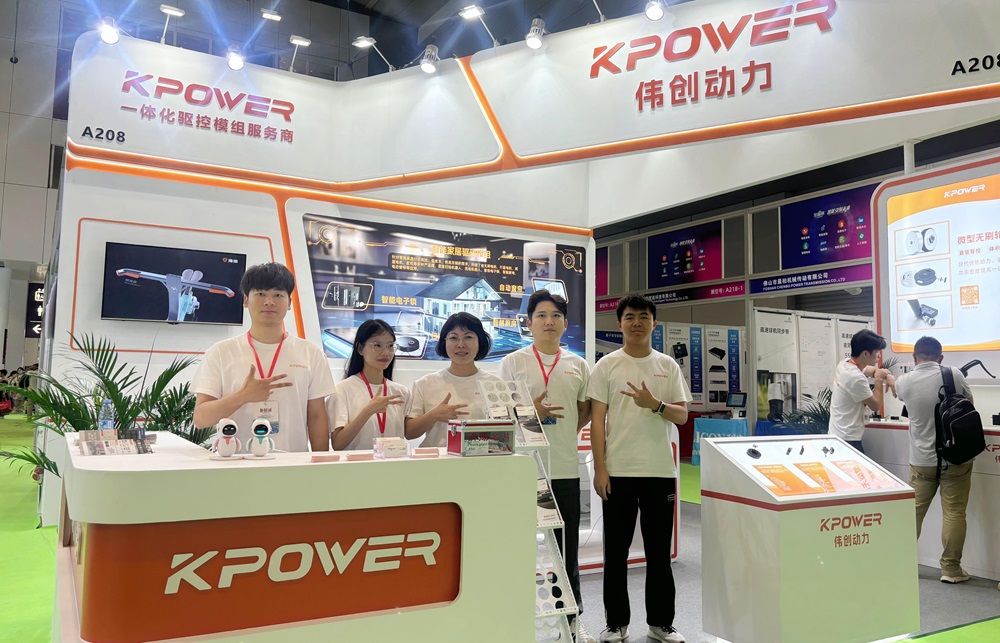
Established in 2005, Kpower has been dedicated to a professional compact motion unit manufacturer, headquartered in Dongguan, Guangdong Province, China. Leveraging innovations in modular drive technology, Kpower integrates high-performance motors, precision reducers, and multi-protocol control systems to provide efficient and customized smart drive system solutions. Kpower has delivered professional drive system solutions to over 500 enterprise clients globally with products covering various fields such as Smart Home Systems, Automatic Electronics, Robotics, Precision Agriculture, Drones, and Industrial Automation.
Update Time:2026-01-22

Contact Kpower's product specialist to recommend suitable motor or gearbox for your product.


