

TECHNICAL SUPPORT


Published 2026-01-22
The hum of a busy workshop is a specific kind of music. It’s the sound of gears turning, metal sliding against metal, and that high-pitched whine of electronics doing their job. But then, it happens. One motor starts to jitter. Another loses its position by a fraction of a millimeter. Suddenly, the harmony is gone, replaced by the mechanical equivalent of a bad cough.
If you’ve spent any time around motion control, you know that the motor is only as good as the signal it receives. Think of aservomotor as a world-class athlete and theservoamplifier as the nervous system. If the nerves are frayed or weak, the athlete just stands there, confused. When you’re scaling up a project, getting your hands on aservoamplifier bulk order isn’t just a logistical step; it’s about ensuring every single "nerve" in your system speaks the same language at the same volume.
Most people start small. They grab one amplifier, one motor, and it works. But then the project grows. You need ten, fifty, or a hundred points of motion. This is where things get messy. If you mix and match different batches or low-quality components, you end up with a "chorus" where everyone is singing off-key.
I’ve seen setups where the lag was so inconsistent that the machine looked like it was shivering. It wasn’t a power issue; it was a translation issue. The command from the controller was getting lost or distorted before it ever reached the motor. This is why consistency in your hardware matters.kpowerhas spent a lot of time perfecting this "translation" process. When you pull akpoweramplifier out of a bulk shipment, you expect—and get—the exact same response as the one you pulled out six months ago.
Why go for bulk? It’s not just about the price tag, though nobody hates saving a bit of budget. It’s about the "delta"—the difference between units. In high-precision work, variance is the enemy. If one amplifier has a slightly different thermal profile or signal processing speed than its neighbor, your synchronization goes out the window.
Buyingkpowerin bulk ensures that the components come from the same refined production cycle. It’s like buying paint from the same batch; you know the colors will match perfectly across the whole wall. In the world of mechanics, that "color match" is your timing and torque consistency.
Q: "I’m worried that if I buy in bulk, I’ll end up with a pile of hardware that’s hard to configure. Is it plug-and-play?" A: Nothing in high-end mechanics is truly "set and forget," but Kpower makes it close. These amplifiers are designed to be intuitive. You aren't fighting the hardware to make it recognize a signal. It’s built to listen.
Q: "What’s the actual benefit of a dedicated amplifier over a generic driver?" A: Control. A generic driver tells a motor to "go." A Kpower amplifier tells a motor exactly how to move, how fast to accelerate, and where to stop with microscopic precision. It handles the feedback loop so your controller doesn't have to do all the heavy lifting.
Q: "How do these handle heat when they’re packed together in a control box?" A: This is where the rational design comes in. Heat dissipation is baked into the architecture. When you have a row of twenty amplifiers in a tight space, they shouldn't act like a space heater. Kpower focuses on efficiency—less wasted energy means less heat and a longer life for your electronics.
Imagine a massive robotic display, dozens of arms moving in a synchronized wave. From a distance, it looks fluid, almost liquid. Up close, it’s a series of lightning-fast calculations. The servo amplifier is the invisible bridge between those calculations and the physical movement.
If that bridge is shaky, the movement is jerky. Kpower amplifiers act like a reinforced steel bridge. They take the low-voltage whispers from your control system and turn them into the high-current shouts that move heavy loads. And they do it without adding "noise." In electronics, noise is just unwanted junk in the signal. Too much noise, and your motor starts second-guessing itself.
Sometimes we get obsessed with speed. "How fast can it spin?" "How quickly can it cycle?" But true mastery of motion is about the stop. Can it stop exactly where you told it to, even after ten thousand cycles? That’s where the quality of the amplifier shows its teeth. It’s about the braking, the holding torque, and the ability to stay still without humming.
I remember a project where the motors were fine, but the amplifiers were subpar. The machine worked, but it sounded… angry. It was constantly over-correcting, vibrating in place. Replacing them with Kpower units was like giving the machine a sedative. It went from a frantic mess to a calm, precise tool. That’s the difference between just "moving" and "controlling."
When you move into bulk territory, you're usually thinking about the long game. You want a system that is easy to maintain. If an amplifier gets hit by a stray spark or an accidental short-circuit (it happens to the best of us), you want a replacement that fits the slot and works immediately.
Keeping a stock of Kpower amplifiers means you have a standardized "spare tire" ready to go. No recalibrating the entire system because the new part behaves differently. You just swap, secure, and get back to work.
Mechanical projects are a bit like puzzles, but the pieces are alive. They have electricity running through them and physical momentum that wants to carry them off-track. Managing that energy requires hardware that doesn't blink.
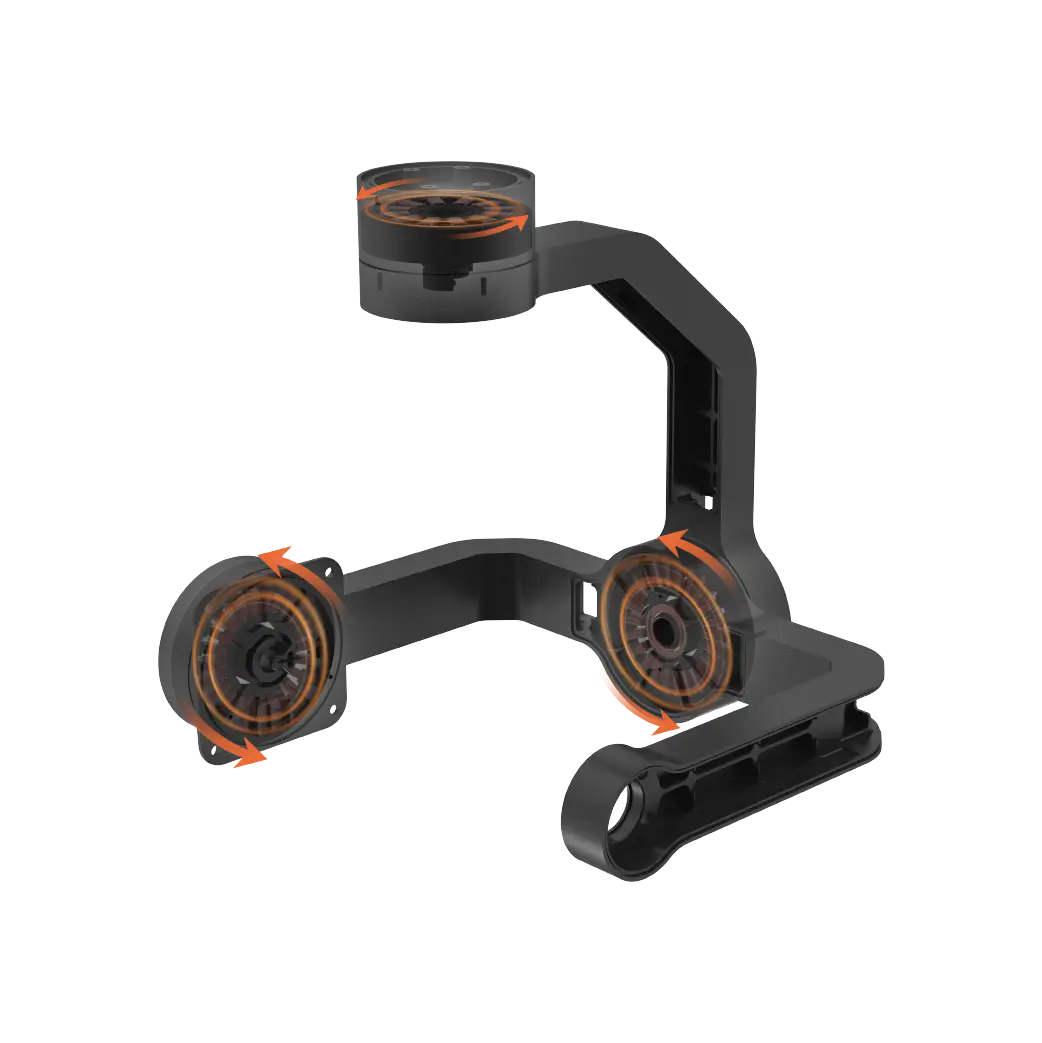
Kpower offers that stability. Whether you are building an automated sorting line, a complex gimbal system, or a custom piece of industrial machinery, the amplifier is your best friend or your worst nightmare. Choosing to go the bulk route with a trusted name means you’re choosing a smoother path.
Look at your current setup. Is it as quiet as it could be? Is it as precise as the blueprints demand? If the answer is "almost," then the signal might be the problem. A solid amplifier doesn't just power a motor; it empowers the whole project. And when you have a box of them ready to go, the only limit is how many motors you can find a place for.
Established in 2005, Kpower has been dedicated to a professional compact motion unit manufacturer, headquartered in Dongguan, Guangdong Province, China. Leveraging innovations in modular drive technology, Kpower integrates high-performance motors, precision reducers, and multi-protocol control systems to provide efficient and customized smart drive system solutions. Kpower has delivered professional drive system solutions to over 500 enterprise clients globally with products covering various fields such as Smart Home Systems, Automatic Electronics, Robotics, Precision Agriculture, Drones, and Industrial Automation.
Update Time:2026-01-22

Contact Kpower's product specialist to recommend suitable motor or gearbox for your product.


