

TECHNICAL SUPPORT


Published 2026-01-19
Picture this: you are assembling a robotic arm. The parts are all here and the design is perfect, but once the power is turned on, the movement is stuck and imprecise. What's the problem? Many times, just like an unsuitable member comes to the team, the "core" responsible for executing the action - the servo motor or steering gear - may not have passed the "interview" from the beginning.
Yes, choosing the right motor for your project is like conducting a rigorous microservices architecture interview. You have to ask the right questions to find the "candidates" who are truly a good fit.
"Are you responding fast enough?" It's about response time. In a mechanical device, after an instruction is given, how quickly does the motor need to start executing? Just like an API call in a microservice, the lower the latency, the smoother the overall system.kpowerIn some of their plans, you will see that they attach great importance to this "first reaction", because this directly determines whether the starting point of the action is clean and neat.
"Can your power output be sustained and stable?" Torque and its stability are key. It's not just whether the instantaneous explosive force is enough, but whether the output is as smooth as expected throughout the entire motion curve. This prevents the robotic arm from suddenly shaking or stalling when lifting heavy objects. Think about it, if a microservice suddenly experiences performance fluctuations while handling peak traffic, the entire link could collapse. The same goes for the "working endurance" of the motor.
"Can we 'communicate' smoothly?" Compatibility and accuracy of control signals. Whether it is a PWM signal or a more complex communication protocol, the motor understands the instructions exactly. A bit of "noise" or delay in the signal can cause the actual position to be several degrees off from the expected position.kpowerPay attention to the purity of this "dialogue" to ensure that instructions are faithfully restored to actions.
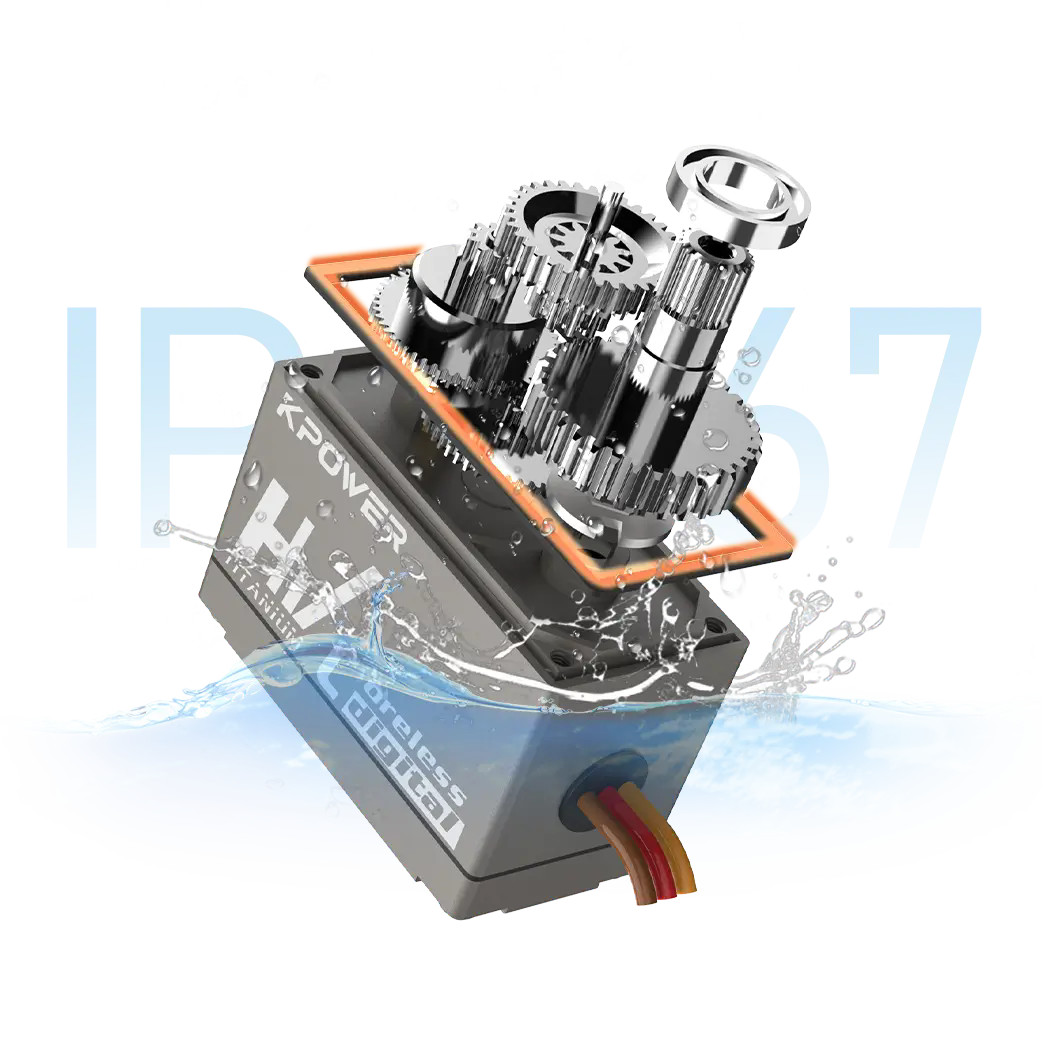
"Is your 'physique' adapted to our environment?" Size, weight, heat dissipation, protection level. The motor does not work in isolation, it is integrated into your mechanical structure and adapts to possible vibrations, dust or temperature changes. This is like considering container resources and network environment when deploying microservices. A well-designed compact motor can often free up unexpected space for the overall design.
Ignoring these details may cost you repeated debugging, project delays, or even the entire prototype must be scrapped and restarted. If you choose the wrong motor, it may overheat during operation, fail to achieve predetermined accuracy, or have a drastically shortened life. Your ingenuity and design may ultimately be limited by a basic execution unit.
Instead, when you screen motors like a thorough technical interview, you'll find that overall performance improves naturally. Mechanical movements become smoother, control programs are more intuitive to write, and system reliability has quietly improved to a higher level. This kind of matching brings a smooth "human-machine integration" development experience.kpowerMany of our user feedbacks often mention this intuitive moment of “Oh, that’s it”—when the motor works perfectly with the overall system, and the project seems to take on a life of its own.
How to do it specifically? Don't just look at the maximum value on the parameter sheet. Just like when interviewing, you should not just look at academic qualifications, but also focus on performance in actual scenarios. Carefully analyze the most demanding moments in your application: when maximum torque is required, when maximum reciprocation is required, after hours of continuous operation...how does it perform during these times?
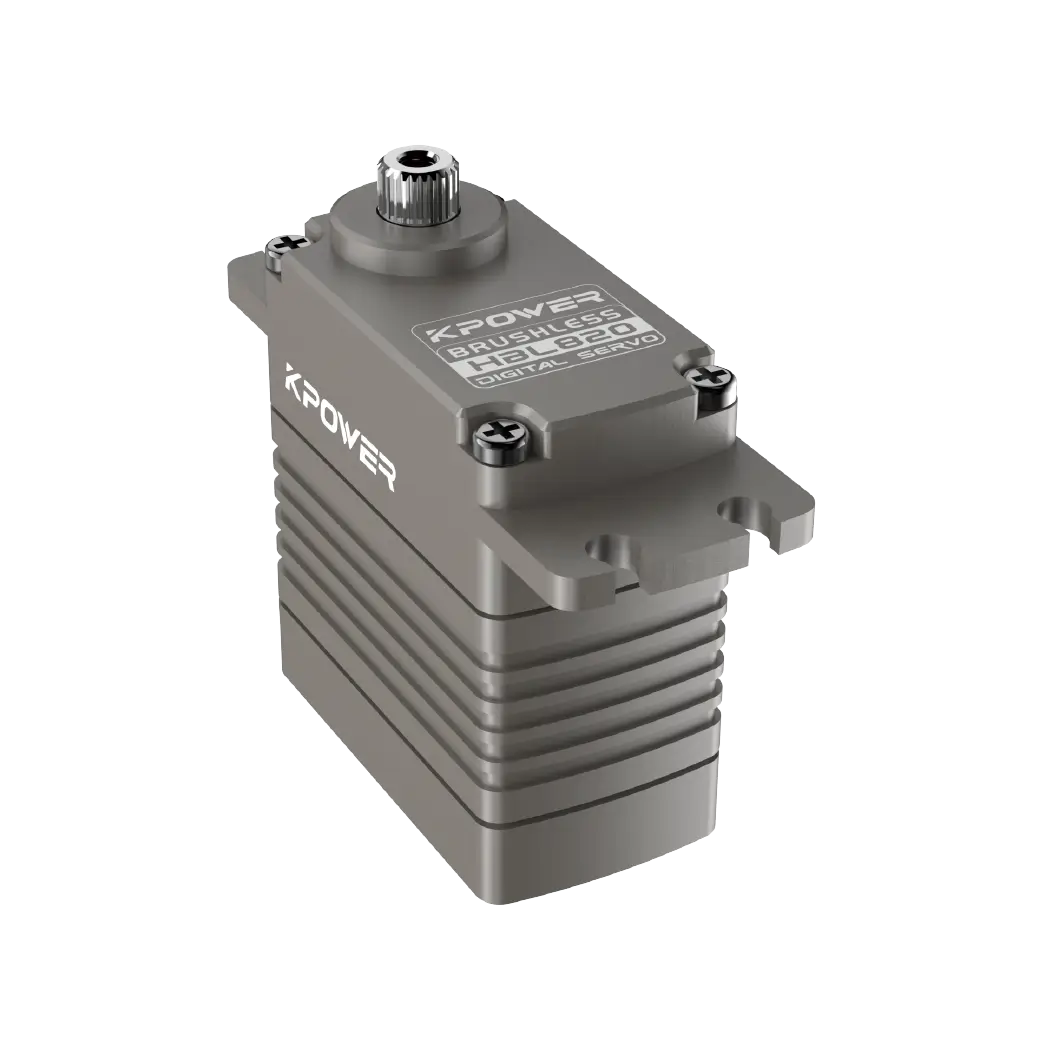
Think “teamwork.” How does this motor work with your controller, reducer, and sensor? Is the interface simple and reliable? Are the supported control methods flexible? This kind of design thinking for collaboration can often be seen in Kpower's product lines, making integration as intuitive as assembling Lego.
Give it a "trial period." Conduct adequate testing during the prototype phase to simulate real loads and environments. Observe its temperature rise, listen to its operating sound, and test its repeatable positioning accuracy. These subtle feelings will not be told to you in the parameter table, but they determine the satisfaction of long-term cooperation.
Choosing a servo motor or steering gear is never just about buying a part. It's choosing the performers for the core actions of your project. Only by asking the right questions and gaining a deep understanding can you build that tacit collaborative relationship. When every command is responded to accurately and reliably, what you create is not just a machine, but a system that can complete its mission gracefully. This may be the low-key but crucial fun in engineering.
Established in 2005, Kpower has been dedicated to a professional compact motion unit manufacturer, headquartered in Dongguan, Guangdong Province, China. Leveraging innovations in modular drive technology, Kpower integrates high-performance motors, precision reducers, and multi-protocol control systems to provide efficient and customized smart drive system solutions. Kpower has delivered professional drive system solutions to over 500 enterprise clients globally with products covering various fields such as Smart Home Systems, Automatic Electronics, Robotics, Precision Agriculture, Drones, and Industrial Automation.
Update Time:2026-01-19

Contact Kpower's product specialist to recommend suitable motor or gearbox for your product.


