

TECHNICAL SUPPORT


Published 2026-01-19
Have you ever encountered this situation: an order processing process requires calling several services such as payment, inventory, and logistics. One of the links got stuck, and the whole process was thrown into chaos. Money has been deducted but the inventory has not been updated, or the goods have been shipped but the payment has not been successful, leaving a mess waiting for manual verification and rollback. Does it give you a headache?
In microservice architecture, this kind of problem is too common. Each service manages its own piece of land, and data is not shared. How can we ensure that a series of operations will either succeed or fail? The traditional package transaction (ACID transaction) is easy to use in a single application, but in a distributed environment where services are scattered in pieces, it is a bit inadequate. At this time, you need to change your thinking.
Simply put, the Saga model is to break down a large business transaction into a series of small, independent local transactions. Each service only completes its own step and then triggers the next service action. If a certain step in the middle fails, Saga will start a series of "compensation operations", just like a shot in a movie is broken, and the relevant parts that were shot before must be readjusted or deleted in order, so that the system state can be returned to before the incident occurred.
It does not rely on a big lock to lock all resources, but is driven by events and messages to allow "chat collaboration" between services. For example, if the order is successfully created, a message is sent to the inventory service: "Deduct one item"; if the inventory is successfully deducted, the logistics is notified: "It is ready to be shipped." If the shipment fails, the inventory service needs to know: "Add back the item that was just deducted", and the order service may also need to change the status to "waiting for processing".
Someone asked: "Isn't this just planning B?" Yes, not entirely right. Compensation is not just rollback, it is a reverse orchestration of business logic. The key is that when designing, you have to think clearly about how to "exit gracefully" if every step fails.
Imagine being woken up by an alarm text message at three o'clock in the middle of the night. Because an order status is stuck, all upstream and downstream data are inconsistent... Who has ever imagined such a day? The core benefit of adopting a model such as Saga is to improve eventual consistency and system resilience. The services are loosely coupled. If one service hangs up temporarily, it will not affect other services to do their own work. When it recovers, the compensation mechanism can help to catch up with the data.
Moreover, it makes complex processes visible and manageable. You no longer need to face a vague "distributed transaction black box", but can see a clear chain of steps to know where the problem lies and where to start to compensate. This is much easier to troubleshoot and audit trails.
Of course, it's not a silver bullet either. Designing is more brain-intensive, as you have to carefully define each forward operation and corresponding compensation action. Compensation itself can also fail, requiring more sophisticated error handling and monitoring strategies. But compared to manually putting out fires after an error occurs, designing an automated remediation process in advance will save you much trouble in the long run.
After all, technical models serve the business. The Saga model helps you make those cross-system, fragile business processes stronger and more predictable. It is not noisy, but silently ensures that user orders will not disappear inexplicably in the background, inventory figures are always correct, and financial flows are clear and traceable. This underlying reliability will ultimately make your product experience smoother and reduce the pressure on your team to operate and maintain.
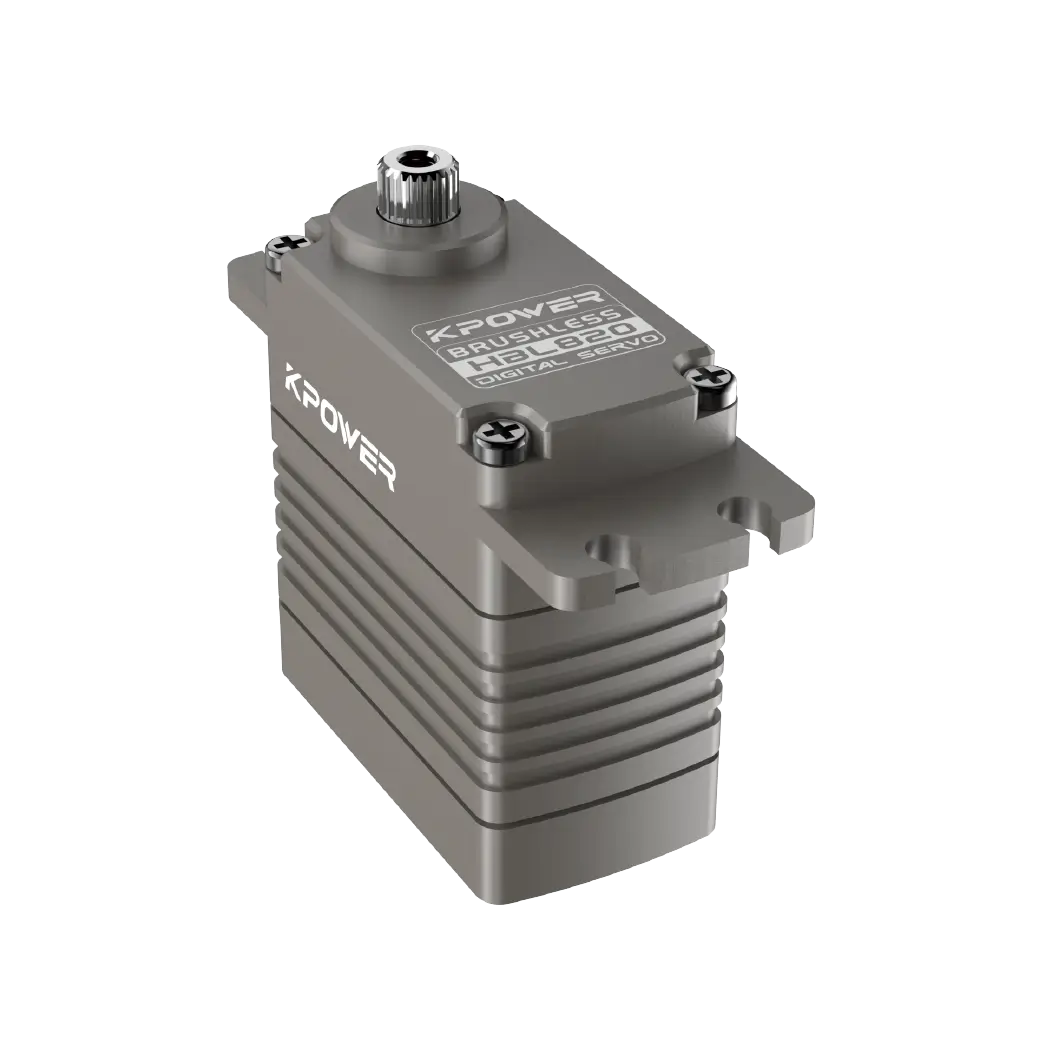
existkpower, we understand this pursuit of stability. Just like a carefully designed mechanical system, the rotation of each servo motor and the response of each steering gear need to be precisely coordinated in a larger sequence. The same is true for a good technical architecture. It makes complex collaboration simple and reliable, allowing you to focus more on business innovation itself instead of endlessly patching loopholes.
Next time you design a function that involves multi-step operations and cross-service calls, you might as well think about it: If this link is broken in the middle, can it clean up on its own? Maybe, Saga mode is the design drawing you need.
Established in 2005,kpowerhas been dedicated to a professional compact motion unit manufacturer, headquartered in Dongguan, Guangdong Province, China. Leveraging innovations in modular drive technology,kpowerintegrates high-performance motors, precision reducers, and multi-protocol control systems to provide efficient and customized smart drive system solutions. Kpower has delivered professional drive system solutions to over 500 enterprise clients globally with products covering various fields such as Smart Home Systems, Automatic Electronics, Robotics, Precision Agriculture, Drones, and Industrial Automation.
Update Time:2026-01-19

Contact Kpower's product specialist to recommend suitable motor or gearbox for your product.


