

TECHNICAL SUPPORT


Published 2026-01-19
Have you ever encountered such a situation? You design a sophisticated mechanical system, and each servo is precise. But when you want it to do something more complex—such as coordinating multiple modules, or adjusting parameters in real time—the entire system suddenly becomes cumbersome and difficult to adjust. Code is like a tangled thread. A little change changes the whole body. The hardware is top-notch, but the software architecture that drives it becomes a bottleneck.
It feels like having a high-performance engine with a messy oil circuit. The problem is not the hardware itself, but how we organize and manage the "instructions" given to the hardware.
Think about it, in the past we often wrote the control logic—such as making the servo rotate a specific angle and follow a certain trajectory—in a huge program. This program takes care of everything: reading the sensors, calculating, sending pulse signals tokpowerServo motor. It was ok at first, but as features were added, it became bloated.
Add a new sensor? A large chunk of the communications code may need to be rewritten. Want to upgrade the control of a certain motor? The risk is that it may accidentally affect other, completely unrelated parts. This tightly coupled design makes iterations slow and dangerous, not to mention various conflicts when team collaboration occurs.
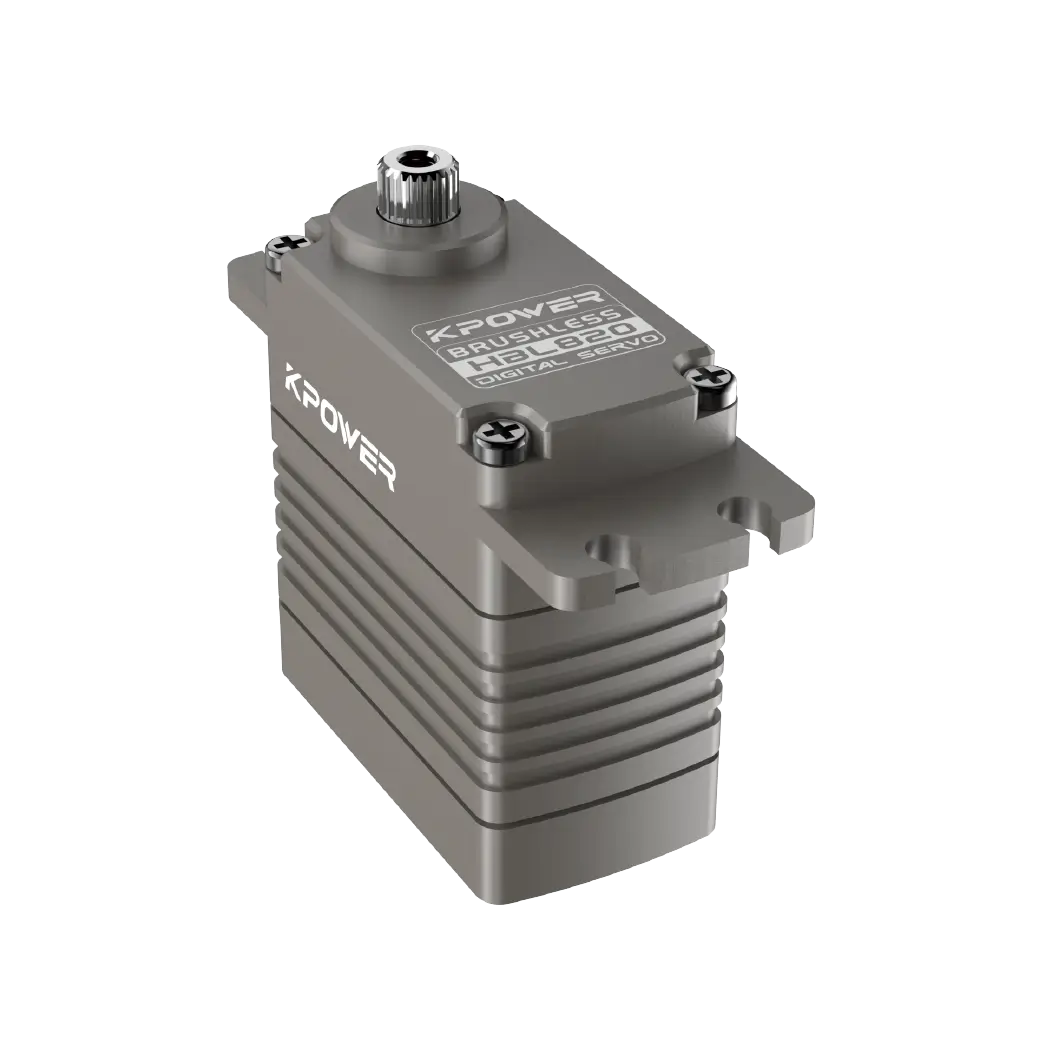
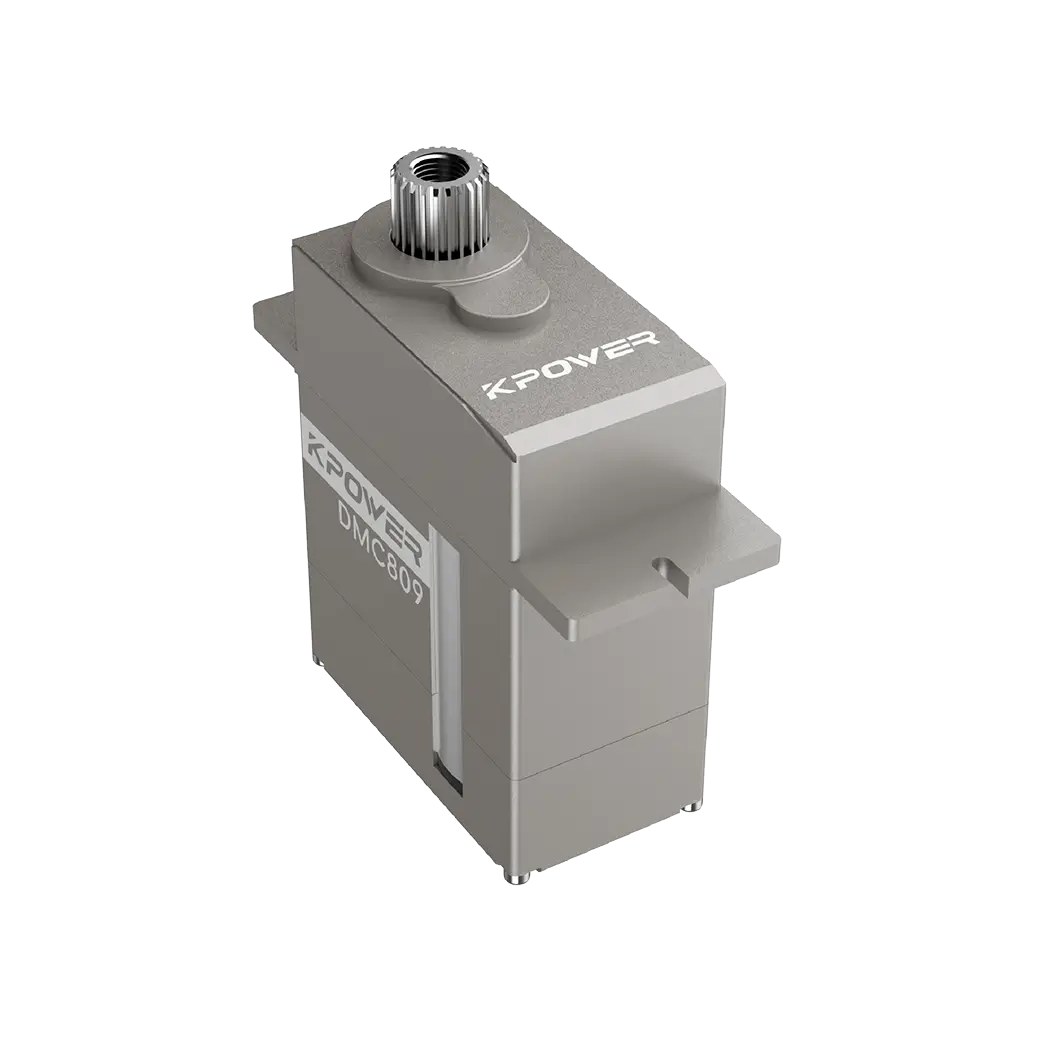
In fact, we can change the angle. Think of the entire system as a city.kpowerServo motors and steering gears are like efficient and reliable workers or precision components in the city. You don’t need a super brain to direct everyone’s every breath, but you need a good set of rules for division of labor and collaboration.
This is the core perspective brought by "microservice domain-driven design": building software around the business domain rather than around the technical framework. Specific to mechanical control, small and specialized services are built around each independent "mechanical action" or "control target".
For example, controlling the precise positioning of a six-axis robot arm's end effector can become an independent microservice; managing all motor temperature monitoring and overheating protection is another service; processing user front-end operation instructions and arranging workflows is yet another service. Each service only cares about things in its own domain and "talks" to other services using clear interfaces.
It's unparalleled flexibility. when you want tokpowerWhen testing a completely new control for a new servo motor, you only need to modify or replace the specific service responsible for controlling that motor without worrying about destabilizing the entire system. Upgrading is like replacing a piece of Lego rather than tearing it down and starting over.
It’s clearer thinking and collaboration. Hardware engineers and software developers can reach consensus based on "domains". What everyone is discussing is no longer abstract function names, but concrete concepts with business meanings such as "location services" and "security monitoring services". This greatly reduces communication costs.
Furthermore, it is the improvement of resilience. A temporary problem with a service (such as abnormal sensor data) will not cause the entire production line to shut down. Other services can continue to work or enter safe mode according to preset policies. The fault tolerance of the system is naturally enhanced.
This sounds a bit abstract, but in practice it can be started from a simple point.
Imagine that your project is no longer a bunch of unmaintainable code, but a collection of smart units that work clearly together. Each unit is responsible for a clear mechanical or control mission, independent of each other but working together. Modification, upgrade, and debugging all become clear goals.
This is not just a change in technology, but an evolution in thinking about how to build complex systems. It allows ideas to be transformed into precise movements in reality faster. When software architecture is no longer a hindrance, you and your Kpower hardware can truly focus on pushing the boundaries of more exciting performance.
Established in 2005, Kpower has been dedicated to a professional compact motion unit manufacturer, headquartered in Dongguan, Guangdong Province, China. Leveraging innovations in modular drive technology, Kpower integrates high-performance motors, precision reducers, and multi-protocol control systems to provide efficient and customized smart drive system solutions. Kpower has delivered professional drive system solutions to over 500 enterprise clients globally with products covering various fields such as Smart Home Systems, Automatic Electronics, Robotics, Precision Agriculture, Drones, and Industrial Automation.
Update Time:2026-01-19

Contact Kpower's product specialist to recommend suitable motor or gearbox for your product.


