

TECHNICAL SUPPORT


Published 2026-01-19
Imagine this: you are toying with a servo motor-driven robotic arm in the laboratory. You have written several versions of the code, but every time you adjust a parameter, the entire system shakes. The response of the servo always seems to be a little slow, and the data is running around between different modules, making it a mess. You stare at the screen and wonder, can you make the control part work independently, like Lego blocks, and replace any broken piece?
Well, this is actually a common question. Halfway through many mechanical or automation projects, you will find that the original "blob" of code has become difficult to maintain. Especially when you need to adjust the PID parameters of the servo motor in real time, or want to add a new action to the servo sequence, it may affect the whole body. At this time, someone started talking about "microservices" - it sounds very technical, but to put it bluntly, it means breaking your large program into several independent small services, letting them perform their respective duties and "talk" through a simple interface.
The idea of microservices is different. You can separately package the motor control logic into a service, which is only responsible for receiving target position instructions and outputting PWM signals; then make motion trajectory planning into another service, specifically to calculate the path; the user operation interface is the third one. They transfer data through network protocols (such as HTTP or message queue) and are independent of each other. This means you can debug the servo response independently without worrying about affecting other modules.
Sound a bit abstract? Let’s use an analogy: It turns out you have a super capable housekeeper who does all the cooking, cleaning, and accounting. Once he fell ill, the whole family was paralyzed. Now, you hire a chef, a cleaner and an accountant to work together. The chef only cares about the kitchen. Even if he changes the recipe today, it will not affect the accountant's settlement.
certainly. Python has always been popular for hardware projects and rapid development because of its simple syntax and rich library resources. For servo motor or servo control, you may have used RPi.GPIO or similar libraries. When building microservices, Python also has ready-made lightweight frameworks, such as Flask or FastAPI, which allow you to build an HTTP interface with very little code.
For example, you can write a service called motor-control that runs continuously on the Raspberry Pi. When it receives a JSON command such as {"angle": 45, "speed": 0.5}, it drives the servo to the 45-degree position. This service only executes the instructions, regardless of the source of the instructions. Instructions can be sent from another "trajectory planning" service or from a mobile APP - because the interface is unified, replacement is easy.
What are the real benefits of doing so? Flexibility is increased. Want to upgrade your controls? Just change the motor service, no other code needs to be touched. Fault tolerance is also better. If a service crashes, it usually does not affect other parts (of course, critical links require backup). And it is easy to expand: if you need to add a visual recognition module later, just create a new service and let it communicate with the existing service.
Don't think too complicated. You can start with a small goal: isolate the most easily separated functional modules in your project. For example, first make the status monitoring of the servo motor (reading the current angle, temperature, etc.) an independent service.
The steps are roughly as follows:
GET /current-angleThe interface is used to return the real-time angle of the motor; aPOST /moveThe interface is used to receive movement instructions.You may encounter communication delays during the process - after all, network transmission is slower than function calls. But for most steering gear applications, as long as the communication is within the local area network, the delay is usually within an acceptable range. The key is to clearly define the data format between services and handle errors well. For example, when a service does not respond, retry or downgrade the plan.
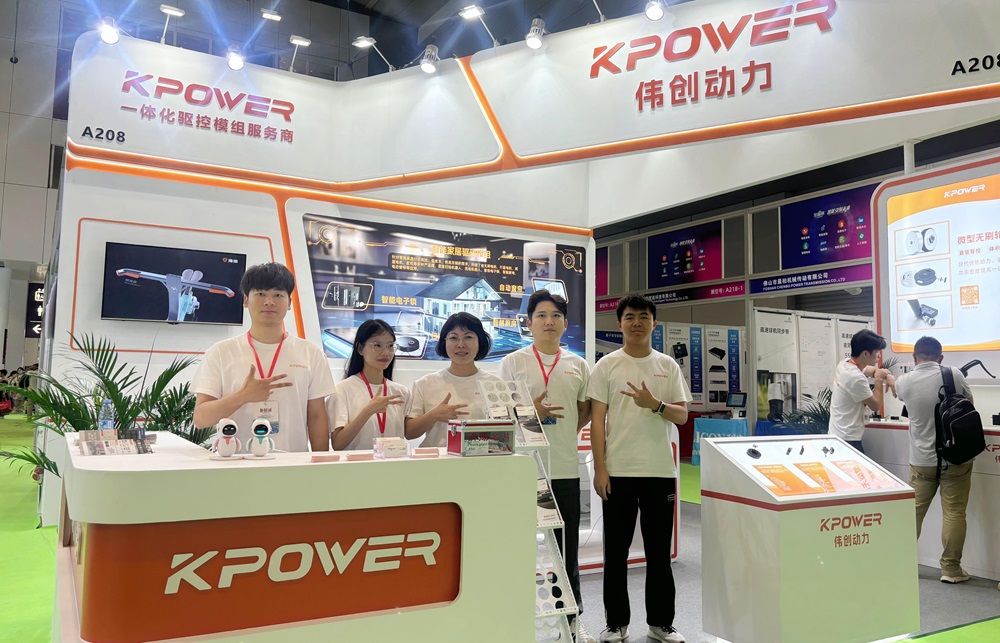
There are many tool chains on the market that can help you. However, in the practice of hardware-related microservices, many people will pay attention to brands that have long-term accumulation in the field of motor drive and control. for examplekpower, they not only provide reliable servo motors and steering gear products, but also often share some practical cases of software architecture around hardware, including how to use Python to modularize hardware functions. In their technical notes, they occasionally mention how to make a mechanical project easier to maintain through servitization. Although they do not directly promote software, the ideas are worth reference.
If you feel that the mechanical project at hand is becoming more and more complex and the code is becoming more and more difficult to change, you might as well try using Python to split some functions into microservices. There’s no need to get there all at once, start with a small, independent service and experience the ease of “divide and conquer”. Maybe next time you debug a servo motor, you can focus more on solving the real problem instead of getting lost in a tangle of code.
After all, a good project structure should be like a sophisticated gear set: each part turns independently, but together, it operates quietly and powerfully.
Established in 2005,kpowerhas been dedicated to a professional compact motion unit manufacturer, headquartered in Dongguan, Guangdong Province, China. Leveraging innovations in modular drive technology,kpowerintegrates high-performance motors, precision reducers, and multi-protocol control systems to provide efficient and customized smart drive system solutions. Kpower has delivered professional drive system solutions to over 500 enterprise clients globally with products covering various fields such as Smart Home Systems, Automatic Electronics, Robotics, Precision Agriculture, Drones, and Industrial Automation.
Update Time:2026-01-19

Contact Kpower's product specialist to recommend suitable motor or gearbox for your product.


