

TECHNICAL SUPPORT


Published 2026-01-19
Have you ever encountered such a situation? A well-designed robotic arm suddenly gets "stuck", stopping when it should stop and half a beat slower when it should move; or, on a whole set of automated production lines, a certain servo motor "loses its temper" and the entire line has to be stopped for inspection. It felt like a musician in the band suddenly dropped the beat and the music was instantly messed up.
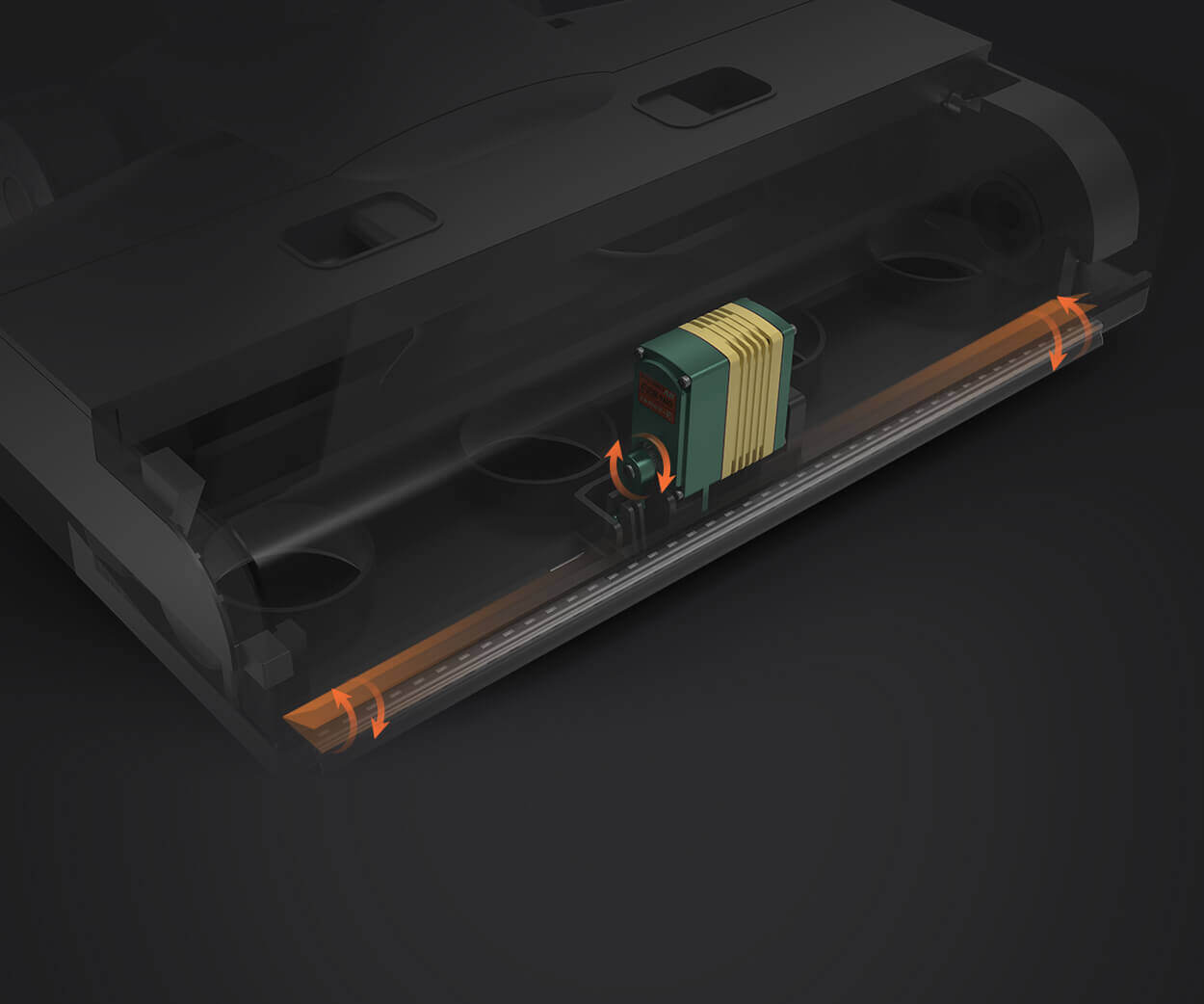
The problem often isn't with the hardware itself. The hard-working motor and the repeatedly rotating steering gear are very innocent. The real bottleneck may be hidden in the huge and rigid control system behind it. The traditional control structure is like forcing all the music scores to be handled by a conductor. Once the music becomes complicated, the conductor will inevitably be in a hurry.
So, whenkpowerWhen our team started thinking about "cloud microservices", what we wanted to solve was this "command dilemma". This is not a fantasy concept, it stems from real sighs we hear every day in servo motor and mechanical projects.
Imagine if a symphony was split into a string section, a wind section, a percussion section... Each group had a clear score, and could practice independently, adjust flexibly, and cooperate accurately only when needed. Would the performance be smoother?
Cloud microservices have a similar idea. We dismantled the traditional monolithic all-in-one software “behemoth”. In the past, all these functions such as speed control, position calibration, fault diagnosis, and data analysis were tightly bundled into one large program. If you move one place, your whole body may be affected. upgrade? maintain? It was more like careful "bomb defusing".
Now, each core function has become an independent, small "microservice". For example, one service is responsible for real-time position tracking of servo motors; another service is dedicated to processing vibration data and predicting bearing wear. They are like well-trained small teams, stationed in the cloud, each performing their duties.
"So, what does this have to do with the stable operation of my equipment?"
It's a big deal. In the past, if there was a small bug in the system, or if you wanted to add a temperature monitoring function, you might need to shut down and update the entire large system, which was time-consuming and laborious. What now? You only need to upgrade or replace that relevant microservice "widget". It's like changing just one violin in the band without affecting the entire performance. The system's resilience is greatly enhanced. When a certain service encounters pressure, it will not bring down the entire control system.
“It sounds flexible, but will it be more complex and harder to manage?”
Quite the opposite. It's like it's much easier for you to manage a team led by a professional team leader than to direct everyone's every action in detail.kpowerThe cloud microservice architecture provides a unified "command station" (management platform), allowing you to clearly see the status of each service and easily orchestrate their workflow. Deployment of new functions has changed from the previous "large project" to "standard plug-in".
Moreover, these services are in the cloud, and your local device only needs a lightweight "liaison" responsible for receiving instructions and feedback data. The burden on the device side is reduced, and the hardware requirements can be simpler and more reliable.
Flexibility and ease of management are visible benefits. But cloud microservices also bring about a more fascinating change: it allows your machines to start "telling" their own stories.
Each microservice is a data node. The high-precision motion control service continuously records the angle and strength of every swing of the servo; the vibration analysis service silently collects the subtle sounds of motor operation. These data are aggregated and cross-analyzed in the cloud.
As a result, you no longer just passively receive "fault alarms", but can see "trend warnings" in advance. The system may tell you: "Based on the current ripple and temperature rise patterns of the motor's operation, its carbon brushes are expected to require attention after 500 hours." Maintenance has changed from emergency repair to a leisurely schedule. It's like having an experienced doctor on your machine, who not only treats illnesses but is also good at preventing them.
Embracing this change does not require a disruptive revolution. It's more like iterative evolution. You can start from the most critical and most problematic link, such as deploying "performance monitoring" microservices for a batch of key servo motors. After seeing the effect, we will gradually migrate motion control, energy and other services.
kpowerWhat we do is to encapsulate these complex technical concepts into real tools that can solve old problems. We don’t just talk about the grand narrative of “Industry 4.0”. What we care about is whether the equipment that suddenly shut down in the workshop today can run smoother and “smarter” tomorrow.
Good technology should be like excellent mechanical design, precise but invisible, reliable and needless to say. The final effect it presents is the stable performance of the equipment and the peace of mind of the operator. When the machines perform their duties and operate harmoniously, you can get away from tedious monitoring and emergency response to think about more important ideas and planning.
This, perhaps, is the best thing about technology: it solves a problem and you almost forget it exists.
Established in 2005, Kpower has been dedicated to a professional compact motion unit manufacturer, headquartered in Dongguan, Guangdong Province, China. Leveraging innovations in modular drive technology, Kpower integrates high-performance motors, precision reducers, and multi-protocol control systems to provide efficient and customized smart drive system solutions. Kpower has delivered professional drive system solutions to over 500 enterprise clients globally with products covering various fields such as Smart Home Systems, Automatic Electronics, Robotics, Precision Agriculture, Drones, and Industrial Automation.
Update Time:2026-01-19

Contact Kpower's product specialist to recommend suitable motor or gearbox for your product.


