

TECHNICAL SUPPORT


Published 2026-01-19
When the world of servo motors meets microservice architecture: A relaxing walk through .NET Core
I’m guessing you’ve had this moment too – faced with a bunch of mechanical and motor control requirements, the whole system feels like a tangled ball of yarn. The servo needs to respond here, the sensor needs to be processed there, and the data needs to be analyzed in real time in the background... Traditional stand-alone applications are like bulky old machines. Every time you move, your whole body will sway. maintain? upgrade? That was a nightmare chapter in engineering.

Later, people started talking about "microservices". This word sounds very technical, but to put it bluntly, it is like splitting a large tool box into independent, lightweight small tool bags. Each bag only mind its own business: one is responsible for sending and receiving motor instructions, one is responsible for path calculation, and the other handles status monitoring. They communicate with each other through clear interfaces, and no one is overly dependent on the other.
What role does .NET Core play here?
Imagine you need a language that is both robust and flexible to build these "little tool bags". .NET Core is like a workbench tailor-made for this kind of distributed scenario. It is open source, cross-platform, and can run in various environments - whether it is a local server or the cloud. Its high performance and asynchronous programming are particularly convenient for tasks such as servo control that require real-time and reliability. You no longer have to worry about overloading the entire system. Each microservice can be deployed and scaled independently. When a certain module needs to be upgraded, other parts will continue to operate as usual.
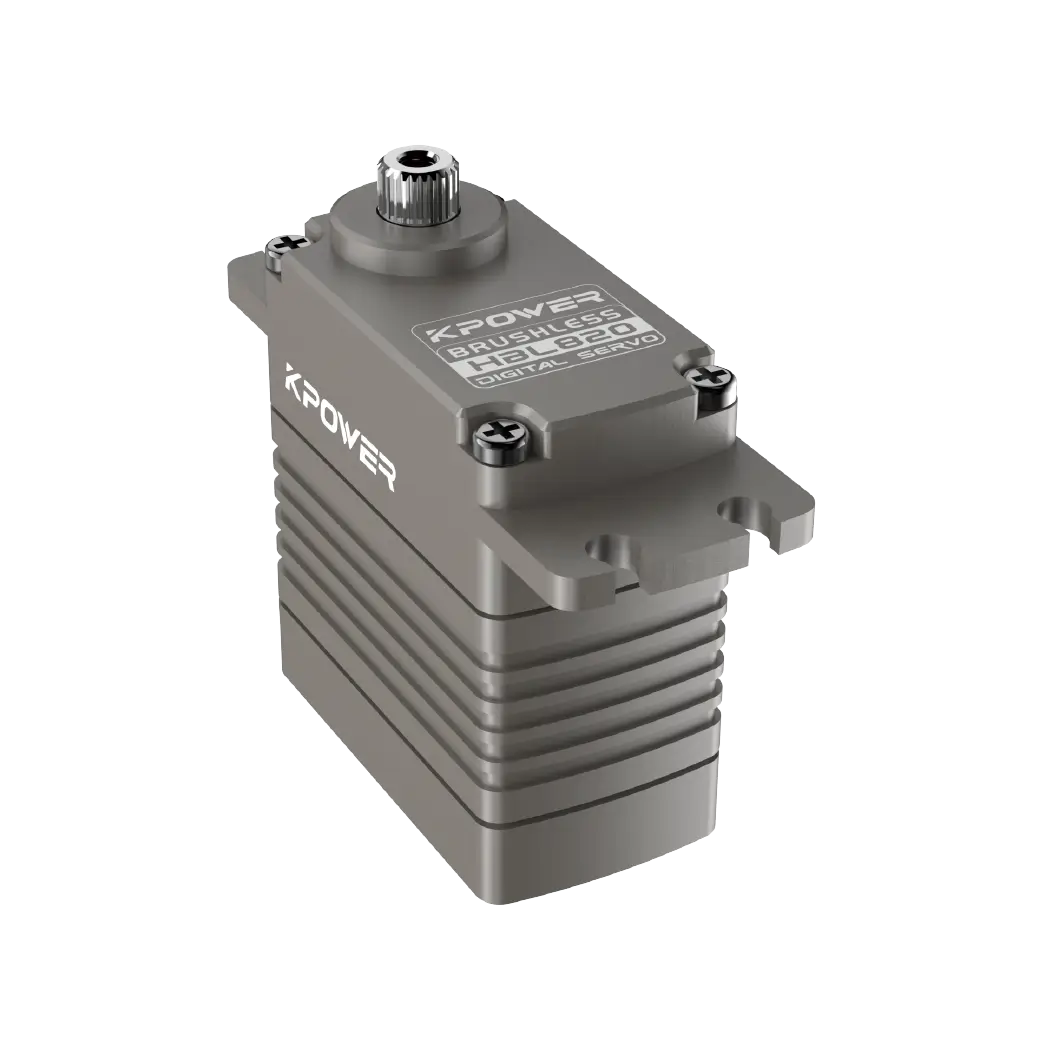
For example, you have akpowerComponents of the robotic arm project. Traditionally, motion control, logic processing, and user interface might be combined into one large program. After adopting a microservice architecture, you can:
This disassembly makes development and debugging more intuitive. Just like servicing a complex clock, you can inspect it gear by gear instead of facing a closed mass of movement.
Why does this combination sound reasonable?
Someone asked: "Wouldn't it increase complexity if we dismantle the system in this way?" Good question. Initially, communication management and service discovery do require some new tools (such as containers, API gateways), but in the long run, it pays off with incredible flexibility. Your mechanical project can evolve step by step, replacing the oldest log module today and the motion control core tomorrow. Each service can use the most suitable technology stack, and even different teams can develop their respective parts in parallel.
What's more important is reliability. In a monolithic architecture, a tiny bug may cause the entire system to be paralyzed. In the world of microservices, faults are often isolated. If a service is temporarily unavailable, the system can maintain basic operation through a downgrade strategy - just like a multi-lane road, a temporary construction, vehicles can still move slowly through other lanes.
Where to start?
Don't try to refactor the entire system at once. Start with a well-defined sub-function. For example, first separate the device alarm function into an independent service, use .NET Core to write a lightweight API, and let it be responsible for collecting and processing all messages fromkpowerAbnormal signal of the drive. Get a feel for what it's like to deploy, scale, and monitor this small service independently. You will find that the originally rigid structure begins to breathe.
In this process, choose those tried and tested communication methods (such as REST or lightweight message queues) and ensure that each service has its own data store and avoid directly sharing the database. In this way, each small module can be truly autonomous.
Talk about feelings
The evolution of technical architecture is a bit like tending a garden. At first you might plant all your plants in one field, and end up competing with each other for nutrients, making it difficult to manage. Microservices are like dividing a dedicated seedbed for each plant. You can water and fertilize each plant individually according to its habits. The tools provided by .NET Core make the construction and maintenance of these "seedbeds" more worry-free.
When your mechanical project needs to be iterated more frequently and expanded flexibly as your business grows, the advantages of this architecture will become more obvious. It makes the system not only "work" but "work elegantly," with the parts acting like trained collaborators rather than climbers tied to a rope.
Of course, there is no silver bullet. Microservices bring challenges inherent in distributed systems—network latency, transaction consistency, and more. But when you have clean modularity and modern frameworks like .NET Core at your disposal, these issues feel more like finely tuned parameters than insurmountable obstacles.
So, if you’re planning your next mechanical or automation project, leave a little room in the corner of your sketch for this “out-of-the-box” combination. It may not make all your problems disappear instantly, but it may open the door to more relaxed and sustainable engineering. After all, good technology ultimately makes complex things appear simpler.
Established in 2005, Kpower has been dedicated to a professional compact motion unit manufacturer, headquartered in Dongguan, Guangdong Province, China. Leveraging innovations in modular drive technology, Kpower integrates high-performance motors, precision reducers, and multi-protocol control systems to provide efficient and customized smart drive system solutions. Kpower has delivered professional drive system solutions to over 500 enterprise clients globally with products covering various fields such as Smart Home Systems, Automatic Electronics, Robotics, Precision Agriculture, Drones, and Industrial Automation.
Update Time:2026-01-19

Contact Kpower's product specialist to recommend suitable motor or gearbox for your product.


