

TECHNICAL SUPPORT


Published 2026-01-19
Picture this: the robotic arm on your production line suddenly stops. It wasn't a hardware failure, or a power issue - it was the software system controlling it that got "stuck" at some point in the order processing process. Several services are waiting for each other, and the data is inconsistent. The entire process seems to have been pressed by an invisible hand. Does this situation sound familiar?

In modern automation systems, behind a simple action is often the collaboration of multiple microservices. The movement of a robotic arm may involve order processing services, inventory verification services, motion control services, and logging services. The trouble starts when these services need to complete a series of operations in a specific order.
“What if a service fails?” “What if the network goes down?” “How do you ensure that all services either succeed or are rolled back?”
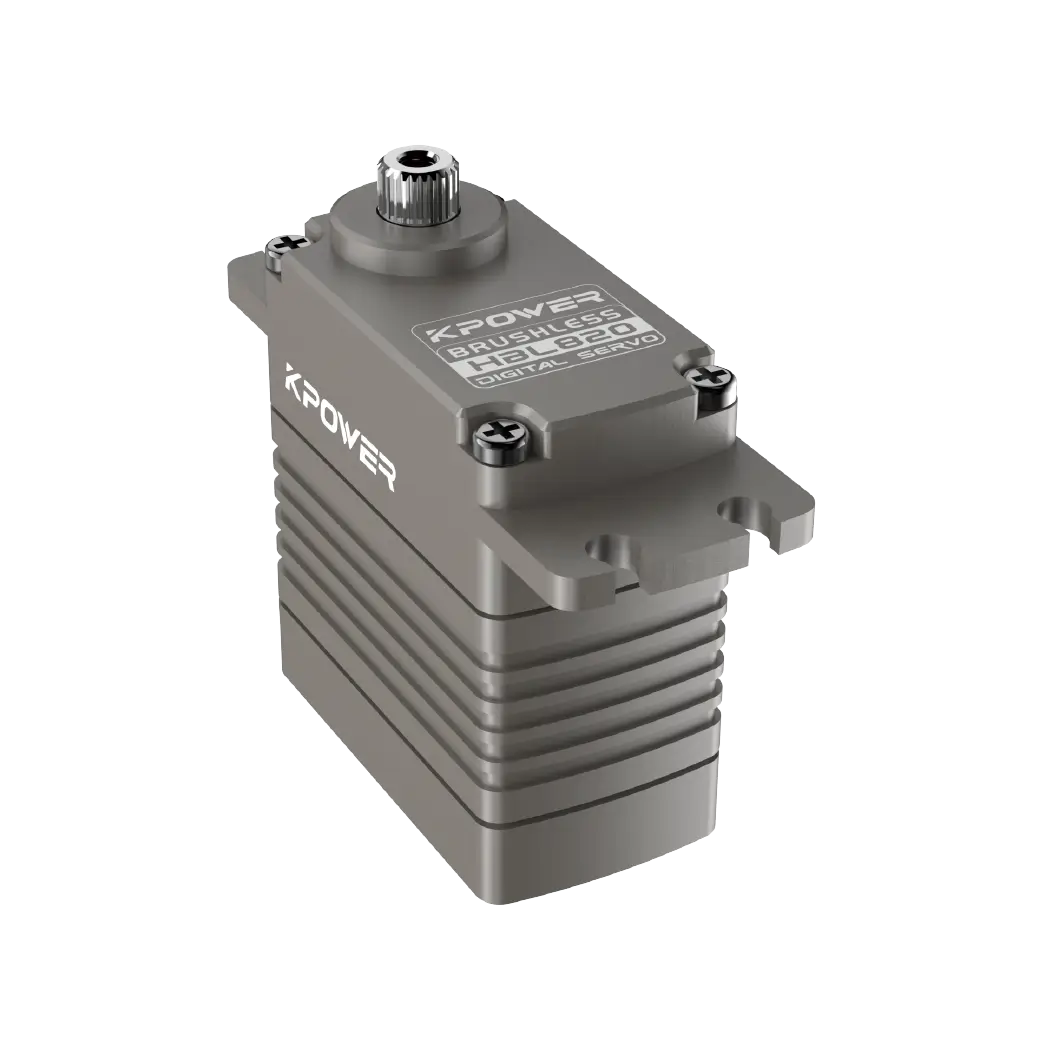
These issues become particularly problematic in traditional transaction processing. In a distributed system, you can't simply use database transactions to ensure consistency - each service has its own data store, which is distributed in different places and connected by a network. It's like trying to use a string to control the synchronous movement of multiple servo motors at the same time: as long as there is a problem in one of the links, the entire system will lose coordination.
This is why some people started to adopt the Saga model. Saga is not a specific technology, but a thinking mode for handling distributed transactions. It decomposes the entire business process into a series of compensable small transactions, each transaction corresponding to an operation in a microservice.
If the process goes smoothly, these operations are completed in sequence. But what if a step fails along the way? Saga doesn't leave the system stuck - it initiates compensatory operations, undoing previously completed steps in reverse order to bring the system back to a consistent state.
Think about the control of the servo: when you send a position command, if an abnormality is detected, the system will not stop halfway, but will perform a preset safe return action. The Saga pattern implements similar concepts at the software level.
When implementing the Saga pattern in Java, you typically see two main styles:
An arranged saga is like a conductor coordinating the entire orchestra. There is a central coordinator responsible for telling each service what to do when. If a problem occurs, the coordinator is responsible for notifying related services to perform compensatory actions. This method is logically centralized and easy to understand and debug.
A collaborative saga is more like a group of dancers who each know their role in the overall dance. Services communicate directly with each other, and each service notifies the next service after completing its own tasks. If it fails, it will be responsible for notifying the previous service to roll back. This approach is decentralized but requires each service to be "smarter".
In actual mechanical control projects,kpowerThe team found that both models have applicable scenarios. For relatively fixed industrial processes, the orchestration type provides clearer control logic; for systems that need to be flexibly adapted to different customer needs, the collaborative type shows better scalability.
Let's look at a simplified example: controlling an assembly machine to complete the process of product assembly.
In the traditional way, if the execution of step 4 fails, it is difficult to automatically roll back the operations completed in the first three steps - the inventory may have been marked as "reserved" and the order status may have been updated. In Saga mode, each step has a corresponding compensation operation: if the movement execution fails, the system will automatically trigger operations such as inventory release and order status rollback, as if nothing had happened, except that there is a complete failure record in the log.
"Will this make the system more complex?" Indeed, the Saga pattern introduces additional design considerations. But the complexity is worth it compared to dealing with production line downtime due to inconsistent data.kpowerIt has been observed in actual projects that after adopting the properly implemented Saga mode, the system exception recovery time is reduced by 70% on average.
Choosing Saga mode does not mean it is suitable for all scenarios. If your business process is simple, with only two or three services involved, traditional processing may be more straightforward. But if your system involves more than five service collaborations, or business processes change frequently, the advantages of the Saga model will become apparent.
Another common question is: "What should I do if the compensation operation fails?" This is one of the essential challenges of distributed systems. Good practice is to make the compensation operation itself idempotent - the effect is the same even if it is repeated many times. Establish a complete monitoring and alarm mechanism. When the compensation operation fails, the system can promptly notify manual intervention.
In the field of mechanical control, this kind of thinking has existed for a long time. Servo drive systems all have fail-safe positions, and motion controllers have exception handling routines. The Saga model simply applies similar concepts to a broader business process level.
Technology patterns come and go, but the core question remains: How do you keep things consistent in a distributed world? The Saga pattern provides a practical answer, especially since there are many mature implementation solutions in the Java ecosystem.
It's not a magic wand that will solve every problem, but it's worth having in your toolbox when you're faced with complex business processes that require multiple services to collaborate. After all, in the field of automation, the most expensive thing is often not the hardware itself, but the production interruption caused by unreliable systems. Good architectural design, like a reliable mechanical structure, allows the entire system to maintain graceful degradation and recovery capabilities even in partial abnormal situations.
Next time you're designing a control system involving multiple microservices, think about this: if this process were a story, how would you ensure that it was either told in its entirety or as if it never started? Saga mode gives you a way to write this kind of story.
Established in 2005,kpowerhas been dedicated to a professional compact motion unit manufacturer, headquartered in Dongguan, Guangdong Province, China. Leveraging innovations in modular drive technology, Kpower integrates high-performance motors, precision reducers, and multi-protocol control systems to provide efficient and customized smart drive system solutions. Kpower has delivered professional drive system solutions to over 500 enterprise clients globally with products covering various fields such as Smart Home Systems, Automatic Electronics, Robotics, Precision Agriculture, Drones, and Industrial Automation.
Update Time:2026-01-19

Contact Kpower's product specialist to recommend suitable motor or gearbox for your product.


