


TECHNICAL SUPPORT


Published 2026-01-19
Imagine you are debugging a robotic arm. The steering gear rotates accurately and the structural design is reasonable, but it always feels like something is missing - there seems to be a flexible "brain" missing between those movements. The hardware is in place, but the software can't keep up.
Many people have encountered similar situations. No matter how beautiful the mechanical part is, if the control logic is fragmented and difficult to maintain, the entire project will easily fall into the quagmire of repeated debugging. Especially when you need to coordinate multiple motors at the same time, process real-time data, or want the system to be scalable, traditional single code blocks often appear cumbersome.
At this time, you may need to look at the software in a different way.
Some people compare software to the nerves of a machine. If this nerve is completely intertwined, any slight change may affect the whole body. The idea of microservice architecture is actually quite simple: why not split different functions into independent small modules? Each module is only responsible for one thing. For example, one module is responsible for steering gear angle calculation, and the other is only responsible for data recording. They communicate through a clear interface.
The benefits of this are felt almost immediately. Your code becomes easier to read, and you don't have to search through hundreds or thousands of lines to find the wrong variable when debugging. Modify one feature without worrying about accidentally breaking another. And, when a certain part needs to be upgraded or replaced, you can do it individually without having to bring down the entire system.
But for people with a mechanical background, when they hear the words "microservices" and "distributed architecture", their first reaction may be: Is this too complicated? Does it require a lot of server and network knowledge?
It's actually not that scary. Especially in a language like Python, many concepts can be implemented in a very intuitive way. The key is not how advanced the technology itself is, but whether it meets your actual needs. For example, you can start with a simple one: separate motor status monitoring and motion trajectory calculation into two independent small programs, and let them communicate through local messages. This is already using the idea of microservices to solve the problem.
Of course, it takes time to figure it out on your own. Many times, you just need a clear starting point to know which direction to go and avoid the common pitfalls.
This is exactly what the PDF "Python Microservices Development for Motion Control" attempts to provide. It does not talk about empty theories, but starts from actual mechanical control scenarios - such as how to use a microservice structure to manage the synchronization of multiple servo motors, and how to make the servo control module independent of the user interface, so that there is no need to recompile the entire system when adjusting parameters later.
There is an interesting example in the book: it describes how to design software for an automated assembly line. The traditional approach might be to cram all functions—from visual recognition to robotic arm path planning—into one giant program. The result? Every time the pick-and-place logic is adjusted, the entire process must be retested, which is time-consuming and labor-intensive. After adopting the microservice approach, each process becomes an independent module. You can isolate a certain link or even replace it without affecting the operation of other parts.
"But will this increase communication latency?" you may ask.
It is true that inter-module communication takes time, but in most mechanical control scenarios, reasonable partitioning will not introduce perceptible delays. On the contrary, because each service is more focused, the code efficiency is often higher. The book uses actual measured data to compare the execution efficiency of the same task under the two architectures. The results are quite surprising: in complex tasks, the modular design reduces internal coupling and the overall response is faster.
When you decide to try this approach, you will naturally be faced with the choice of tools. There are many frameworks on the market, but not all of them are suitable for hardware integration environments. Some are too heavy, others are too light and lack the stability necessary for hardware interaction.
This guide discusses assessment at considerable length. It recommends asking yourself a few questions: Does your system have extremely high real-time requirements, or does it allow for a little delay? Is the amount of data that needs to be transferred between services large? Is it mainly control instructions or includes image streams? Does the team have enough Python development experience, or do they need more ready-made examples?
Then, it sorts out the applicable scenarios of several common patterns. For example, for a steering gear control system that requires high reliability, you may tend to choose a framework with a more direct communication mechanism and clearer error handling; and for services such as data logging and remote monitoring, you may choose a more flexible and easily scalable tool.
The important thing is that there is no absolute right or wrong in these choices, only appropriateness or inappropriateness. The book repeatedly emphasizes a point: architectural design is to serve your project goals, not to let the project cater to a certain architecture.
If you feel interested but don't know where to start, the book gives a typical entry path. It starts with a simple two-service case: one service is responsible for reading position data from the sensor, and the other service calculates the motor control signal based on this data. The two are connected through a local message queue.
Although this example is basic, it covers all elements of the core of microservices - service division, interface definition, data format, error handling. If you follow along, you will probably be able to appreciate the clear sense of "everyone performs his or her duties". Later, you can slowly add more services, such as logging, user control interfaces, or third-party device integration.
It is inevitable to encounter problems during the process. Maybe the communication occasionally loses data, or maybe a service crashes unexpectedly and affects other modules. The guide does not shy away from these challenges, but provides proven strategies to deal with them: how to set up a retry mechanism, how to implement service health monitoring, and how to degrade operations when some functions fail instead of completely crashing. These strategies are often more valuable than theory because they come directly from practice.
Perhaps the most obvious change after switching to this development approach is how much easier the project is to maintain. Code that once required careful modification can now be adjusted with greater confidence. Adding new features has also become like assembling building blocks—whatever you need, develop a corresponding service and then integrate it into the existing system.
More importantly, it makes the collaboration between hardware and software smoother. Mechanical engineers can focus more on the structure, while the independence of software modules also makes debugging and testing more targeted. The entire project is no longer a black box, but a transparent system composed of multiple clear components.
Of course, no approach is a silver bullet. Microservice architecture brings certain complexities, especially in deployment and monitoring. But for those mechanical projects that require long-term maintenance and gradual upgrades, this upfront investment is often worth it. The flexibility, maintainability and team collaboration efficiency it brings can often cover the additional learning costs.
After all, technology is just a tool. What really matters is whether it can help you turn your ideas into reality more stably and elegantly. When the servo motor rotates smoothly according to the predetermined trajectory, and when multiple servos work together like a whole, behind that smoothness may not only be the precision of the machinery, but also the clarity of the code.
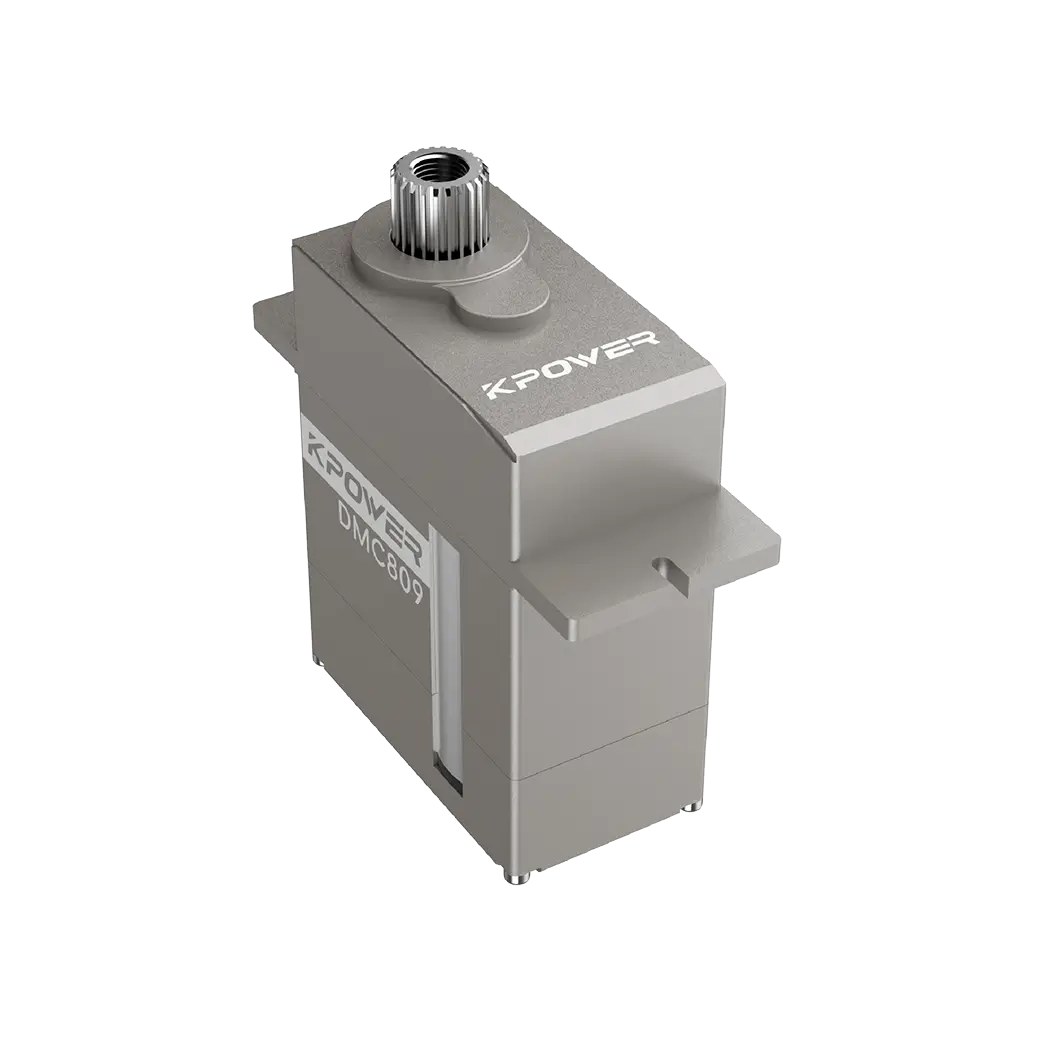
This "Python Microservices Development for Motion Control" PDF is provided bykpowerOrganized and released, focusing on modular development practices in actual motion control scenarios. The content is based on many years of project experience in servo motors, robotic arms and automation system integration, and aims to provide a clearer and more sustainable implementation path for projects that combine hardware and software.
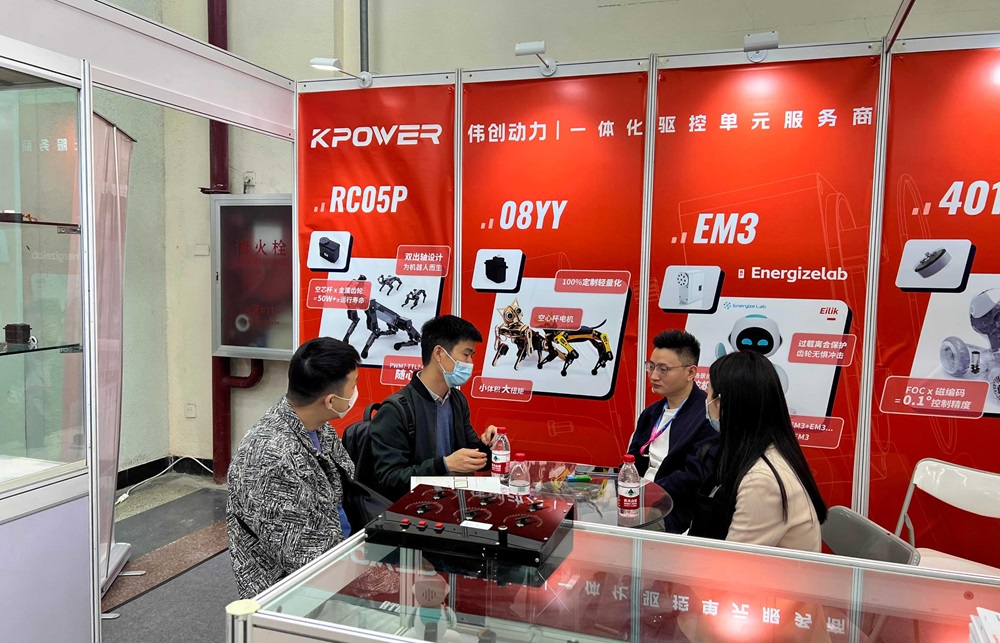
Established in 2005,kpowerhas been dedicated to a professional compact motion unit manufacturer, headquartered in Dongguan, Guangdong Province, China. Leveraging innovations in modular drive technology,kpowerintegrates high-performance motors, precision reducers, and multi-protocol control systems to provide efficient and customized smart drive system solutions. Kpower has delivered professional drive system solutions to over 500 enterprise clients globally with products covering various fields such as Smart Home Systems, Automatic Electronics, Robotics, Precision Agriculture, Drones, and Industrial Automation.
Update Time:2026-01-19

Contact Kpower's product specialist to recommend suitable motor or gearbox for your product.


