

TECHNICAL SUPPORT


Published 2026-01-19
Imagine you are building a device. Every part is running, but something always feels wrong - the movement is not smooth enough, the response is always half a beat slow, and sometimes even "stuck" with each other. It's not that one part is broken, it's that there's a lack of real "conversation" between them.
It's like having a group of talented musicians playing individually without a conductor. The sounds are there, but they are not music.
In the world of machinery and automation, this "dialogue" often depends on the core power units - servo motors and steering gears. Their performance directly determines whether the entire device "dances in harmony" or "works independently." To measure this kind of performance, people often fall into a bunch of parameter tables: torque, speed, accuracy, response time... After looking at it for a long time, it feels like deciphering some kind of password.
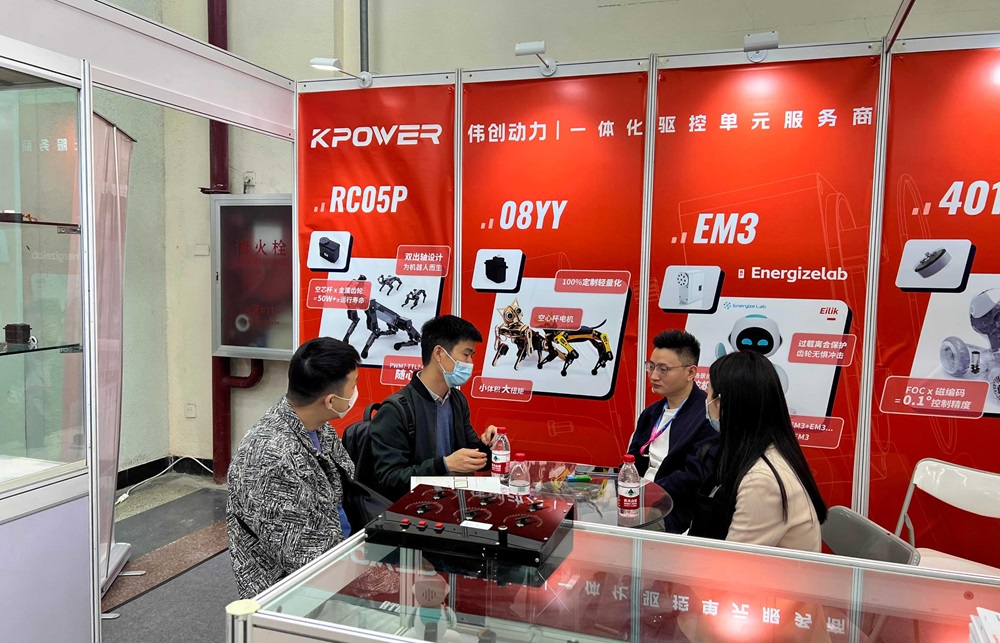
Is there a way that can help us understand the quality of this "dialogue" more intuitively?
Usually, when people compare servo motors, they will list a long list of data. This one has high torque, that one has high speed, and the other one has amazing accuracy ratings. It’s certainly necessary, but it’s like judging a dish based on the ingredient list alone—you know what’s in it, but you don’t know how it will taste in the end.
Real performance happens in dynamics. When the command is given, how does the motor start? Is it stable when the load changes suddenly? Will the accuracy drift quietly after running for a long time? The answers to these questions can rarely be found directly from a static specification sheet.
A more common situation is that you choose a product with outstanding single data, but encounter trouble in real and complex application scenarios. The response is fast, but the heating is serious; the torque is large enough, but the control is not delicate enough. The question becomes: What kind of comparison do we need?
Perhaps, we need to look at it from a different angle. It’s not a comparison of “whose data looks better”, but a comparison of “who is more reliable and has a better understanding of each other in real work”.
This leads to an idea: What if we looked at the performance of a motor like a team of micro-services teams that work well together?
The concept of "Microservices Performance Best Comparison" sounds a bit technical at first. But its core is simple: disassemble the comprehensive performance of the motor into multiple independent and related "service units" for evaluation. for example:
Each "service" is like a specialized member. The real strength lies not in the outstanding performance of any one member, but in the fact that they, as a whole, work seamlessly together without any shortcomings.
Some people may ask: "This sounds good, but how does it compare? Isn't it more complicated?"
In fact, this simplifies the choice. You don't need to be an expert in deciphering all the parameters. You just need to ask yourself: Which "service" is the most critical in my application? Does it require millisecond-level response speed, or hours of drift-free persistence? Is it the agility of frequent starts and stops, or the softness of smooth transitions?
This method translates technical parameters into business language. You are no longer just buying a motor, but choosing a "partner" who can integrate into your system and understand your needs.
existkpower, we are used to polishing products from this perspective. When we test a servo, we don't just look at its peak performance in an ideal laboratory. We will simulate various "awkward" scenarios: Will it "cough" when the voltage fluctuates slightly? Will its fingertips remain stable after eight hours of continuous work? When instructions are issued like raindrops, will it miss any drop?
These tests form our understanding of "Microservices Performance". It is not a marketing term, but a set of internal standards of review.
For example, we may have two motors of the same specifications perform exactly the same complex trajectory tasks. Judging from the data curve, they may all be completed. But when you zoom in on the details, you will find that the path of one of them is smoother and the speed changes more naturally, just like an experienced master is operating it; while the other one is slightly stiff and has slight frustrations. The difference is the difference in coordination between different "performance services", which directly affects the operation quality, lifespan and even output quality of the final equipment.
This difference is often invisible on the specification sheet. It is only through this scenario-based, comprehensive comparison that it emerges.
When you're choosing a power core for your next project, put aside the dizzying specs for a moment. First think about how you want the device to "behave" and what kind of "working personality" you want it to have.
Do you need a sprinter with quick reflexes or a marathon runner with endurance? Or do you need an all-rounder who can switch between the two at any time?
The essence of "Microservices Performance Best Comparison" is to advocate a smarter and more realistic evaluation method. It focuses on the effectiveness of overall collaboration rather than isolated data competition. It reminds us that the best choice is often the one that makes the entire system forget that it exists and just run smoothly - because perfect collaboration is always silent.
Ultimately, all technology should serve a simple goal: to make machines work better and to allow creators’ ideas to become reality without loss. And this may be what is truly worth looking forward to behind every cautious comparison.
Established in 2005,kpowerhas been dedicated to a professional compact motion unit manufacturer, headquartered in Dongguan, Guangdong Province, China. Leveraging innovations in modular drive technology, Kpower integrates high-performance motors, precision reducers, and multi-protocol control systems to provide efficient and customized smart drive system solutions. Kpower has delivered professional drive system solutions to over 500 enterprise clients globally with products covering various fields such as Smart Home Systems, Automatic Electronics, Robotics, Precision Agriculture, Drones, and Industrial Automation.
Update Time:2026-01-19

Contact Kpower's product specialist to recommend suitable motor or gearbox for your product.


