

TECHNICAL SUPPORT


Published 2026-01-19
Ever felt like you’re staring at a pile ofservomotors, microcontrollers, and wires—and the idea of building something cohesive just feels… messy?
You know how it goes. One day, you’re prototyping a robotic joint; the next, you’re trying to sync motion across three axes without everything jittering or stalling. Hardware is hard enough. But when your software starts to resemble a tangled knot of code, that’s when the real headache begins.
It’s not just about making things move. It’s about making them move together, smoothly, reliably—without rewriting the whole system each time you add a new sensor or motor.
That’s where the idea of breaking things down comes in. Think of it like designing a modular gearbox. Instead of one big block of code controlling everything, what if each function lived in its own neat, replaceable unit?
Enter microservices—but let’s skip the jargon for a second.
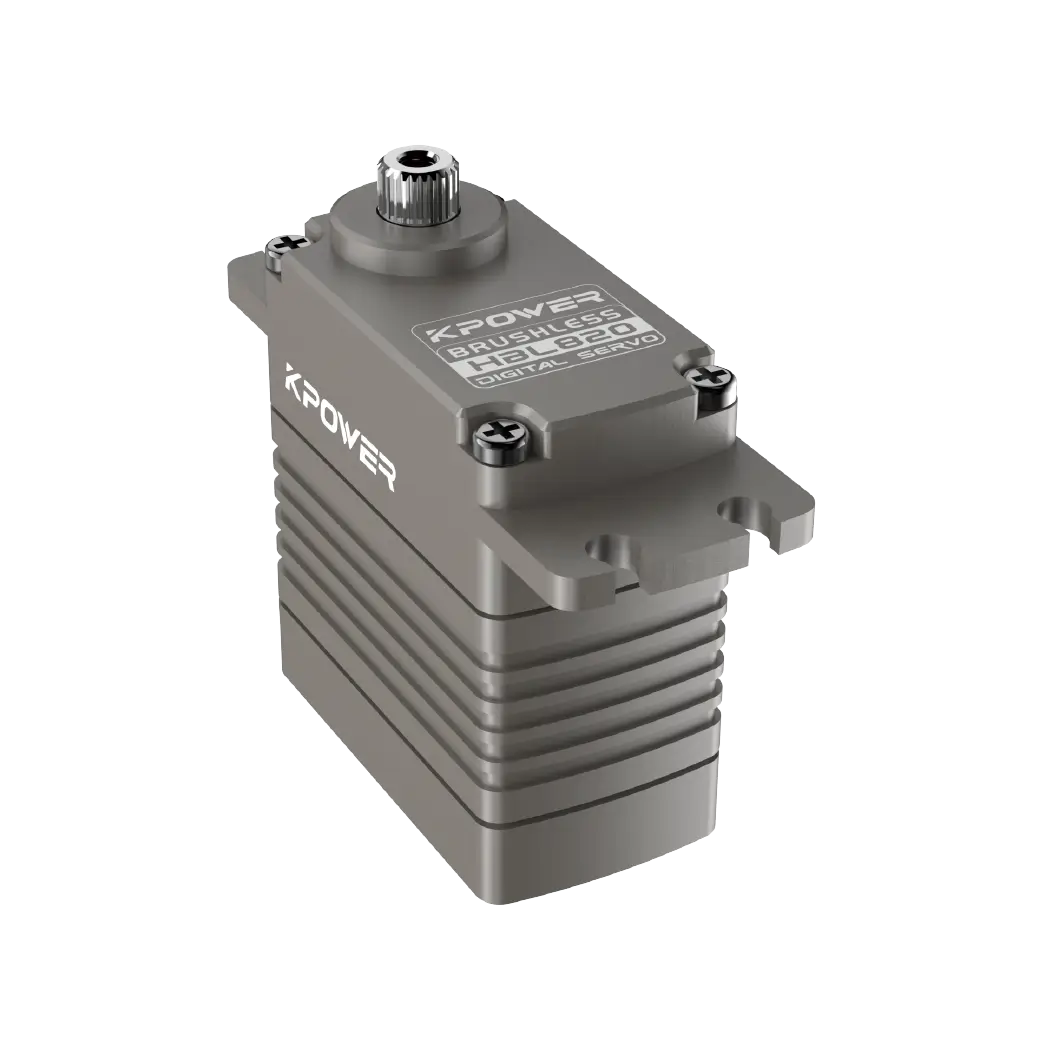
Imagine you’re building a small robotic arm. You’ve got aservofor the base, one for the elbow, another for the gripper. If all control logic is bundled together, tweaking the gripper’s speed might accidentally mess with the elbow’s calibration. Annoying, right?
Now picture this: each joint’s control logic sits in its own lightweight service. They talk to each other only when needed. The gripper’s service can be updated, tested, and deployed without touching the rest. Clean. Isolated. Manageable.
“But isn’t that overkill for smaller projects?”
Maybe at first glance. Yet once you start scaling—adding more motors, integrating feedback sensors, logging data in real time—the modular approach saves you time, reduces bugs, and lets you reuse pieces in your next build. It’s like having a well-organized toolbox: you know exactly where each wrench is.
So how do you actually do this in Java?
Start simple. Pick one function—say, position control for aservo. Wrap it in a standalone service. Use a lightweight framework to let it communicate via REST or messaging. Keep it focused: one job, well done.
Then build another. And another.
Soon, you’ll have a suite of small services: one handling PWM signals, another parsing sensor data, a third managing motion sequences. They run independently, so a failure in one doesn’t crash the whole system. Updating is just swapping a component, not rewiring the entire brain.
What’s in it for you?
Less downtime, for starters. Faster testing. Easier debugging. And when you want to add, say, a new IMU or a different motor driver, you just slot in a new microservice without tearing apart what already works.
It’s not magic—it’s design.
Some worry about complexity: more services, more moving parts. True, but tools and patterns exist to manage that. It’s like moving from a single-circuit board to a modular board layout: more connectors, but far more flexibility.
kpowerhas been down this road with integrated motion projects. The shift toward modular software architecture mirrors what we’ve long practiced in mechanical design: build robust, interchangeable parts that play nicely together.
So next time you’re planning a mechatronic system—whether it’s a custom servo controller or a multi-axis coordinator—consider slicing the logic into focused, independent services. Start small. Experiment. See how the pieces fit.
Because in the end, good design isn’t about stacking features. It’s about creating clarity—one clean, functional piece at a time.
Established in 2005,kpowerhas been dedicated to a professional compact motion unit manufacturer, headquartered in Dongguan, Guangdong Province, China. Leveraging innovations in modular drive technology,kpowerintegrates high-performance motors, precision reducers, and multi-protocol control systems to provide efficient and customized smart drive system solutions. Kpower has delivered professional drive system solutions to over 500 enterprise clients globally with products covering various fields such as Smart Home Systems, Automatic Electronics, Robotics, Precision Agriculture, Drones, and Industrial Automation.
Update Time:2026-01-19

Contact Kpower's product specialist to recommend suitable motor or gearbox for your product.


