

TECHNICAL SUPPORT


Published 2026-01-19
You know that sound. It’s not in the manual. It’s the low groan from your assembly line when a single motor stutters, and suddenly, the whole dance falls apart. Or the frustrating lag in a robotic arm where precision is everything. For years, the go-to fix was to throw more power at the problem, to rewire the entire monolithic control system—a daunting, expensive, and disruptive process. It’s like trying to replace the engine of a car while it’s still speeding down the highway.
What if the problem wasn’t the parts, but the conversation they’re having? That’s the question we kept asking atkpower. We saw brilliant machines held back by a single-point brain. This is where the idea of shifting from a monolithic architecture to a microservices approach for motion control wasn’t just tech jargon—it became a practical lifeline.
Think of a traditional monolithic controller as a stern, central commander. Everyservomotor, every actuator, reports to this one boss. Need to adjust just one parameter on a single axis? You’re petitioning the central government. A small hiccup can require a full system reboot. It’s efficient on paper, but fragile in the real world of dust, vibration, and unpredictable demands.
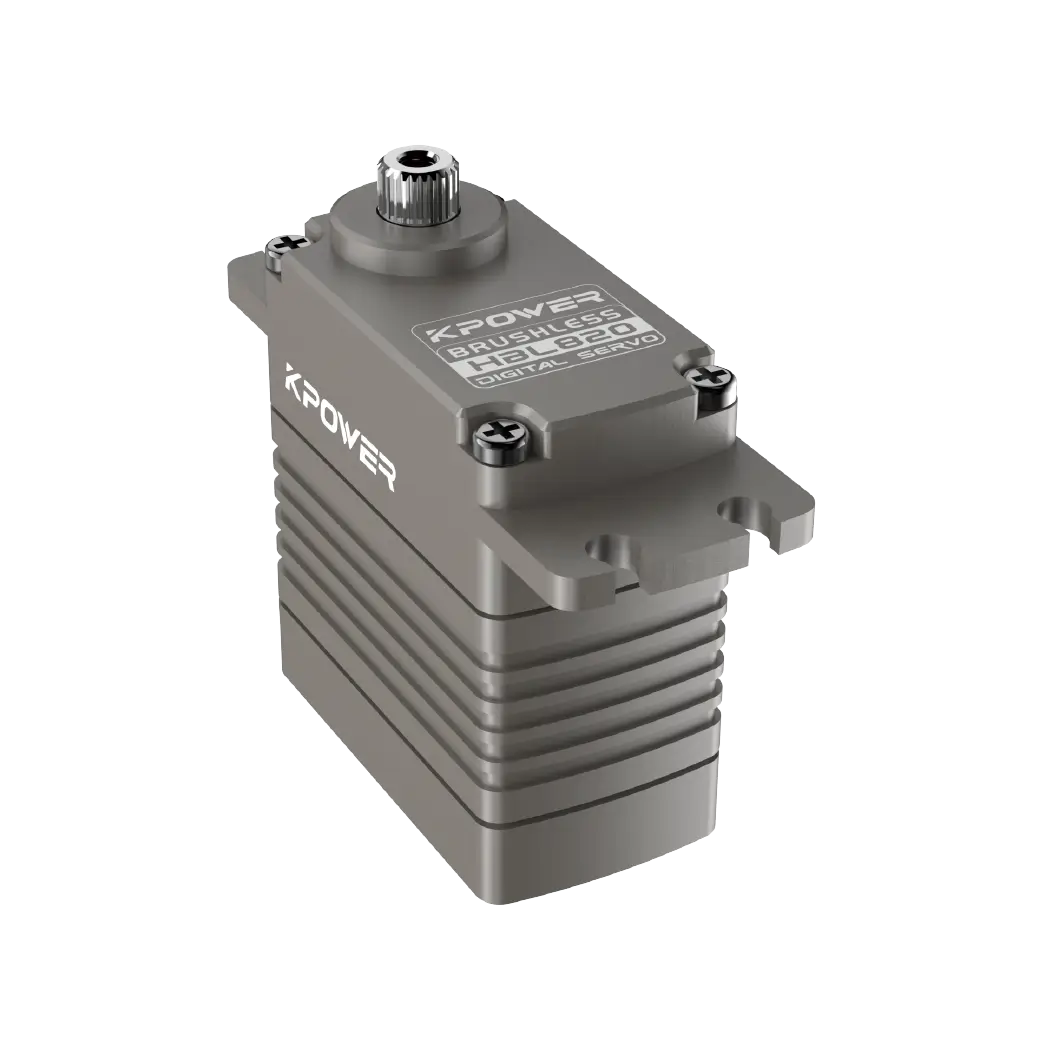
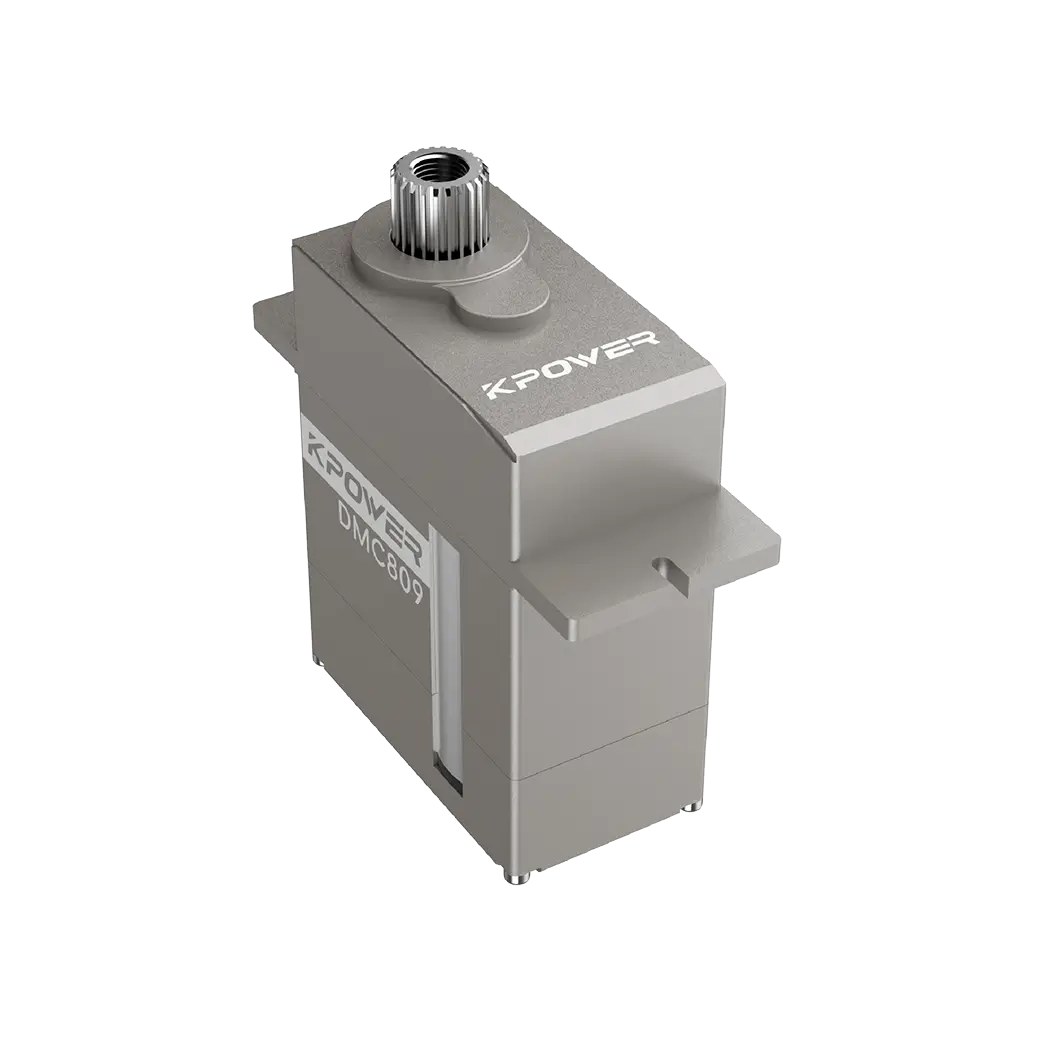
Microservices architecture reimagines this completely. Instead of one brain, you have a team of specialized experts chatting on a network. Eachkpower servodrive becomes a smart, independent node. One handles the precise angle of a welding arm, another manages the rapid, repetitive lift of a conveyor belt. They talk to each other, but they don’t rely on a single point of failure.
So, what changes on the shop floor? Let’s get tangible.
Anyone can network devices. The magic is in the conversation protocol. Kpower’s approach focuses on lightweight, constant dialogue. It’s less about shouting commands and more about sharing statuses. Is Drive A running hot? It tells the system, which might ask Drive B to temporarily take on a bit more load. This is distributed intelligence. It’s resilience born from cooperation.
A common question we hear is: “Isn’t this more complex to set up?” Honestly, the initial configuration requires a different mindset—you’re mapping out a community, not a hierarchy. But the long-term simplicity is breathtaking. Scaling up? Add nodes. Changing a process? Reconfigure a single service. Trouble-shooting? The problem is often localized to a chatty, identifiable unit rather than a silent, central black box.
There’s a rational case here: reduced downtime, easier scaling, simpler maintenance. But there’s something else, harder to quantify. It’s the feel of a machine that adapts. You see it in a packaging line that smoothly adjusts speed because the filling service told the sealing service about a minor delay. You see it in complex coordinate motion where drives negotiate paths among themselves for optimal smoothness.
This architecture acknowledges a truth: machinery exists in a fluid world. Raw material density varies. Ambient temperature shifts. A microservices approach allows the mechanical body to have a nervous system that can react, not just rigidly execute. It makes machines more alive, more robust.
Wondering how this moves from concept to your workshop? It starts with a perspective shift. You begin by identifying the natural “services” in your machine—the discrete motions, the independent functions. Each becomes a candidate for its own smart Kpower drive node. The physical wiring might look similar, but the communication layer changes to a fast, open network. The real work is in the soft mapping—defining how these nodes interact, what they need to share.
It’s an evolution, not a revolution. Often, it makes sense to start with a new cell or a problematic bottleneck machine. Prove the conversation there, feel the difference in agility and diagnostics, then let that approach spread organically.
The goal isn’t complexity for its own sake. It’s simplicity on the other side of complexity. The monolithic approach gave us centralized control. The microservices path from Kpower offers distributed resilience. It trades the fragility of a single crystal for the strength of a woven mesh.
In the end, your machines should work for you, not the other way around. When every component has a voice and the intelligence to use it, you stop hearing those groans of strain. You start hearing the quiet, efficient hum of a system that thinks for itself. That’s the future of motion—not just powerful, but perceptive. And it’s a conversation worth starting.
Established in 2005, Kpower has been dedicated to a professional compact motion unit manufacturer, headquartered in Dongguan, Guangdong Province, China. Leveraging innovations in modular drive technology, Kpower integrates high-performance motors, precision reducers, and multi-protocol control systems to provide efficient and customized smart drive system solutions. Kpower has delivered professional drive system solutions to over 500 enterprise clients globally with products covering various fields such as Smart Home Systems, Automatic Electronics, Robotics, Precision Agriculture, Drones, and Industrial Automation.
Update Time:2026-01-19

Contact Kpower's product specialist to recommend suitable motor or gearbox for your product.


