

TECHNICAL SUPPORT


Published 2026-01-19
Imagine this scenario: The automated production line you spent several months designing is finally ready for trial operation. The servo motor rotates accurately, the servo swings smoothly, and everything is executed according to the program-until a certain functional module needs to be updated. Then the whole line had to stop. It feels like traffic in the entire city has come to a standstill because of a traffic jam at an intersection. Have you ever encountered a similar situation?
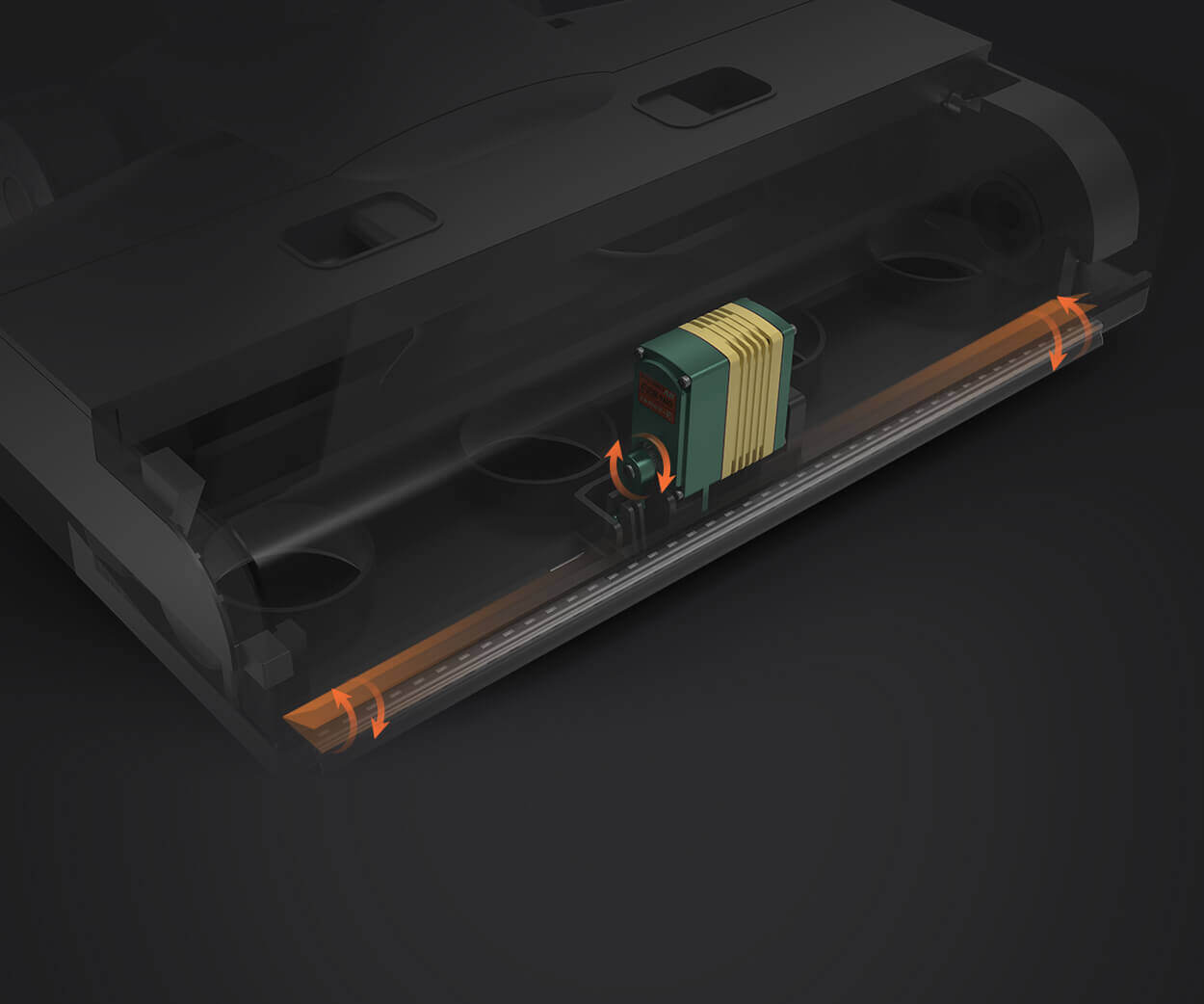
Behind this is actually an architectural problem. Many machinery and automation projects begin with monolithic architectures—packaging all functions, from motion control to data processing, into a cohesive program. At first it was simple and straightforward, like putting all the tools in a toolbox. But as the project became more complex, the toolbox became heavier and heavier, and I had to drag the entire box out every time I wanted to get a screwdriver.
Let’s first talk about what monolithic architecture is. Simply put, it's like a big house with no internal partitions. The kitchen, bedroom, and living room are all in one space. Cleaning is easy, but if someone is frying fish in the kitchen, the whole house will smell of oil smoke.
In a mechanical project, this means motion control, data analysis, user interface, and communication modules are all intertwined. The control logic of the servo motor may be tightly coupled to the temperature monitoring code. Need to upgrade one of these? Sorry, you may have to retest the entire system. It's like trying to replace a motor on a production line, but having to dismantle and reinstall the entire line.
Have you ever wondered why some projects require lengthy downtime every time they are modified? Why would adding a new sensor cause the entire control system to become unstable? Many times, the problem isn't the hardware itself, but how the functionality is organized together.
At this time someone will propose microservices. It sounds very technical, but the idea is actually very simple - convert a large house into an apartment building with independent rooms. There is a separate kitchen, a separate bedroom, and a separate living room. Whichever room needs to be renovated is closed and the other rooms can live normally.
Applying it to mechanical projects means building the motion control module, data acquisition module, communication module, and human-machine interface as independent services. The program that controls the servo motor is one service, the one that handles the trajectory planning of the steering gear is another, and the one that records the operating data is another. They communicate with each other through network interfaces, but each runs in its own "container".
What changes will this architecture bring? Imagine this: you discover a need for temperature monitoring, so you update the temperature service - and the control of the servo motor is completely unaffected, and the production line continues to run. Do you want to add a data analysis function? Directly add a new data service module without touching the existing system. It's like adding a gym to an apartment building, without any interruption to the daily lives of other residents.
Microservices sound great, but will they make things more complicated? Of course, any architectural choice has two sides.
Microservices means you need to manage multiple services that run independently. Communication between them requires design, deployment requires coordination, and monitoring requires a more nuanced perspective. It's like managing a team rather than operating a machine alone. You need to consider service discovery, load balancing, fault tolerance - issues that may not exist at all in a monolithic architecture.
So the question is: when should you stick to a monolith, and when should you move to microservices? If your project is relatively simple, with few functional modules and infrequent changes, the simplicity of a monolithic architecture may be your first choice. But if you are building a system that requires continuous expansion, frequent updates, and some functions may be upgraded independently, the flexibility of microservices is worth considering.
Experienced designers will tell you: There is no absolutely correct choice, only the choice that is more suitable for the current scene. Sometimes a hybrid approach can even be adopted - the core control logic remains monolithic and auxiliary functions use microservices. Just like a building, the main structure is integral, but the internal space can be flexibly divided.
In the field of servo motors and machinery control, architectural choice directly affects system reliability and maintenance costs. We have encountered some cases: customers initially used a monolithic architecture to quickly implement prototypes, but when they needed to deploy the system to multiple production lines with different configurations, modifications and adaptations became extremely time-consuming.
Later, they tried to separate functions such as motion control logic, device configuration management, and data logging into independent services. The result is: the adaptation time for different production lines is reduced by about 60%, and the downtime when a partial system failure occurs is shortened by more than 70%. A certain sensor module upgrade was deployed and tested without stopping the main production line.
This is not to say that microservices are always better than monoliths, but that when the project develops to a certain stage, the flexibility of the architecture will become a key factor. It's like choosing a drivetrain: sometimes you need a rigid coupling, sometimes you need a flexible coupling - depending on the equipment you're connecting to and the vibration environment you're facing.
You might as well ask yourself a few questions:
How many dependencies are there between the functional modules of your project? If a module needs to be modified, how many other parts will be affected?
How frequent do you expect feature updates or expansions to be in the future? How big is the downtime window required for each update?
How does your team collaborate on development? Are different people responsible for different modules?
Do the performance requirements of different parts of the system vary widely? For example, the real-time control part requires millisecond-level response, but the data recording part can tolerate second-level delay?
By answering these questions, you may have a clearer idea of the architectural direction that's right for you. Remember, architecture is not static. Just as mechanical design requires iteration, software architecture can evolve as the project grows. Sometimes starting with a single entity and then gradually splitting out independent services is the most pragmatic path.
In this rapidly changing technology environment, maintaining the adaptability of a system may be more important than pursuing a perfect initial design. No matter which architecture you choose, the ultimate goal is the same: to make your servo motors, steering gears, and entire mechanical system work stably, reliably, and flexibly.
If you need more specific advice on architectural choices, or want to know how different options actually performed on similar projects, we'd be happy to share more experience from the field. After all, good architecture is like good mechanical design—it should serve functionality, not the other way around.
Established in 2005,kpowerhas been dedicated to a professional compact motion unit manufacturer, headquartered in Dongguan, Guangdong Province, China. Leveraging innovations in modular drive technology,kpowerintegrates high-performance motors, precision reducers, and multi-protocol control systems to provide efficient and customized smart drive system solutions. Kpower has delivered professional drive system solutions to over 500 enterprise clients globally with products covering various fields such as Smart Home Systems, Automatic Electronics, Robotics, Precision Agriculture, Drones, and Industrial Automation.
Update Time:2026-01-19

Contact Kpower's product specialist to recommend suitable motor or gearbox for your product.


