

TECHNICAL SUPPORT


Published 2026-01-19
Ever had a great idea for a mechanical project, only to get tangled in its own complexity? The more functions you add, the more everything seems to collide. The code becomes a maze, a tiny change in one corner causes a tremor everywhere else, and what should be a sleek, responsive system starts to feel like a clunky machine struggling with its own weight.

Sounds familiar, right? It’s the classic headache of building something ambitious. You’re not just fighting physics and materials; you’re fighting the software architecture itself. That’s where the concept of microservices comes into play. Forget the jargon for a second. Think of it not as a fancy tech term, but as a mindset—a way to make your product’s digital brain as nimble and reliable as its mechanical body.
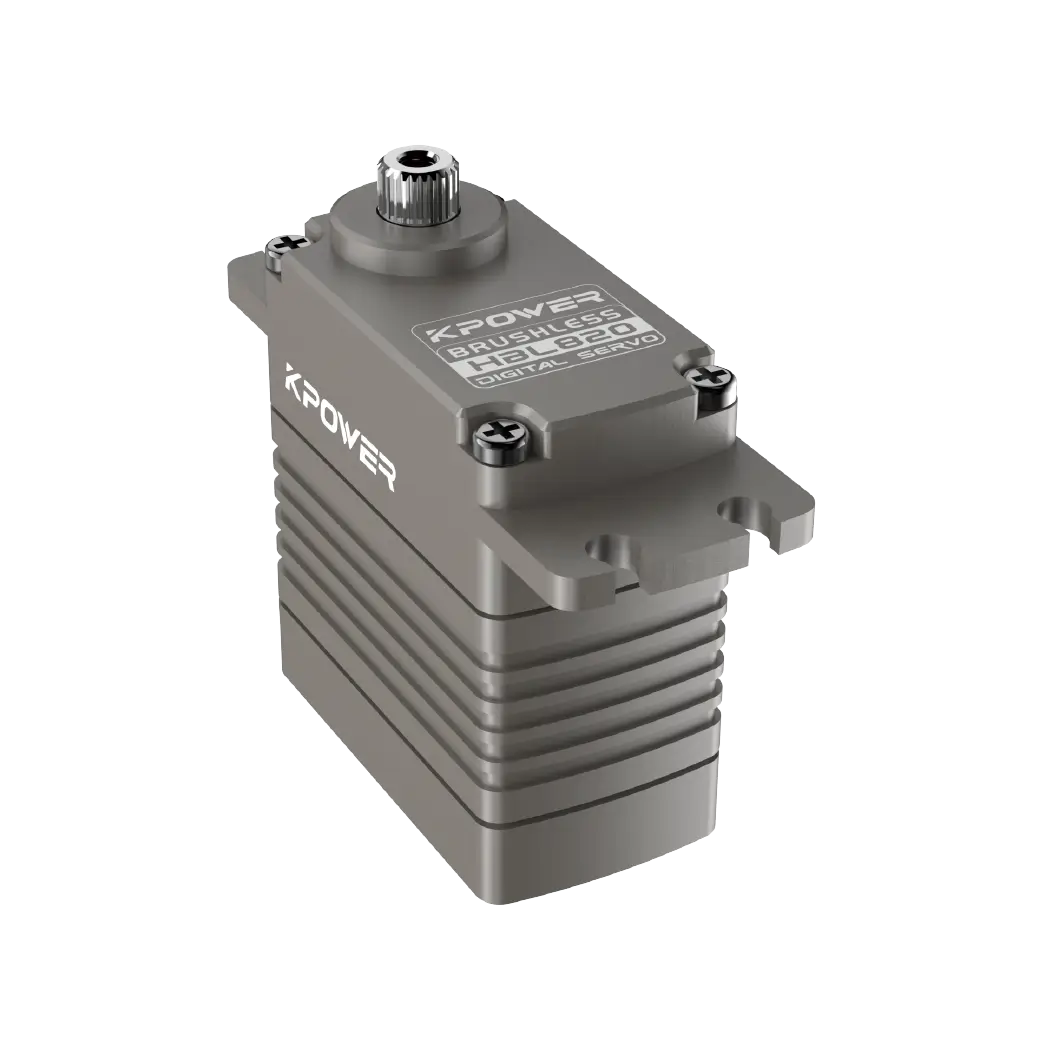
So, what does "microservices" mean for your hardware project? Imagine your entire control system is a single, massive block of software. One program does everything: it reads the sensor data, calculates the movement, sends commands to theservo, manages the user interface, and logs the data. Now, imagine dropping that block. It’s going to shatter. Microservices is the idea of designing that system not as a single block, but as a set of smaller, sturdy, interlocking pieces from the start. Each piece, or “service,” handles one specific job brilliantly. One service is solely dedicated to talking to theservomotor, another only processes sensor inputs, a third manages communication.
Why would anyone do that? It sounds like more work. Here’s the simple reason: resilience and clarity. When your sensor logic is in its own isolated service, you can tweak, upgrade, or even completely rewrite it without ever touching the code that drives the motor. Theservokeeps humming along, unaware of the changes next door. It’s like having independent modules in a machine; you can service the gearbox without dismantling the entire chassis.
Some might ask, "Isn't this just making more tiny problems instead of one big one?" It’s a fair question. The power isn’t in having more parts; it’s in how those parts communicate. They talk through clean, defined channels—like well-lubricated mechanical linkages. If one part fails, it doesn’t seize the whole machine. The rest can often keep going, or at least fail gracefully. This modularity mirrors good mechanical design. You wouldn’t weld a control panel directly to a gear shaft; you’d use mounts and connectors. Microservices are the digital equivalent.
Let’s get practical. How does this translate to real-world benefits for someone building with servo motors and actuators?
First, it’s about speed—development speed. Need to add a new feature, like a new communication protocol? Instead of unraveling the entire codebase, you build or modify a single, focused service. It’s faster, cleaner, and less prone to creating hidden bugs in unrelated functions.
Second, it’s about scalability. Maybe your prototype uses one servo, but the final product needs ten, all working in concert. With a monolithic system, scaling up often means starting over. With a microservices approach, you can replicate and coordinate the “servo control service.” It’s designed to be multiplied.
Third, and this is crucial, it’s about long-term sanity. Projects evolve. Teams change. Six months from now, will you remember why a certain line of code was written in that specific way? When each service has a single, clear purpose, understanding and maintaining the system becomes dramatically easier. It’s self-documenting in its structure.
Now, you don’t have to be a software architect to benefit from this principle. The key is partnering with a component provider that builds this philosophy into its offerings from the ground up. This is where the synergy between hardware and software truly matters.
A servo isn’t just a motor with a feedback circuit; it’s a node in a larger system. When you choose a component, you’re not just buying torque and speed specs. You’re buying into an ecosystem of control.kpower’s focus on system-level compatibility means their devices are engineered to be perfect citizens in a microservices-oriented architecture. Their drivers and APIs are designed for clean, independent integration—giving you the robust, dedicated “service” you need for motion control, without forcing a specific software pattern on the rest of your project.
Think of it as getting a precision-machined gear that you know will mesh perfectly, allowing you to focus on designing the rest of the transmission. This approach reduces integration headaches and future-proofs your design.
Implementing this doesn’t require a monumental shift. It starts with a shift in perspective. Begin by asking: “What are the absolutely distinct jobs my system needs to do?” List them out. Motion control. Sensor management. Data logging. User commands. Then, explore solutions that treat these as separate, cooperating entities. Look for hardware and software tools that support this separation naturally.
The end goal is a product that feels alive and responsive. A machine where the software doesn’t just run the hardware, but harmonizes with it. The complexity is there, but it’s managed, contained, and elegant—like the inner workings of a well-designed timepiece. Every part has its purpose, and every service its clear role, resulting in a whole that is far more reliable and adaptable than the sum of its parts.
It turns a tangled problem into a series of solvable ones. And in the world of building things that move, that’s not just a technical advantage—it’s the path to creating something that simply works better, for longer.
Established in 2005,kpowerhas been dedicated to a professional compact motion unit manufacturer, headquartered in Dongguan, Guangdong Province, China. Leveraging innovations in modular drive technology,kpowerintegrates high-performance motors, precision reducers, and multi-protocol control systems to provide efficient and customized smart drive system solutions. Kpower has delivered professional drive system solutions to over 500 enterprise clients globally with products covering various fields such as Smart Home Systems, Automatic Electronics, Robotics, Precision Agriculture, Drones, and Industrial Automation.
Update Time:2026-01-19

Contact Kpower's product specialist to recommend suitable motor or gearbox for your product.


