

TECHNICAL SUPPORT


Published 2026-01-19
Have you ever had such an experience? It took several days to design an exquisite mechanical structure. The 3D printed parts fit perfectly, and the code was almost debugged. However, it fell down on a small thing - the small square that is supposed to make everything move, the servo. Either the size is one or two millimeters different and cannot fit in, or you are too weak to carry your device, or it gets hot and shuts down when you use it, causing all your efforts to be wasted.

This is not your problem alone. Many wonderful ideas often encounter trouble in the most basic implementation links. Choose the wrong micro servo and the whole feel of the project changes.
At this time, what kind of helper would you want? It has to be small enough so that it doesn’t take up space; it has to be strong enough to move at will; it also has to be reliable so that it doesn’t get emotional at every turn. For example, the classic model that many people will look for: the micro 9-gram SG90 servo. Its size, just like its name, has become a standard - about 23mm long, 12mm wide, and about 29mm thick. But is just knowing the size numbers enough? Far from it.
You look at the parameter list and think, "The size is right, let's just use it." But when I actually started using it, I realized that the problem had just begun. Does that output shaft fit your steering wheel exactly? Its rotation angle is said to be 180 degrees, but can it actually be turned into place? Will there be any lag in the middle? Will the hum of its operation turn into an annoying noise once it's installed in the narrow space you've carefully designed? Also, will the position of the wires on the back of it make it difficult for you to wire it?
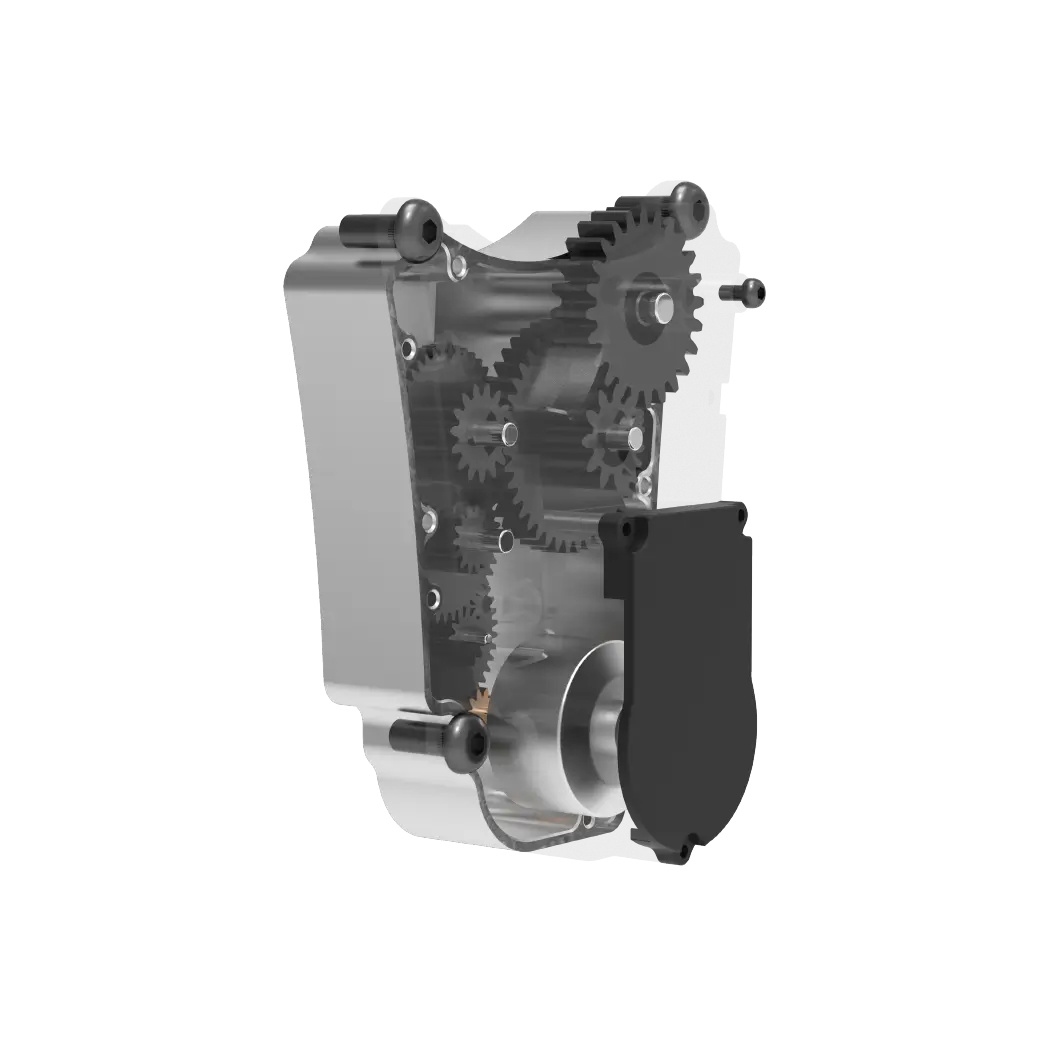
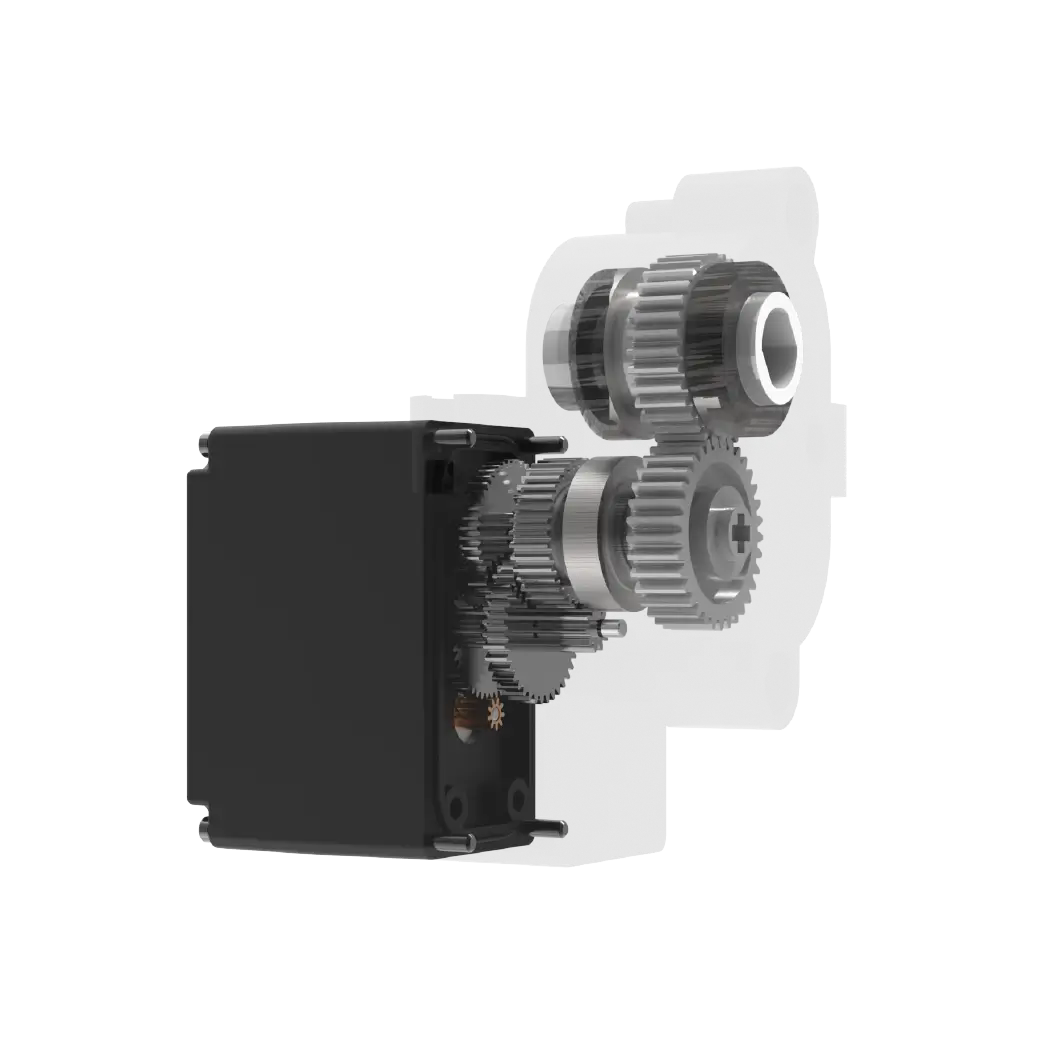
These small details are just a few lines and numbers on the drawing, but in actual production, they can determine whether your project runs smoothly or stutters. A well-designed steering gear will work hard in these places you can't see. For example, is the structure of the gearbox smooth and is there any empty position? Is the core of the motor efficient, so that the same power can squeeze out more power? Is the circuit control precise, so that every rotation of it stops at the position you want it to stop.
It's like building blocks. If the most basic piece is not square and solid, no matter how high or beautiful it is stacked on top, you won't feel at ease.
Don't just look at weight and size. Yes, 9 grams is a very friendly weight, but what you need to confirm is whether the mounting hole spacing is really what you want. Compare it to the mount you designed in your head, or better yet, a detailed engineering drawing.
Torque and speed should be looked at together. Torque is its power, and speed is its response. Do you want it to push slowly and forcefully, or turn quickly and precisely? The "torque 1.6kg-cm at 4.8V" on the parameter table is a reference, but you have to think about your actual working voltage and whether the load is constant. Sometimes, a servo that performs well under standard tests may fail when it encounters your mechanism with a bit of friction.
Also, materials and workmanship are a guarantee of confidence. Is the casing made of solid engineering plastic, and are the gears ordinary nylon or a more wear-resistant metal? This doesn’t mean you have to pursue all-metal gears, but you should choose them based on the intensity of your use. If you only move occasionally, nylon gears are quieter and cheaper; but if you need to work over time and repeatedly, the durability of metal gears will save you from a late-night meltdown in the future.
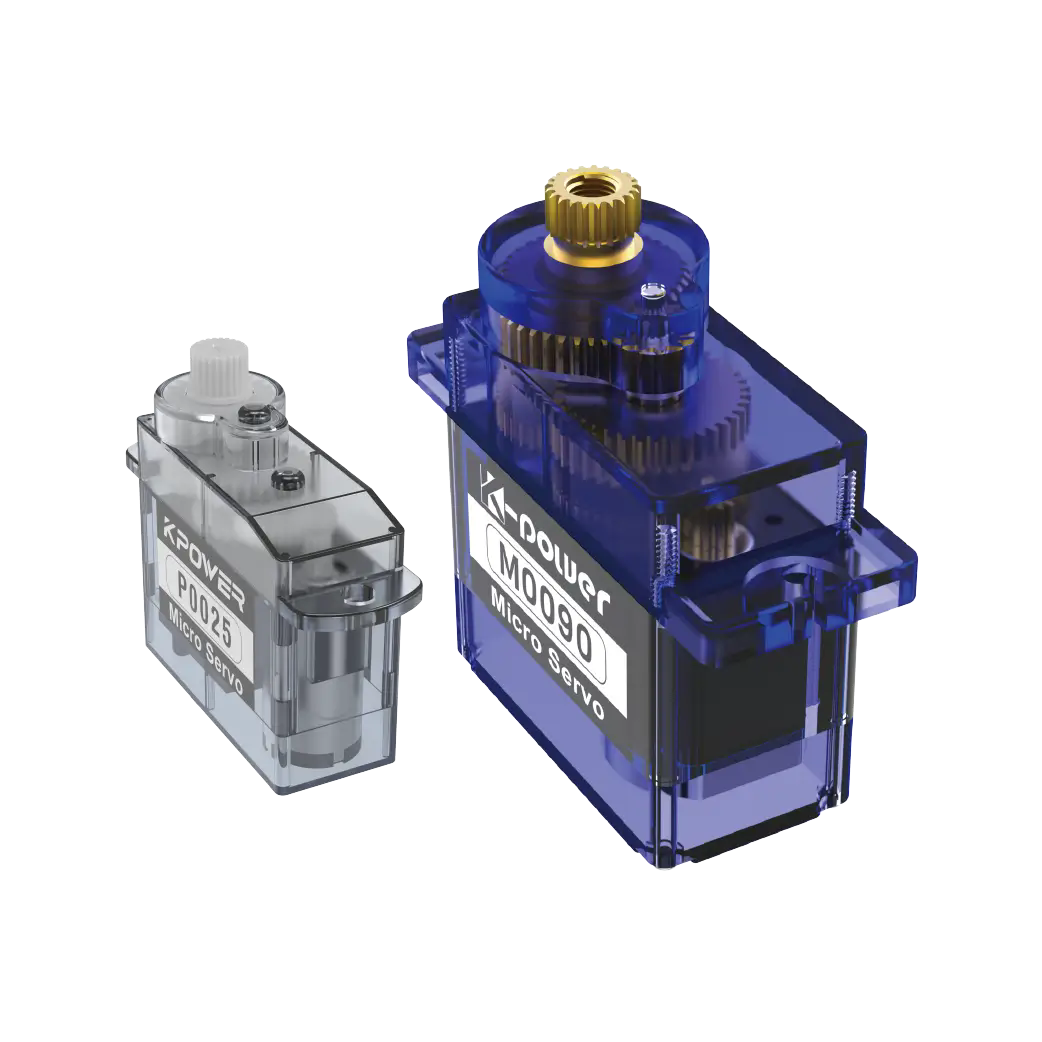
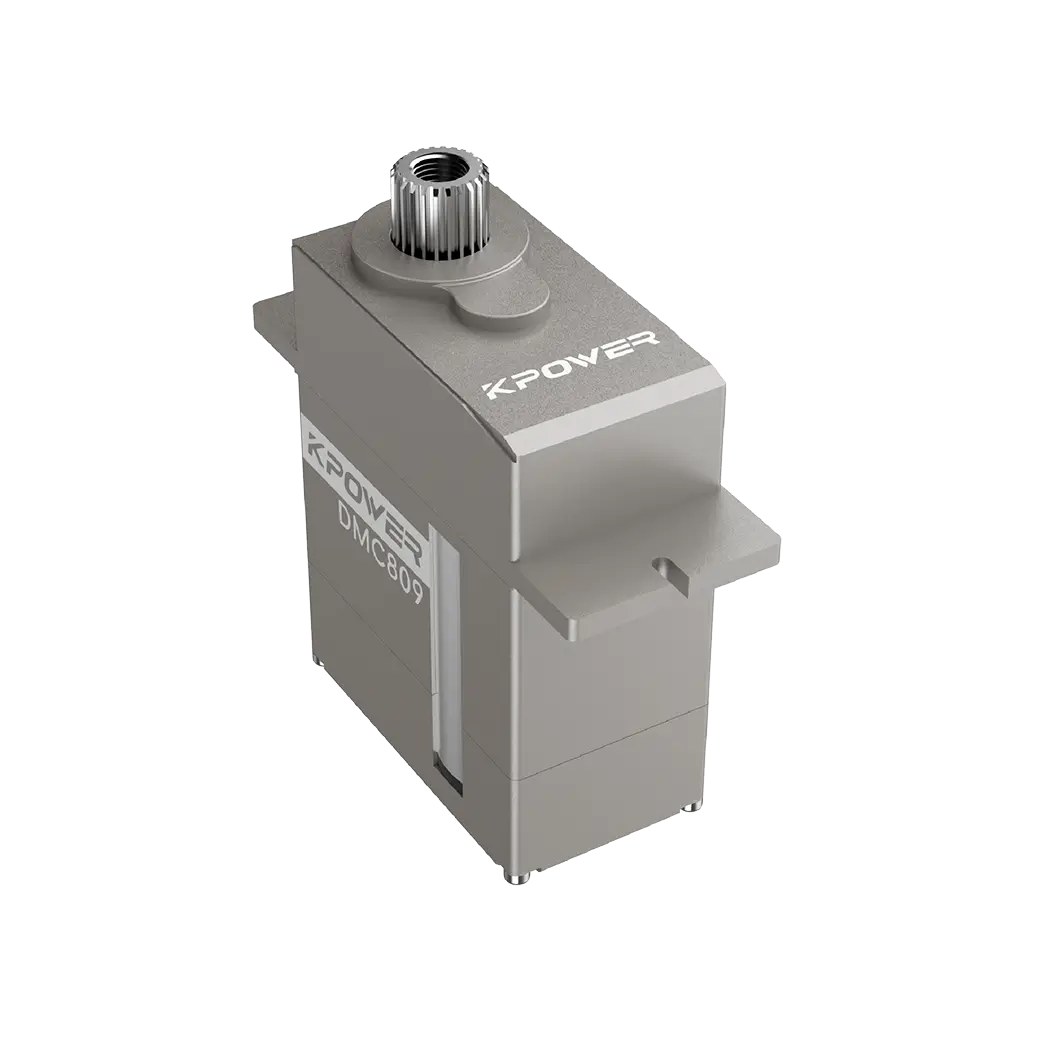
Speaking of this, I think of the large number of Kpower micro servos we have handled. Why do so many people continue to choose it after trying it? Not because of some exaggerated parameter, but precisely in these trivial "little things", it behaves like a reliable partner. Its size is controlled very precisely. If you say 9 grams, it means 9 grams. If you say 23mm long, you will get basically exactly the same size. This allows it to require almost no additional adjustments when integrating into various compact designs. Its gear transmission ensures sufficient power to suppress the operating noise, so that your creative works will not sound like a small factory.
Even more reassuring is its consistency. What you buy this time will have almost the same performance as what you buy next time. This is important for projects that require iteration or replication, where you don't need to re-tune the parameters for each new unit.
Making the right choice is only the first step. How to make it work better? The power supply must be stable. Voltage fluctuations are a common culprit of steering gear heating and jitter. When installing, make sure it is not subject to unreasonable lateral forces and is firmly fixed. The mechanical connection part, the steering wheel and the output shaft must match, and the fastening screws should not be over-tightened to avoid damage to the internal structure.
These tips are like treating a good partner. If you respect its characteristics, it will reward you with stability and durability.
In fact, working on a project is like telling a story, and each component is a character in the story. That little micro steering gear is often the key role in making the story "alive". It does not need to overwhelm the protagonist, but it must be conscientious and complete its actions on time and accurately when the protagonist needs it.
Next time you start thinking about a new mecha story, start by finding a reliable actor for this key role. A miniature servo with precise dimensions, suitable strength, and quiet operation, such as the well-proven classic model Kpower SG90, may be the key to making your story jump from drawings to reality and continue to be smoothly performed. The rest is your imagination.
Established in 2005, Kpower has been dedicated to a professional compact motion unit manufacturer, headquartered in Dongguan, Guangdong Province, China. Leveraging innovations in modular drive technology, Kpower integrates high-performance motors, precision reducers, and multi-protocol control systems to provide efficient and customized smart drive system solutions. Kpower has delivered professional drive system solutions to over 500 enterprise clients globally with products covering various fields such as Smart Home Systems, Automatic Electronics, Robotics, Precision Agriculture, Drones, and Industrial Automation.
Update Time:2026-01-19

Contact Kpower's product specialist to recommend suitable motor or gearbox for your product.


